
2026-09-02 カリフォルニア大学バークレー校(UCB)
<関連情報>
晩年期におけるセマグルチド治療は、雌マウスの老化を遅らせ、寿命を延ばす Late-life semaglutide treatment slows ageing and extends lifespan in female mice
Yufan Feng,Marine Barthez,Yifei Wang,Yibing Chen,Huixian Qiu,Chih-Ling Wang,Kartoosh Heydari,Melaine Delcroix,Lene Juel Rasmussen,Vilhelm A. Bohr & Danica Chen
Nature Published:02 September 2026
DOI:https://doi.org/10.1038/s41586-026-10940-7
Abstract
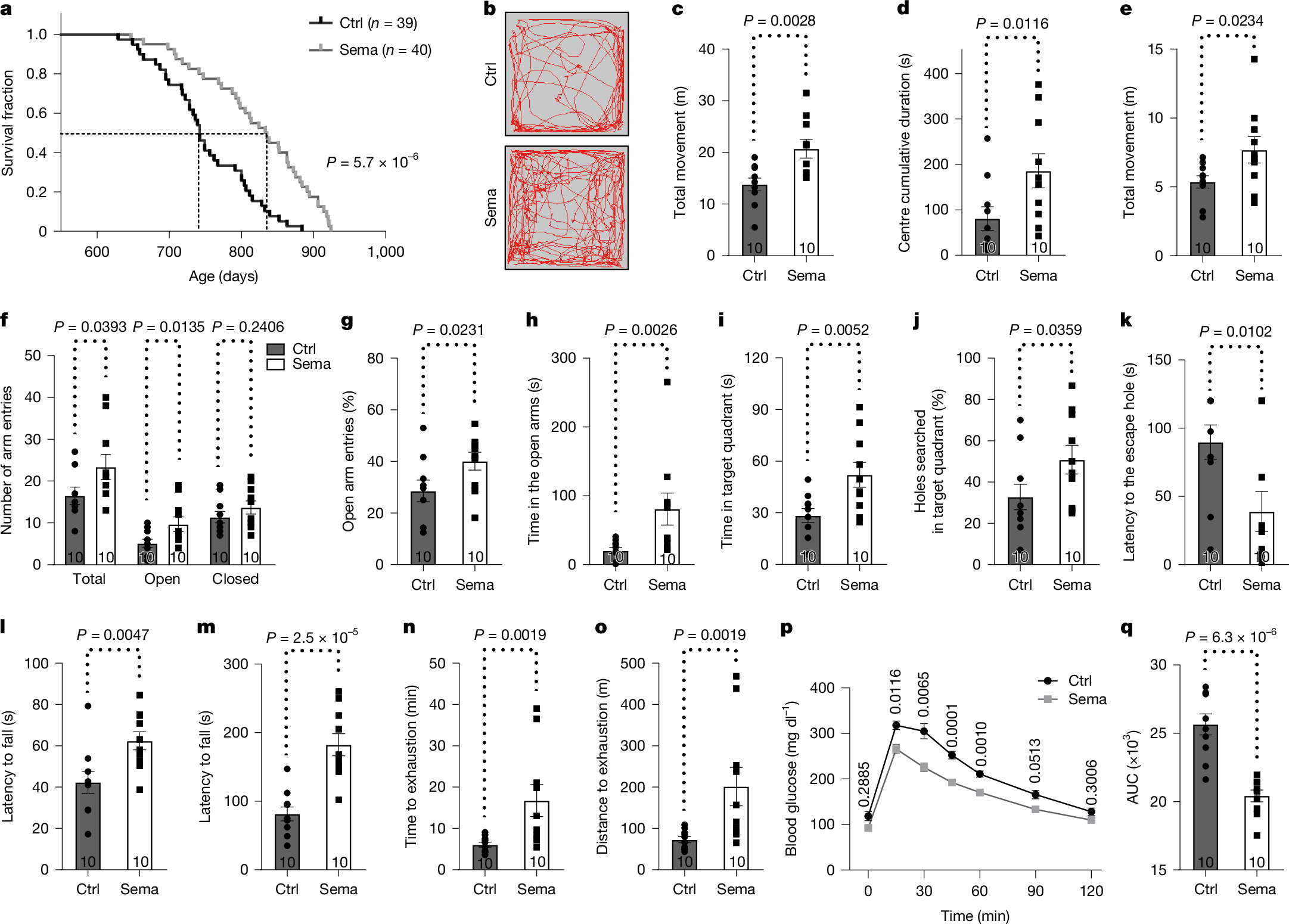
Pharmacological glucagon-like peptide-1 receptor (GLP-1R) activation reduces food intake and is an effective therapy for type 2 diabetes and obesity1. The use of GLP-1 medicines has revealed pleiotropic beneficial effects beyond glucose and weight control2,3,4,5, but little is known about the underlying basis of the pleiotropic effects. Here, treatment of 20-month-old female C57BL/6 mice with the GLP-1R agonist semaglutide for 3 months improved physiological function, attenuated hallmarks of ageing and modulated nutrient sensors and conserved genetic regulators of ageing. Continued treatment extended mouse lifespan. These effects parallel key features of calorie restriction, a dietary intervention that slows ageing, extends lifespan and alleviates a wide spectrum of ageing-associated diseases6. In a longitudinal study in direct comparison to matched calorie restriction, semaglutide treatment preserved baseline function and recapitulated many functional benefits of calorie restriction by attenuating age-associated decline, while also producing improvements above baseline and more favourable trajectories than calorie restriction in exploratory drive, spatial memory and glucose control. Together, these findings demonstrate that GLP-1R activation initiated late in life slows ageing and extends lifespan in female mice, supporting its function as a calorie restriction mimetic and providing a mechanistic framework that may help to explain its broad beneficial effects while revealing effects beyond those attributable to reduced calorie intake.

