2026-09-22 カリフォルニア大学サンタバーバラ校(UCSB)
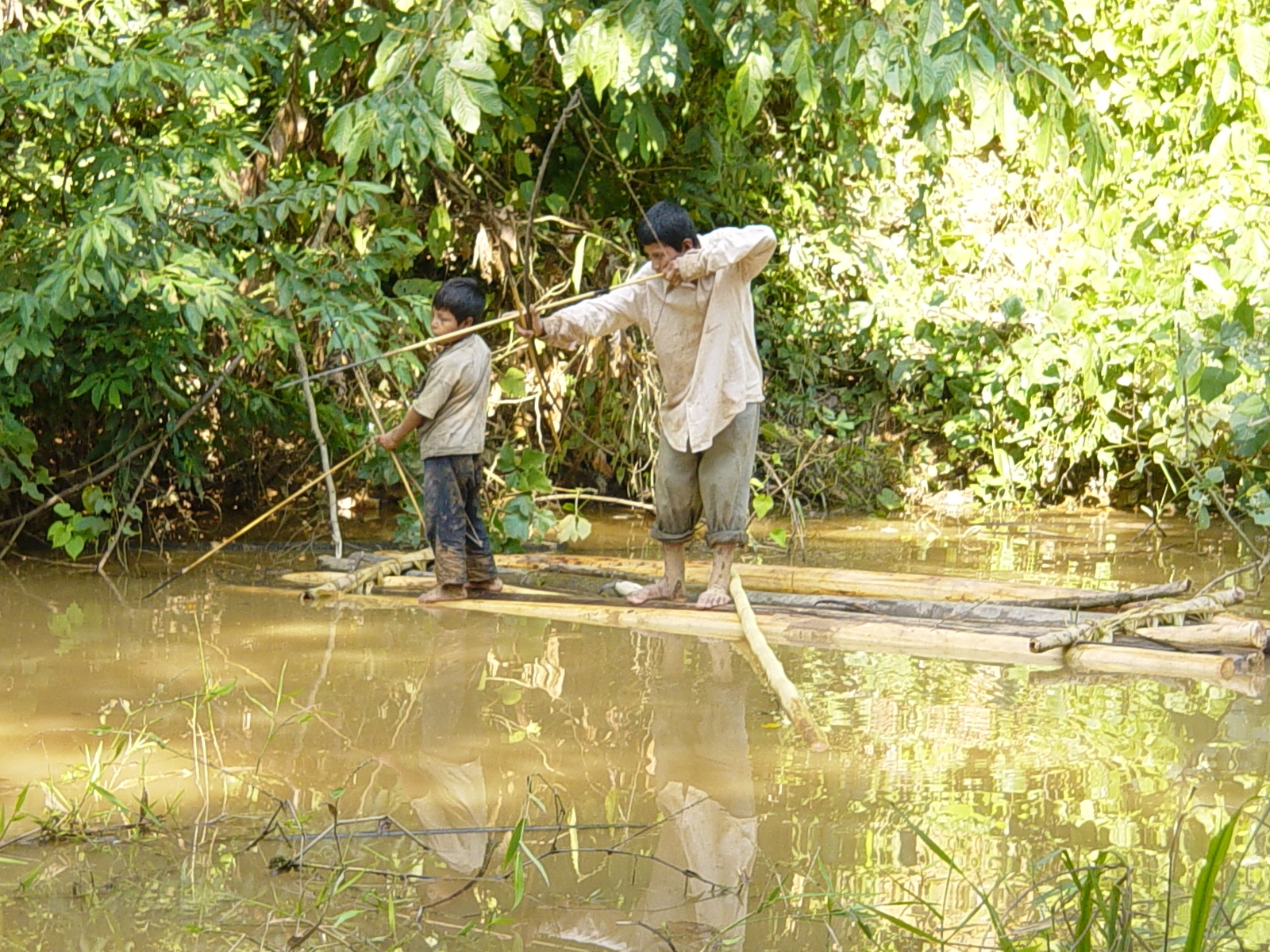
Photo Credit:Michael Gurven
Compared to industrialized counterparts Tsimané people of lowland Bolivia have less food availability and must expend more effort to get it
<関連情報>
- https://news.ucsb.edu/2026/022827/new-study-adds-nuance-understanding-dementia-tsimane-and-moseten-lowland-bolivia
- https://alz-journals.onlinelibrary.wiley.com/doi/10.1002/alz.71750
- https://medibio.tiisys.com/115204/
ボリビア先住民2集団における認知症および軽度認知障害の発症率 Incidence of dementia and mild cognitive impairment in two Indigenous Bolivian cohorts
Margaret Gatz, Wendy J. Mack, Daniel Eid Rodriguez, Raul Quispe Gutierrez, Jesus Bani Cuata, Helena C. Chui, Ellen E. Walters, Daniel K. Cummings, …
Alzheimer’s & Dementia Published: 15 September 2026
DOI:https://doi.org/10.1002/alz.71750
Abstract
INTRODUCTION
We studied dementia incidence and risk factors in Indigenous Tsimane and Moseten Amerindian populations in Amazonian Bolivia with largely subsistence lifestyles.
METHODS
A median of 4.7 years after baseline dementia assessment, 730 participants (52% male; mean age 67.3 years) were re-visited at two follow-up phases to determine new cases among non-demented at baseline. Clinical evaluation was adapted to culture, language, and illiteracy.
RESULTS
There were 22 incident dementia cases (7.40/1000 person years; 95% confidence interval = 4.87–11.24). Prevalence rates remained < 2%. Mortality among dementia cases at baseline was significantly greater versus cognitively normal participants. In exploratory analyses, apolipoprotein E ε4 genotype, thoracic aortic calcium, and plasma neurofilament light chain were associated with incident dementia; other risk factors, amyloid, and phosphorylated tau were non-significant.
DISCUSSION
In these populations, dementia prevalence is strikingly low, reflecting modestly low incidence and shortened life expectancy after diagnosis. Next steps include delineating vascular contributions versus Alzheimer’s disease pathology in dementia cases.
Highlights
- Incidence and especially prevalence of dementia are low in Indigenous Bolivians.
- Dementia cases have shortened life expectancy, contributing to lower prevalence.
- Apolipoprotein E ε4 is a risk factor for incident dementia.
- A subsistence lifestyle with low vascular risk factors may be protective.
- Results may shed light on the evolution of dementia and its risk factors.