2026-11-19 ヒューストン大学(UH)
<関連情報>
- https://www.uh.edu/news-events/stories/2026/november/11192026-vivek-kumar-regenerative-peptides.php
- https://www.science.org/doi/10.1126/sciadv.aef5064
多機能性ペプチドの調整可能な集合体による血管新生の制御
Programming angiogenesis with tunable assemblies of multifunctional peptides
Joseph Dodd-O, Bobak Shadpoor, Abhishek Roy, Roya Jafari, Tarunya R. Sudarshan, Abigail Holberton, Dongjing He, Francesco Coppola, Daniel M. Dinakarapandian, Deep Malu, Gelavizh Gharati, Alexandra Griffith, Harrison Rohe-Weiner, Siya Patel, Edward Bonder, Yuhang Hu, Levi Wood, Anant K. Paravastu, Petr Kral, Vivek A. Kumar
Science Advances, Volume 12, Issue 31, Article eaef5064(2026年7月31日公開)
DOI:https://doi.org/10.1126/sciadv.aef5064

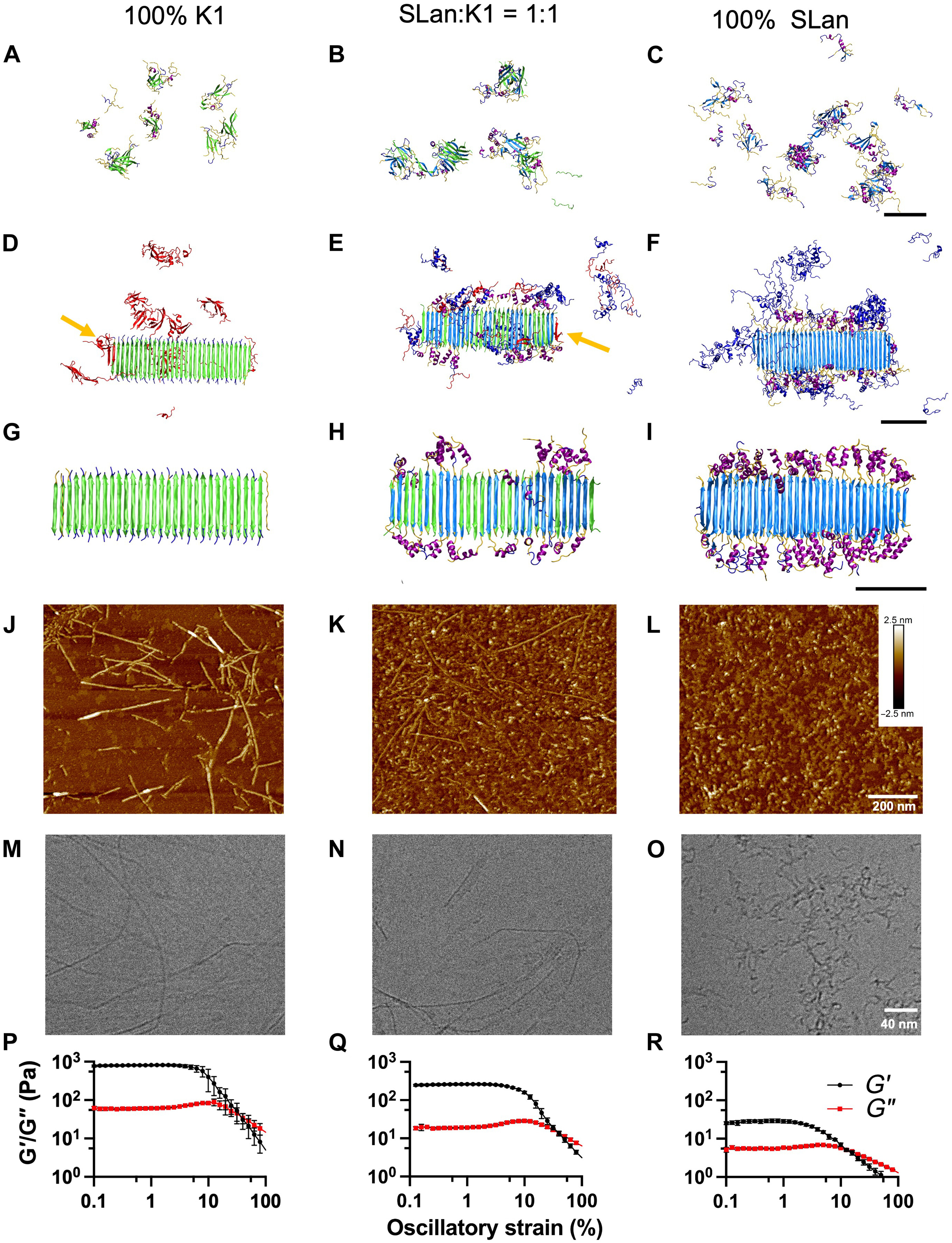
Fig. 1. Fiber assembly of homogeneous and composite peptide hydrogels.© 2026 The Authors. Exclusive licensee American Association for the Advancement of Science.CC BY-NC 4.0
血管新生を人工的に誘導する再生医療技術として、機械的強度と生物学的活性を独立して調整できる多機能性ペプチド材料が開発された。血管新生を促進する従来の成長因子投与では、作用部位への局在や効果の持続性、過剰なシグナル活性化などが課題となっている。本研究では、血管内皮増殖因子(VEGF)を模倣する機能性ペプチドSLanと、機械的強度に優れたβシート形成ペプチドK1を組み合わせ、注射可能なナノファイバー状の自己組織化ペプチドハイドロゲルを作製した。SLanとK1の混合比を変えることで、ゲルの剛性を約100~1,000 Paの範囲で調整しながら、血管内皮増殖因子受容体2(VEGFR2)への結合活性を維持できることを示した。分子動力学シミュレーションと固体核磁気共鳴解析から、両ペプチドの共集合によって分子間の立体障害が軽減され、材料の構造的強度を高めながら受容体結合部位へのアクセスが確保されることが明らかになった。特にSLanとK1を1対1で混合した材料は、VEGFR2を介したMEK–ERKシグナル伝達を活性化し、培養血管内皮細胞の増殖を促進した。さらに、マウスやラットへの移植実験では、血管内皮細胞の浸潤と新生血管の形成が促進され、周囲組織との安定した血管統合が確認された。本研究は、材料の機械的特性と生物学的機能を分離して設計することで、局所的かつ持続的な血管新生を誘導できることを示している。虚血性組織の修復、慢性創傷の治療、組織工学用移植材料などへの応用が期待されるが、ヒトでの治療効果や長期安全性については今後の検証が必要である。
This study presents a multifunctional peptide material that enables therapeutic angiogenesis by independently tuning mechanical properties and biological activity. Conventional growth factor delivery approaches face challenges in localizing vascular signals, sustaining their effects, and controlling excessive signaling. The researchers developed injectable self-assembling nanofiber hydrogels by combining SLan, a vascular endothelial growth factor (VEGF)-mimetic peptide, with K1, a mechanically robust β-sheet-forming peptide. By adjusting the SLan-to-K1 ratio, the stiffness of the resulting hydrogels could be tuned from approximately 100 to 1,000 Pa while preserving affinity for vascular endothelial growth factor receptor 2 (VEGFR2). Molecular dynamics simulations and solid-state nuclear magnetic resonance analyses showed that coassembly reduces steric interference between peptide domains, allowing dense structural packing while maintaining receptor accessibility. The 1:1 SLan-K1 formulation activated canonical VEGFR2–MEK–ERK signaling and promoted endothelial cell proliferation in vitro. In animal implantation studies, the hydrogels stimulated endothelial cell infiltration, new blood vessel formation, and stable vascular integration in surrounding tissues. These findings demonstrate a materials-design strategy that separates mechanical strength from receptor-level bioactivity, enabling localized and sustained angiogenic signaling. The platform may have applications in ischemic tissue repair, chronic wound treatment, and tissue-engineered implants. However, its therapeutic efficacy and long-term safety in humans remain to be established.
原著論文:Science Advances