2025-05-05 コペンハーゲン大学
<関連情報>
- https://news.ku.dk/all_news/2025/05/eske-willerslev-and-team-link-native-american-community-to-their-ancestors-through-ancient-dna/
- https://www.nature.com/articles/s41586-025-08791-9
ピクリス・プエブロの口承史とゲノム解析により、アメリカ南西部における連続性が明らかになった Picuris Pueblo oral history and genomics reveal continuity in US Southwest
Thomaz Pinotti,Michael A. Adler,Richard Mermejo,Julie Bitz-Thorsen,Hugh McColl,Gabriele Scorrano,Motahareh Feizabadifarahani,Devlin Gandy,Matthew Boulanger,Charleen Gaunitz,Jesper Stenderup,Abigail Ramsøe,Thorfinn Korneliussen,Fabrice Demeter,Fabrício R. Santos,Lasse Vinner,Martin Sikora,David J. Meltzer,J. Víctor Moreno-Mayar,Craig Quanchello & Eske Willerslev
Nature Published:30 April 2025
DOI:https://doi.org/10.1038/s41586-025-08791-9
Abstract
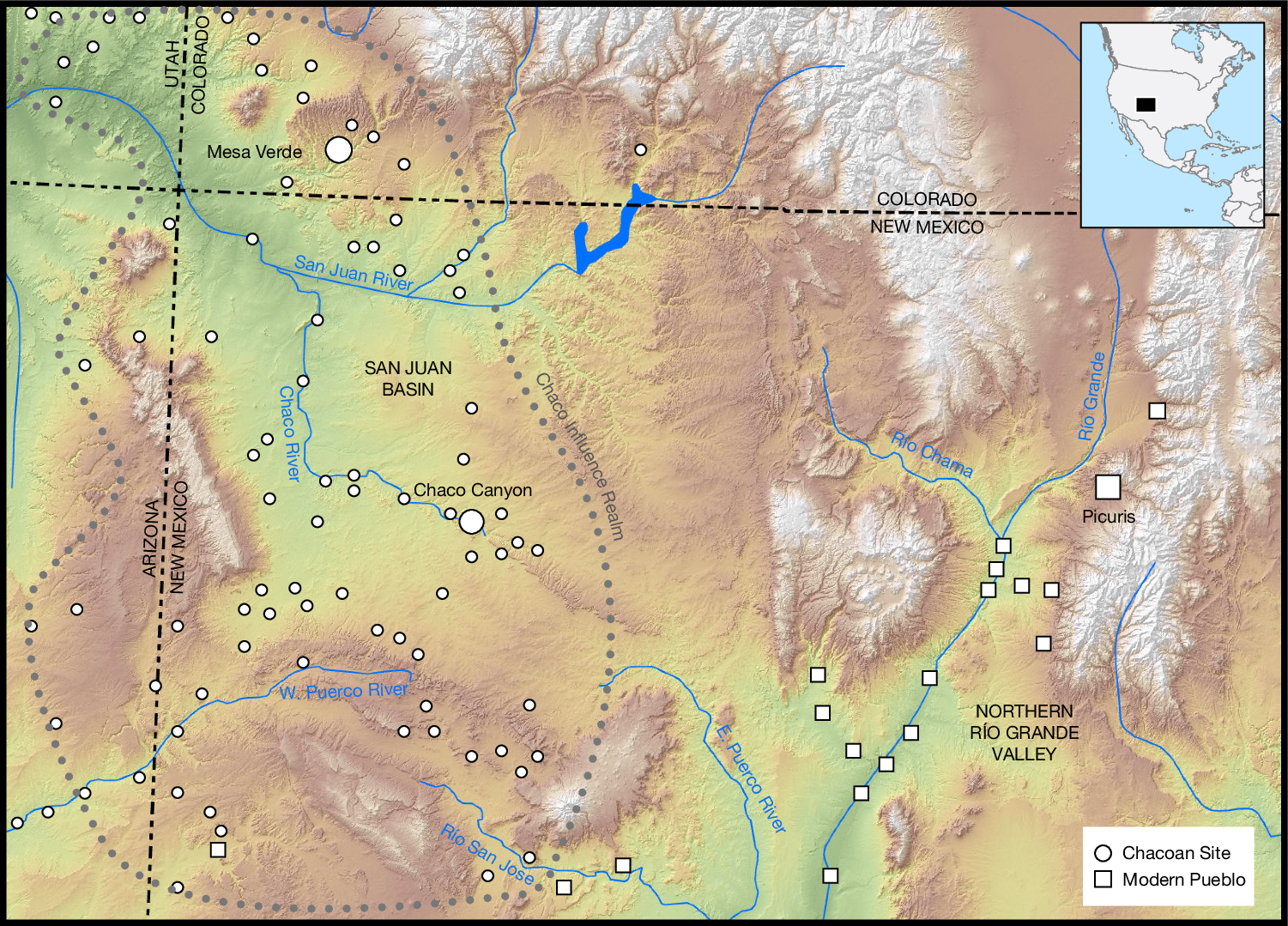
Indigenous groups often encounter significant challenges when asserting ancestral claims and cultural affiliations based on oral histories, particularly in the USA where such narratives have historically been undervalued. Although ancient DNA offers a tool to complement traditional knowledge and address gaps in oral history, longstanding disregard for Indigenous sovereignty and beliefs has understandably led many Indigenous communities to distrust DNA studies1,2,3,4. Earlier research often focused on repatriation claims5,6,7, whereas more recent work has increasingly moved towards enhancing Tribal histories8,9. Here we present a collaborative study initiated by a federally recognized Native American tribe, the sovereign nation of Picuris Pueblo in the Northern Rio Grande region of New Mexico, USA, to address gaps in traditional knowledge and further their understanding of their population history and ancestry. We generated genomes from 16 ancient Picuris individuals and 13 present-day members of Picuris Pueblo, providing genomic data spanning the last millennium. We show genetic continuity between ancient and present-day Picuris, and more broadly with Ancestral Puebloans from Pueblo Bonito in Chaco Canyon10, 275 km to the west. This suggests a firm spatiotemporal link among these Puebloan populations of the North American Southwest. Furthermore, we see no evidence of population decline before European arrival11,12,13, and no Athabascan ancestry in individuals predating 1500 ce, challenging earlier migration hypotheses14,15,16. This work prioritizes Indigenous control of genetic data and brings together oral tradition, archaeology, ethnography and genetics.