2026-08-20 ペンシルベニア州立大学(Penn State)
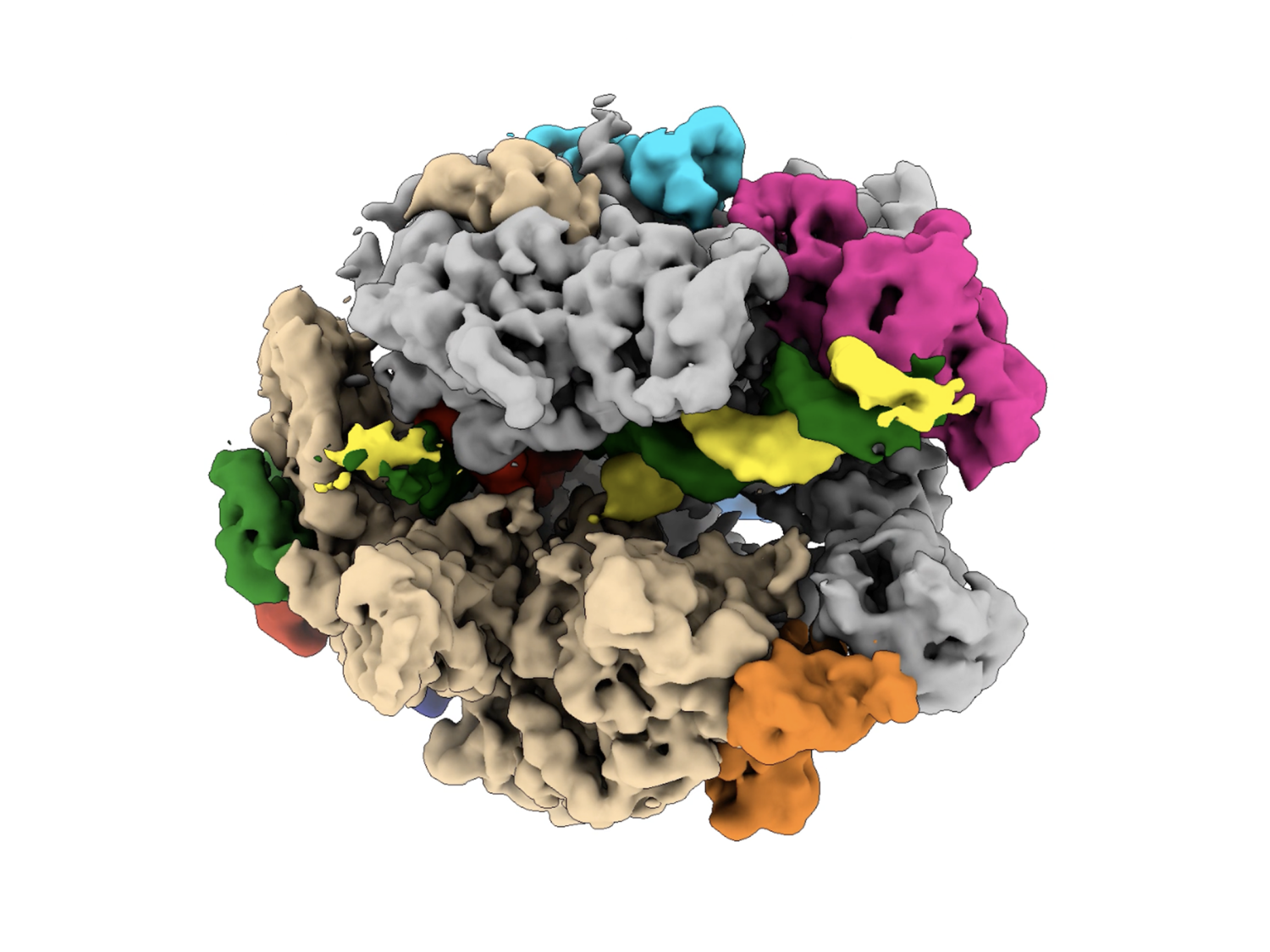
RNA polymerase II transcription complexes were isolated directly from fruit fly embryos, preserving many of the proteins, DNA, RNA and nucleosomes present in the cell.
Credit: Courtesy of Katsuhiko Murakami / Penn State. Creative Commons
<関連情報>
- https://www.psu.edu/news/research/story/messy-life-producing-cellular-process-caught-action-first-time
- https://www.nature.com/articles/s41467-026-75963-0
ショウジョウバエにおける天然RNAポリメラーゼII転写複合体およびヌクレオソームの構造的特徴付け Structural Characterization of Native RNA Polymerase II Transcription Complexes and Nucleosomes in Drosophila melanogaster
Natalie L. Venette-Smith,Rishi K. Vishwakarma,Varun Venkatakrishnan,Roberta Dollinger,Josie Schultz,Paul Babitzke,Ganesh Anand,David S. Gilmour,Jean-Paul Armache & Katsuhiko S. Murakami
Nature Communications Published:05 August 2026
DOI:https://doi.org/10.1038/s41467-026-75963-0 Early provide
Abstract
Structural studies of eukaryotic RNA polymerase II (Pol II) transcription often rely on in vitro assembly, which may not fully represent native conditions. To investigate Pol II transcription in metazoan cells, we developed a method to isolate native transcription complexes from Drosophila melanogaster embryos using FLAG-tag affinity purification and Micrococcal Nuclease treatment. Cryo-EM and proteomics studies revealed diverse transcription complexes and nucleosomes, including a metazoan Rpb4/Rpb7 stalk-less Pol II elongation complex and a hexameric nucleosome lacking an H2A/H2B dimer. Notably, nucleosome is found only downstream of the nucleosome elongation complex, underscoring it as a major energy barrier and a time-consuming step during Pol II progression through chromatin. Proteomics identified co-purified factors involved in transcription initiation, elongation, and RNA modification. This study provides a framework for investigations of transcription in cells, paving the way for future studies of transient and minor complexes.