2025-10-16 基礎生物学研究所,総合研究大学院大学
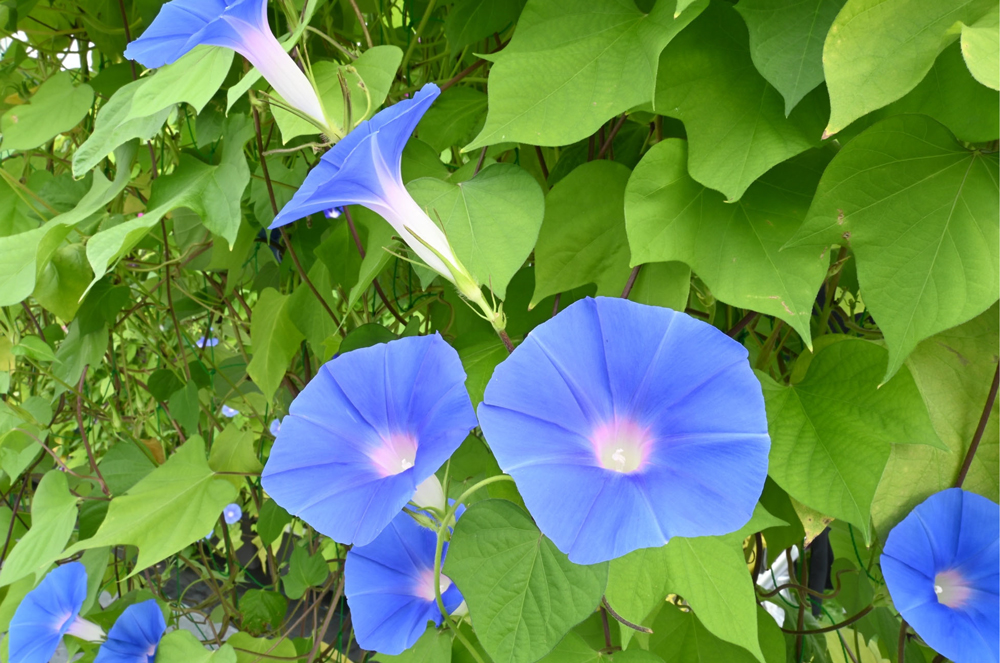
図1:データベースの開発に使ったアサガオの系統は、東京古型標準型(とうきょうこけいひょうじゅんがた)です。この系統はゲノム配列も明らかになっています。
<関連情報>
- https://www.nibb.ac.jp/press/2025/10/16.html
- https://academic.oup.com/pcp/advance-article-abstract/doi/10.1093/pcp/pcaf108/8246632
一日花植物アサガオ(Ipomoea nil) の花弁発達のトランスクリプトームダイナミクス Transcriptomic dynamics of petal development in the one-day flower species, Japanese morning glory (Ipomoea nil)
Soya Nakagawa, Atsushi Hoshino, Kazuyo Ito, Hiroyo Nishide, Katsuhiro Shiratake, Atsushi J Nagano, Yasubumi Sakakibara
Plant and Cell Physiology Published:30 September 2025
DOI:https://doi.org/10.1093/pcp/pcaf108
Abstract
Various aspects of Japanese morning glory (Ipomoea nil) petals, such as color, pattern, shape, flower opening time, and senescence, have been extensively studied. To facilitate such studies, transcriptome data were collected from flower petals at 3-h intervals over 3.5 days; the data were collected 72 h before and 12 h after flower opening, accounting for 29 time points. This dataset serves as a comprehensive foundation for analyzing transcriptomic dynamics across a wide spectrum of developmental stages, ranging from closed buds to fully opened flowers and subsequently senescing petals. Gene ontology analysis highlighted substantial transcriptomic changes between the preflowering and postflowering stages. The short-interval sampling facilitated the identification of 805 genes exhibiting circadian rhythmicity. Further transcriptome analysis provided insights into petal development, senescence, and coloration. The expression patterns of cell division marker genes indicated that cell division practically stops at ~48 h before the flower opens. Furthermore, the increased expression of genes encoding transporters for sugars, amino acids, nucleic acids, and autophagy-related genes was observed post-flower opening, indicating the translocation of nutrients from senescing petal cells to other developing tissues. Correlations were identified between the temporal expression patterns of three transcriptional regulators and distinct sets of structural genes within the anthocyanin biosynthesis pathway. These findings suggest that each regulator plays a unique role in activating specific structural genes. The temporal transcriptome data and interactive database (https://ipomoeanil.nibb.ac.jp/fpkm/) offer valuable insights into gene expression dynamics, periodicity, and correlations and provide a crucial resource for further research on I. nil and other plant species.