2026-04-22 リンショーピング大学
<関連情報>
- https://liu.se/en/news-item/lek-ger-starkare-relation-med-hunden
- https://royalsocietypublishing.org/rsos/article/13/4/252294/481415/Play-interactions-improve-the-dog-owner
遊びを通して犬と飼い主の関係を改善する Play interactions improve the dog–owner relationship
P. Jensen;Caisa Persson-Werme;Lina S. V. Roth
Royal Society Open Science Published:22 Apr 2026
DOI:https://doi.org/10.1098/rsos.252294
Abstract
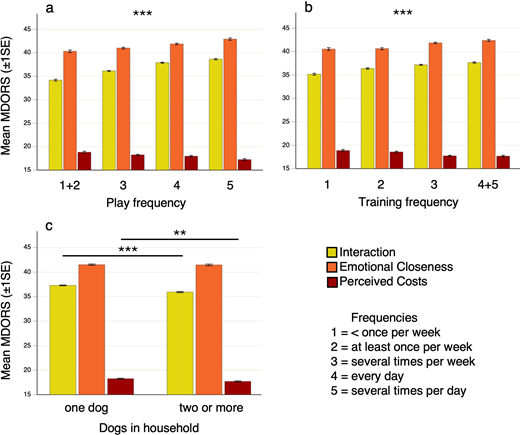
Dogs often play throughout their lives and readily engage in play with humans. In this study, we hypothesized that human–dog play interactions would influence the quality of the dog–owner relationship, more so than other interactions, such as training. First, an online survey was conducted, incorporating the Monash Dog–Owner Relationship Scale (MDORS) along with additional questions about the participants’ typical play and training routines (Study A). To investigate possible causal effects, this was followed by a four-week treatment period (Study B), in which volunteering participants were assigned to one of the three treatment groups: Play, Training or Control group. All participants completed the MDORS survey again following the treatment period. Results from Study A (n = 2940) revealed significant associations between both reported play and training frequencies on all three MDORS subscales: Dog–Owner Interaction, Emotional Closeness and Perceived Costs (p < 0.0001). Following the four-week treatment period in Study B (n = 408), only the Play group showed a significant improvement in Emotional Closeness (p = 0.018), revealing a causal effect of play on the dog–owner relationship. These findings highlight the value of this interspecies play and suggest that play has a greater impact than training on strengthening emotional closeness.