2026-05-04 ヒューストン大学(UH)
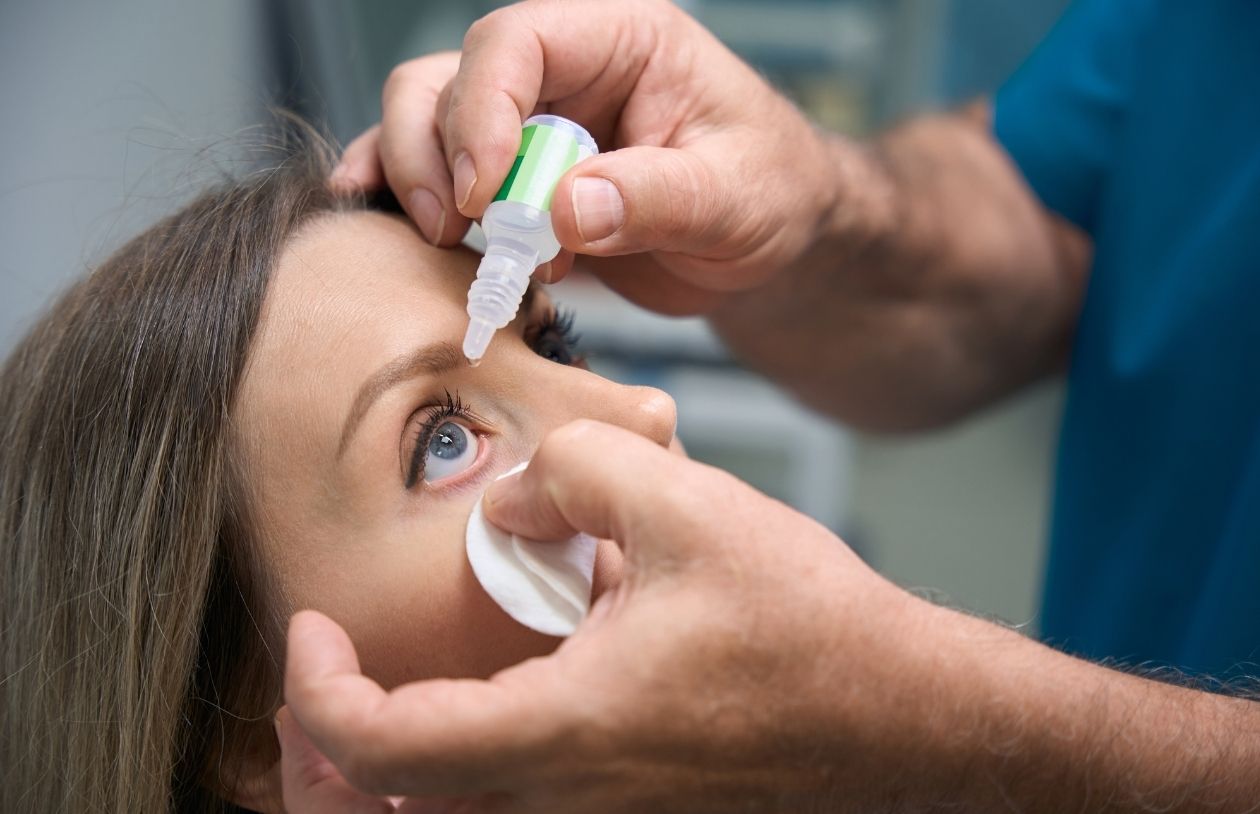
A University of Houston vision researcher has found that a single atropine drop induces early functional and vascular effects in the eye, in the absence of structural change.
<関連情報>
- https://www.uh.edu/news-events/stories/2026/may/05042026-ostrin-atropine-eye-drops.php
- https://link.springer.com/article/10.1186/s40662-026-00477-1
- https://iovs.arvojournals.org/article.aspx?articleid=2803111
若年成人におけるアトロピンの網膜および脈絡膜への短期的影響 Short-term effects of atropine on the retina and choroid in young adults
Barsha Lal & Lisa A. Ostrin
Eye and Vision Published:01 March 2026
DOI:https://doi.org/10.1186/s40662-026-00477-1
Abstract
Background
Low concentration atropine is widely prescribed to slow myopia progression in children, yet its short-term retinal and choroidal effects remain incompletely understood. This study aimed to evaluate short-term effects of a range of low atropine concentrations on axial length, retinal and choroidal thickness, and microvasculature.
Methods
In this double-masked, randomized study, twenty healthy adults received a single instillation of placebo, 0.01%, 0.025%, 0.05%, or 0.1% atropine in the right eye across five separate sessions. Retinal and choroidal thickness in the central 1.0 mm diameter and 1.0–3.0 mm annulus, perfusion density in the superficial and deep vascular complex and choriocapillaris in the central 1.0 mm and 1.0–2.5 mm annulus, foveal avascular zone and axial length were assessed at baseline and 1 h and 24 h after instillation.
Results
Participant mean age was 25.5 ± 3.4 years and mean refraction was − 1.9 ± 2.2 D. No significant changes in retinal or choroidal thickness or axial length were observed for any concentration or time point (P > 0.05). The superficial vascular plexus perfusion density in the 1.0–2.5 mm annulus showed significant decrease (P = 0.02) with time after atropine instillation, but not with concentration (P > 0.05); post hoc analysis showed significant decrease from baseline at 1 h (P = 0.03) compared to 24 h (P = 0.28).
Conclusion
These findings indicate that a single instillation of 0.01%–0.1% atropine does not alter axial length or retinal or choroidal thickness over 24 h, but may transiently affect superficial retinal perfusion in a time-dependent manner. Characterizing these short-term effects is important for a better understanding of the physiological responses to atropine in clinical and research settings.
若年成人におけるアトロピンの投与量依存的な静的および動的瞳孔径と調節機能指標への影響 Dose Dependent Effects of Atropine on Static and Dynamic Pupil and Accommodation Metrics in Young Adults
Barsha Lal; Hope M. Queener; Lisa A. Ostrin
Investigative Ophthalmology & Visual Science Published: June 2025
DOI:https://doi.org/10.1167/iovs.66.6.34
Abstract
Purpose: The purpose of this study was to investigate short-term effects of a range of low-dose atropine concentrations on static and dynamic pupil and accommodation metrics in young adults.
Methods: This double blinded study tested pupil and accommodation metrics at baseline and 1 hour and 24 hours after topical instillation of a single drop of placebo, 0.01%, 0.025%, 0.05%, and 0.1% atropine in the right eyes of 20 healthy adults (18–35 years). Static pupil diameter was measured under photopic, mesopic, and scotopic illumination, and dynamic responses were recorded as illumination changed from 0.3 to 140 lux using a pupillometer (MYAH). Peak constriction and dilation velocities were extracted. Accommodative lag and maximum accommodation were determined (WAM-5500) and dynamic responses were recorded for targets at 33 cm and 6 m (PowerRef). Dynamic responses were fitted with exponential functions to calculate amplitude, time constant, and peak velocities.
Results: Static pupil diameters under all lighting conditions and dynamic metrics, including constriction amplitude and peak constriction and dilation velocities, showed significant dose-response effects at 1 hour and 24 hours (P < 0.05 for all). Maximum accommodation significantly decreased at 1 hour and 24 hours after atropine administration compared to placebo for all concentrations (P < 0.05 for all). Accommodative time constant increased and peak velocity decreased over 24 hours after atropine administration (P < 0.05). On the other hand, accommodative and disaccommodative amplitudes, disaccommodative time constant, and peak velocity did not significantly change after atropine administration (P > 0.05).
Conclusions: A single drop of 0.01%, 0.025%, 0.05%, and 0.1% atropine induced significant changes in static and dynamic pupil and accommodation metrics in a dose-dependent manner in young adults.