2026-06-04 ブラウン大学
◆研究では、大麻使用歴のある若者においてドーパミン系の反応性や調節機能に変化が認められ、脳の発達過程に影響を及ぼす可能性が示唆された。こうした変化は認知機能や情動制御、依存症リスクなどに関係する可能性がある。一方で、因果関係の完全な解明にはさらなる研究が必要であり、遺伝的要因や環境要因の影響も考慮する必要がある。研究者らは、脳が発達途上にある思春期における大麻使用について慎重な評価が必要であると指摘している。
◆本研究は、大麻の健康影響に関する理解を深めるとともに、若年者の公衆衛生対策や予防教育の科学的基盤を提供するものである。
<関連情報>
- https://www.brown.edu/news/2026-06-04/teen-cannabis-use-dopamine
- https://www.nature.com/articles/s41386-026-02444-9
青年期の大麻使用におけるドーパミン神経生理学の指標としての皮質下脳組織鉄の役割 The role of subcortical brain tissue iron as an indicator of dopamine neurophysiology in adolescent cannabis use
Sarah A. Thomas,Meghan A. Gonsalves,Gillian LeBlanc,Elizabeth Lorenc,Jane Metrik,Michael Frank,Sarah Ryan,Emily Olenik,Leslie Brick,Anthony Spirito & Jodi Gilman
Neuropsychopharmacology Published:02 June 2026
DOI:https://doi.org/10.1038/s41386-026-02444-9
Abstract
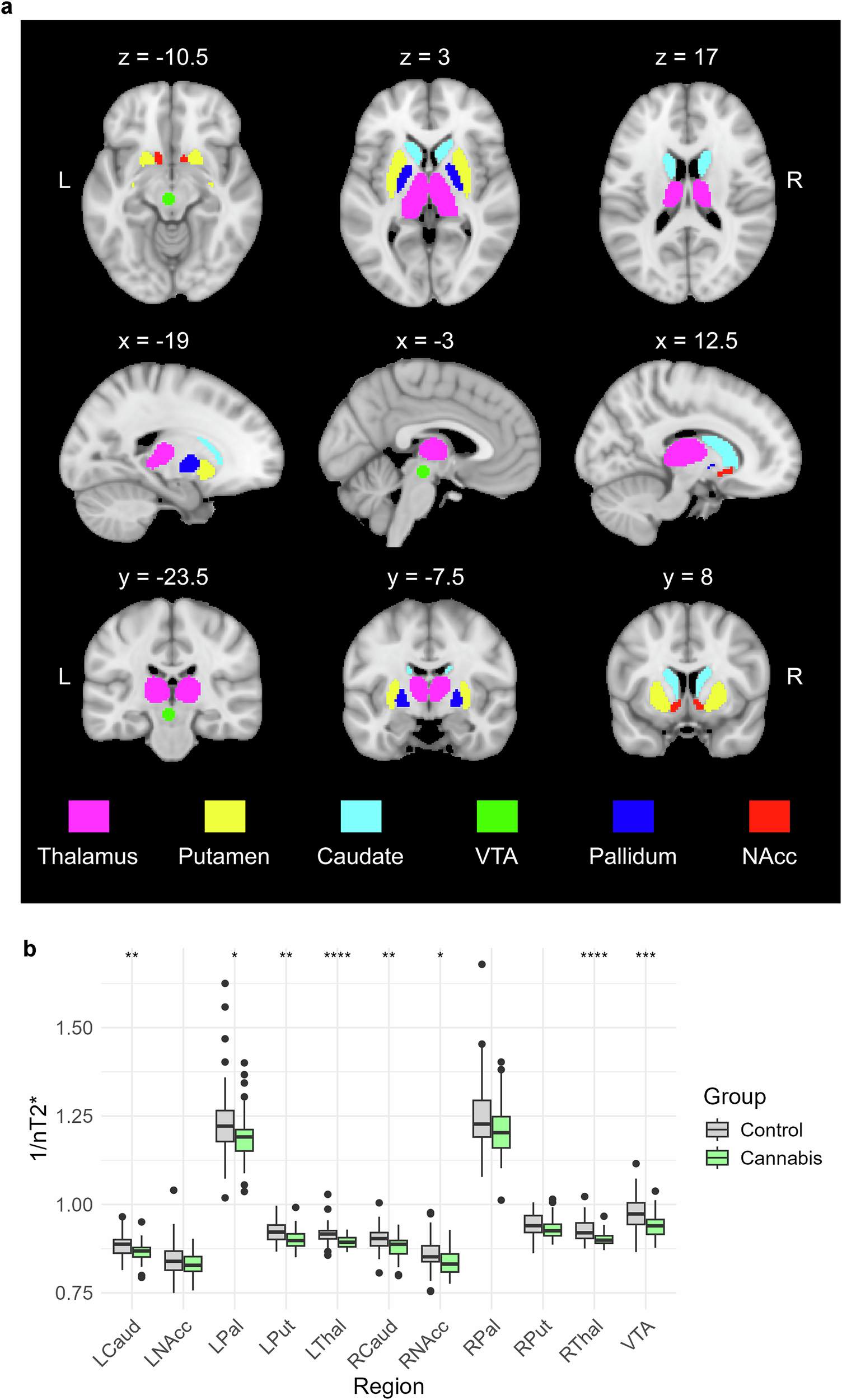
Approximately 10–20% of U.S. adolescents report past-year cannabis use (CU). Although regular CU beginning in adolescence is expected to blunt dopamine-related neurophysiology, this hypothesis has not been tested in adolescents due to methodological limitations. However, neurophysiology contributing to dopamine can be noninvasively indexed via subcortical tissue iron measured with magnetic resonance imaging (MRI). We examined adolescent CU quantity, frequency, and problems in relation to tissue iron in regions with high dopamine activity, hypothesizing that greater CU would be linked to less tissue iron. Adolescents (n = 81; 64.2% female) aged 14–17 reporting either fewer than 5 lifetime cannabis episodes (n = 47) or more than 11 episodes (n = 34), with limited alcohol and nicotine use and no other illicit substance use, completed substance use assessments and an MRI. We calculated the inverse of the normalized T2* measurement (1/nT2*; lower values indicate less tissue iron) from resting-state functional scans by assessing relative T2* decay. 1/nT2* was estimated using subcortical masks for hypothesized regions. Lower 1/nT2* signal was associated with increased daily concentrate hits (b = –0.01, p < 0.001), cannabis hours high (b = –0.01, p = 0.016), CU frequency (b = -0.01, p = 0.01), and cannabis use disorder (CUD) severity (b = –0.01, p = 0.003). Post-hoc analyses highlighted the VTA as a key region. Results align with reduced dopamine-related neurophysiology associated with CU in adult and animal samples, and have implications for understanding adolescent CUD development. Measuring 1/nT2* offers an innovative, non-invasive method to index neurobiological alterations in adolescent CU.