2026-07-08 カリフォルニア大学リバーサイド校(UCR)
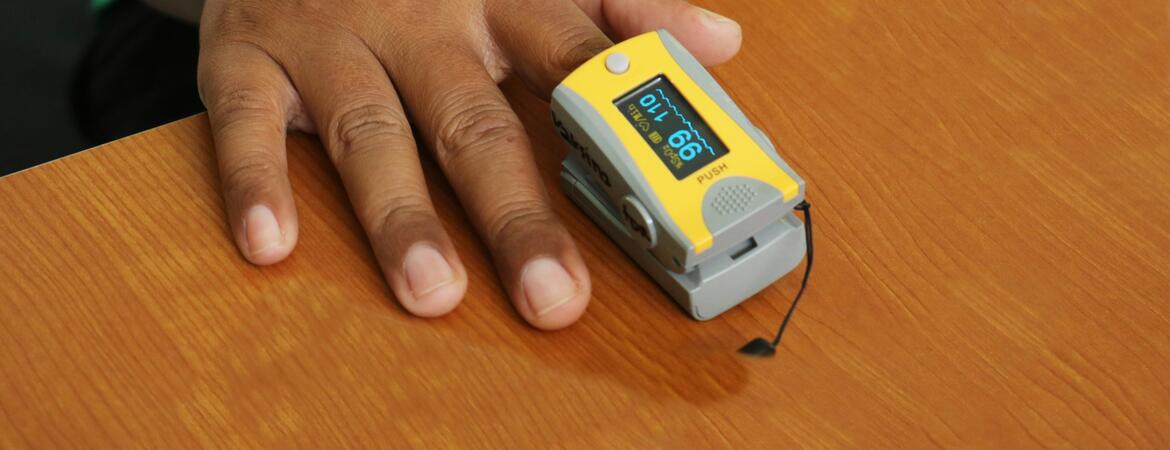
Header image credit: Mufid Majnun on Unsplash
<関連情報>
- https://news.ucr.edu/articles/2026/07/08/dyspnea-matters-normal-oxygen-levels-may-hide-silent-suffocation
- https://www.sciencedirect.com/science/article/abs/pii/S1569904826000315
非侵襲性バイオマーカーを用いた呼吸困難予測のための機械学習アプローチ A machine learning approach to predicting dyspnea with noninvasive biomarkers
Karapet G. Mkrtchyan, Anser Qazi, Borena Lonh, Andrew Dong, Gustavo O. Ramirez, Mona Eskandari, Shujie Ma, Wei Vivian Li, Erica C. Heinrich
Respiratory Physiology & Neurobiology Available online: 12 April 2026
DOI:https://doi.org/10.1016/j.resp.2026.104572
Highlights
- There is significant individual variation in dyspnea severity during free breathing.
- Dyspnea in free-breathing individuals can be predicted using noninvasive biomarkers.
- Machine-learning prediction models are more accurate than observational estimates.
- Subjective symptoms can be predicted using noninvasive biomarker inputs.
Abstract
Dyspnea is the subjective sensation of breathing discomfort. This symptom is highly prevalent in patients with chronic and critical illness, and its presence is associated with poor clinical outcomes and long-term psychological trauma. The multidimensional nature of the neurophysiological mechanisms underlying dyspnea, paired with individual variation in its presentation, makes identifying and monitoring this symptom difficult, particularly in non-communicative patients. Undetected and untreated dyspnea in critically ill patients is a significant problem contributing to patient suffering. Therefore, the objective of this study was to investigate the feasibility of machine learning methods for assessing and continuously monitoring dyspnea using easily obtained noninvasive biomarkers. We recruited healthy participants (N = 60, 35 women) and stimulated dyspnea using a forced end-tidal semi-rebreathing circuit to modulate arterial oxygen and carbon dioxide levels while collecting non-invasive biomarker data and continuous self-reported dyspnea severity scores. This data was used to train machine-learning models to predict the presence or absence of significant dyspnea (Numeric Rating Scale ≥ 3). We then compared the performance of our final model to observational estimates by trained healthcare providers. The final model (Random Forest) performed well (PR-AUC=0.822) and exceeded the accuracy of observation estimates made on the same participants using the Respiratory Distress Observational Scale (RDOS) (accuracy=54%). These results indicate that machine learning models can utilize non-invasive biomarker inputs to accurately predict carbon dioxide- and hypoxia-induced dyspnea in a healthy population during spontaneous breathing.