2026-10-19 長寿医療研究センター研究所
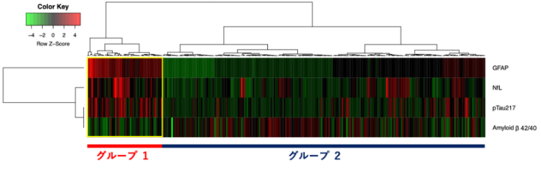
図1 血液バイオマーカーに基づく、MCIグループの同定
<関連情報>
- https://www.ncgg.go.jp/ri/report/20261006-1.htm
- https://alz-journals.onlinelibrary.wiley.com/doi/10.1002/trc2.70329
血液バイオマーカーとゲノム変異の統合により、多領域介入から恩恵を受ける軽度認知障害患者が特定される Integration of blood-based biomarkers and genomic variants identifies individuals with mild cognitive impairment who benefit from multidomain intervention
Tetsuaki Kimura, Akinori Nakamura, Taiki Sugimoto, Tomomi Satou, Naoyuki Sato, Shumpei Niida, Kouichi Ozaki, Takashi Sakurai, Hidenori Arai, …
Alzheimer’s & Dementia: Translational Research & Clinical Interventions Published: 16 October 2026
DOI:https://doi.org/10.1002/trc2.70329
Abstract
INTRODUCTION
Our recent Japan-Multimodal Intervention Trial for the Prevention of Dementia (J-MINT) trial suggested that multidomain lifestyle interventions may delay cognitive decline. However, substantial interindividual variability in response persists, and identifying individuals more likely to benefit from the intervention remains challenging. Blood-based biomarkers (BBMs), which provide a minimally invasive means of assessing Alzheimer’s disease (AD)-related pathological processes, may help identify biologically distinct subgroups of individuals with mild cognitive impairment (MCI).
METHODS
Blood-based biomarkers—including amyloid-β42/40 ratio, phosphorylated tau-217, neurofilament light chain, and glial fibrillary acidic protein (GFAP)—were measured in J-MINT participants. Hierarchical clustering based on BBM profiles was used to identify biologically defined subgroups. Whole-genome sequencing data were analyzed using genome-wide association analysis (GWAS) to identify genetic variants associated with the BBM-based subgroup. A prediction model for the subgroup assignment was constructed using the associated incorporating the genetic variants, age, sex, and apolipoprotein E4 (APOE4) allele count. Model performance was evaluated using five-fold cross-validation repeated 1000 times.
RESULTS
BBM-based clustering identified a subgroup characterized by elevated GFAP and multiple biomarker abnormalities. Within this subgroup, the change in cognitive performance from baseline to 18 months differed significantly between intervention and control groups, with greater decline observed in the control group. GWAS identified four variants showing suggestive association with the subgroup, two of which were located in intronic regions of genes associated with hearing loss (PCDH15 and ATP11A).
DISCUSSION
BBM-based clustering identified biologically distinct subgroups among individuals with MCI. The subgroup characterized by multiple biomarker abnormalities and elevated GFAP showed differential cognitive trajectories between the intervention and control groups. These findings suggest that BBMs, potentially in combination with genetic information, may help identify individuals with a more progressive AD-related biological profile who may derive greater benefit from multidomain intervention.
Highlights
- Japanese participants with mild cognitive impairment (MCI) were classified into two groups based on blood-based biomarker (BBM) profiles.
- The subgroup characterized by elevated glial fibrillary acidic protein (GFAP) and multiple biomarker abnormalities showed a significant difference in CPS change between the intervention and control groups.
- Genetic analysis identified four variants that showed suggestive association with the subgroup.
- Two of these four variants were located in genes related to hearing loss.