2022-06-30 ジョージア工科大学
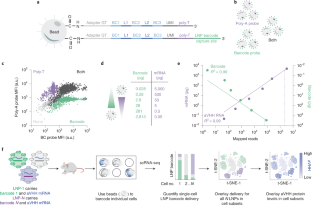
彼らの仮説を検証するために、研究者達は、これら全てを一度に測定する新しいツールを開発しました。このマルチオミック・ナノ粒子導入システムは、シングルセル・ナノ粒子ターゲティング・シーケンス(SENT-seq)と呼ばれるものである。
マルチオミクスアプローチは、ハイスループットLNP探索のための重要な飛躍を意味する可能性があります。SENT-seq技術により、研究チームは、ナノ粒子の取り込みが特に高いか低いかを示す細胞のサブタイプ、およびそれらのサブタイプに関連する遺伝子を特定することができた。
つまり、薬剤の有効性と特定の細胞サブタイプがナノ粒子にどのように反応するかをテストするだけでなく、どの遺伝子がLNPのうまく取り込まれることに関与しているかを特定するのです。そして、それをすべて一度にやっている。
このデータは、これらの異なる細胞サブセットが、ナノ粒子に対して異なる反応をして、mRNA治療の効果に影響を与えることを示唆している。
<関連情報>
- https://bme.gatech.edu/news/all-one-sequencing-key-improving-lipid-nanoparticle-effectiveness
- https://www.nature.com/articles/s41565-022-01146-9
ナノ粒子のシングルセルマルチオミクスリードアウトにより、細胞の不均一性が脂質ナノ粒子を介したメッセンジャーRNA送達に影響することが明らかに。 Nanoparticle single-cell multiomic readouts reveal that cell heterogeneity influences lipid nanoparticle-mediated messenger RNA delivery
Curtis Dobrowolski,Kalina Paunovska,Elisa Schrader Echeverri,David Loughrey,Alejandro J. Da Silva Sanchez,Huanzhen Ni,Marine Z. C. Hatit,Melissa P. Lokugamage,Yanina Kuzminich,Hannah E. Peck,Philip J. Santangelo & James E. Dahlman
Nature Nanotechnology Published:30 June 2022
DOI:https://doi.org/10.1038/s41565-022-01146-9
Abstract
Cells that were previously described as homogeneous are composed of subsets with distinct transcriptional states. However, it remains unclear whether this cell heterogeneity influences the efficiency with which lipid nanoparticles (LNPs) deliver messenger RNA therapies in vivo. To test the hypothesis that cell heterogeneity influences LNP-mediated mRNA delivery, we report here a new multiomic nanoparticle delivery system called single-cell nanoparticle targeting-sequencing (SENT-seq). SENT-seq quantifies how dozens of LNPs deliver DNA barcodes and mRNA into cells, the subsequent protein production and the transcriptome, with single-cell resolution. Using SENT-seq, we have identified cell subtypes that exhibit particularly high or low LNP uptake as well as genes associated with those subtypes. The data suggest that cell subsets have distinct responses to LNPs that may affect mRNA therapies.