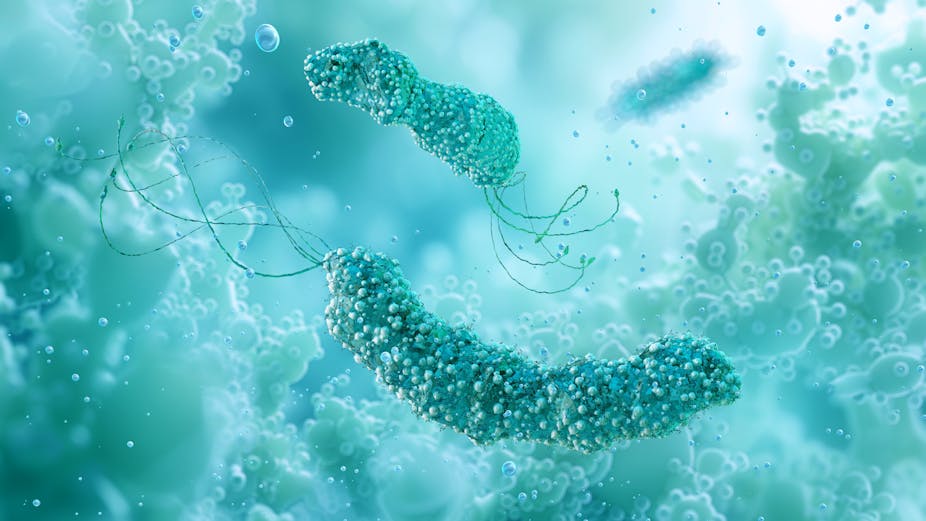
2025-06-27 カロリンスカ研究所(KI)
<関連情報>
- https://theconversation.com/alzheimers-bacteria-that-cause-stomach-ulcers-may-protect-the-brain-our-new-research-indicates-259018
- https://www.science.org/doi/full/10.1126/sciadv.ads7525
ヘリコバクター・ピロリ菌CagAタンパク質は強力で幅広いアミロイド阻害剤である Helicobacter pylori CagA protein is a potent and broad-spectrum amyloid inhibitor
Zhen Jin, William Pallisgaard Olsen, Cecilia Mörman, Axel Leppert, […] , and Gefei Chen
Science Advances Published:11 Jun 2025
DOI:https://doi.org/10.1126/sciadv.ads7525
Abstract
Bacteria, the smallest and most abundant life forms on Earth, have been a source of insights that have had a considerable impact on human health. Helicobacter pylori has captured substantial attention due to its role in provoking an array of gastrointestinal ailments and other human diseases. Here, we report that H. pylori releases the protein CagA (cytotoxin-associated gene A) that strongly inhibits formation of both functional (bacterial biofilm) and pathogenic amyloid assemblies by targeting various stages during fibril formation. CagA’s broad substrate specificity reveals a mechanism whereby H. pylori interferes with other bacteria and humans, offering approaches to combat bacterial infections and human protein misfolding diseases.