2025-10-15 デラウェア大学(UD)
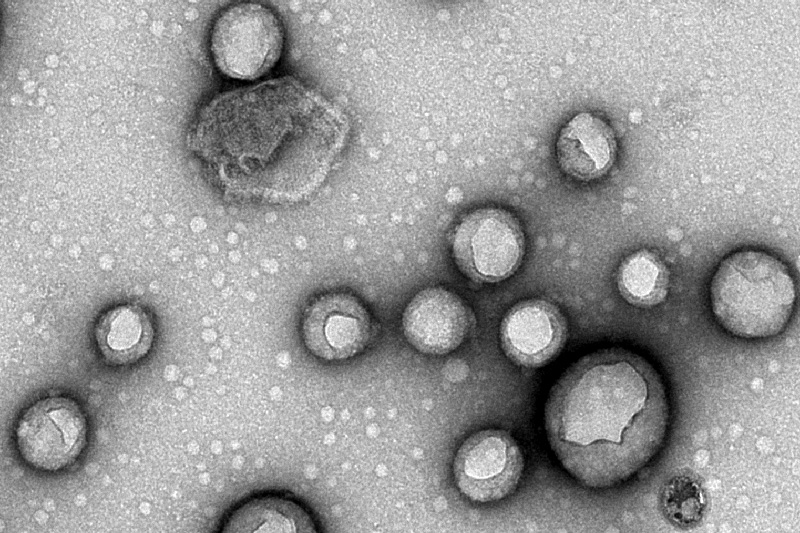
Microscopic image of membrane-wrapped nanoparticles with protein coronas.
<関連情報>
- https://www.udel.edu/udaily/2025/october/precision-nanomedicine-protein-corona/
- https://www.pnas.org/doi/10.1073/pnas.2507922122
膜に包まれたナノ粒子の造血幹細胞および前駆細胞への取り込みとマクロファージによる除去に対するタンパク質コロナの影響 Influence of the protein corona on hematopoietic stem and progenitor cell uptake and macrophage clearance of membrane-wrapped nanoparticles
Eric H. Sterin, Laura A. Weinstein, Ashish Tiwari, +3 , and Emily S. Day
Proceedings of the National Academy of Sciences Published:September 29, 2025
DOI:https://doi.org/10.1073/pnas.2507922122
Significance
Nanoparticles coated with cell-derived membranes [membrane-wrapped nanoparticles (MWNPs)] can better evade immune recognition and target specific cells than unwrapped nanoparticles (NPs). However, as with most NPs, a majority of these MWNPs are retained in the liver and spleen, potentially due to protein corona (PC)-mediated uptake. This study used a combination of in vitro and in vivo investigations to understand the relationship between the PC, targeting, and clearance of MWNPs and unwrapped NPs. We found that both inherent targeting mechanisms of MWNPs and the proteins that adsorb to MWNPs after intravenous injection impact their overall biodistribution and interactions with target or immune cells. These findings could enable rational design of MWNPs to control the PC and enhance targeting success.
Abstract
The ideal delivery of therapeutic nanoparticles (NPs) to specific sites requires evading immune clearance and selectively binding target cells. Wrapping NPs in cell-derived membranes has shown promise in improving targeted delivery, but the mechanisms underlying this phenomenon are not fully understood. Protein corona (PC) formation on NPs can significantly alter their biological identity to influence biodistribution, making its characterization on membrane-wrapped NPs (MWNPs) and unwrapped NPs crucial. In this study, we compared MWNPs incorporating membranes derived from megakaryoblastic CHRF-288-11 cells, which can accumulate in bone marrow (BM) and preferentially bind hematopoietic stem and progenitor cells (HSPCs), with unwrapped NPs. We investigated differences in PC composition, macrophage uptake, target cell uptake, and biodistribution in wild type (WT) mice and knockout mice that have low or absent expression of different opsonin proteins. In vitro, MWNPs with a PC exhibited increased target cell uptake and decreased macrophage uptake compared to unwrapped NPs with a PC. Proteomics revealed apolipoprotein B as the dominant opsonin on both NP types after incubation in mouse, bovine, or human serum, with other proteins like complement, immunoglobulins, and apolipoproteins also being present. Biodistribution studies indicated a complex interplay between the PC and targeting/clearance, where complement component 3 and immunoglobulin G adsorption on MWNPs led to macrophage clearance but also enabled HSPC targeting. Meanwhile, apolipoprotein E adsorption facilitated hepatocyte clearance but reduced immune cell uptake in the liver. Future research on PCs could determine whether these mechanisms are generalizable to other types of MWNPs, potentially revealing strategies to enhance their effectiveness as delivery systems.