
2026-02-15 清華大学
<関連情報>
- https://www.tsinghua.edu.cn/en/info/1245/14708.htm
- https://www.nature.com/articles/s41587-025-02942-z
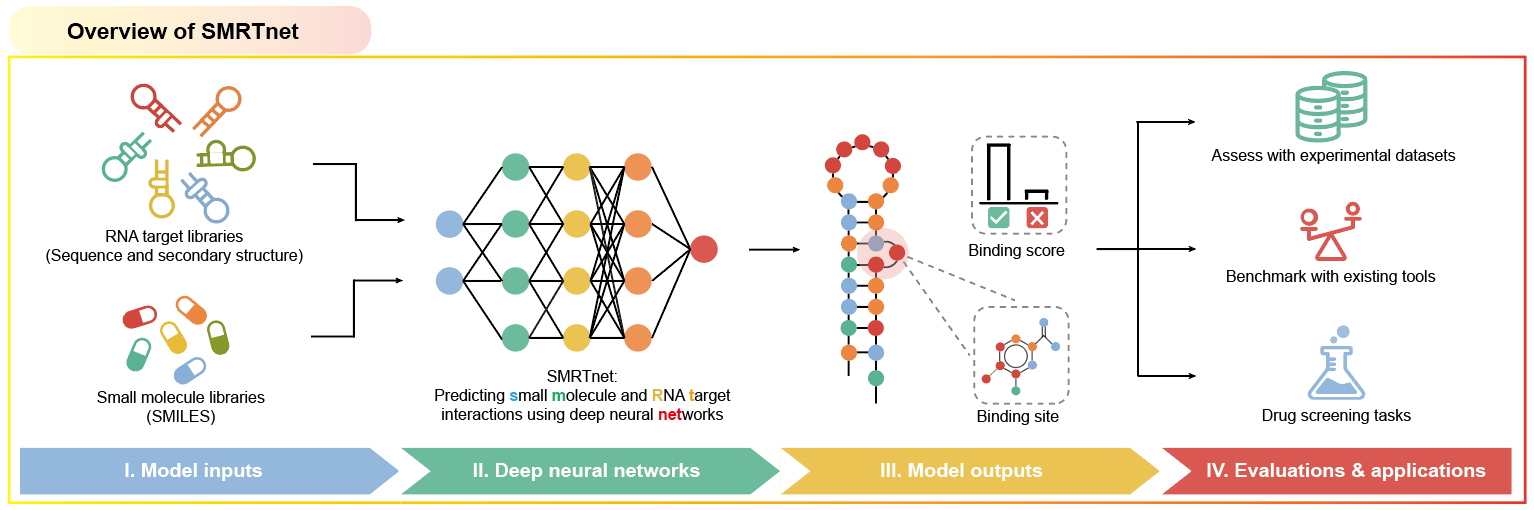
RNA三次構造を考慮せずに小分子とRNAの相互作用を予測する Predicting small molecule–RNA interactions without RNA tertiary structures
Yuhan Fei,Pengfei Wang,Jiasheng Zhang,Xinyue Shan,Zilin Cai,Jianbo Ma,Yangming Wang & Qiangfeng Cliff Zhang
Nature Biotechnology Published:02 January 2026
DOI:https://doi.org/10.1038/s41587-025-02942-z
Abstract
Small molecules can bind RNAs to regulate their fate and functions, providing promising opportunities for treating human diseases. However, current tools for predicting small molecule–RNA interactions (SRIs) require prior knowledge of RNA tertiary structures. Here we present SMRTnet, a deep learning method that uses multimodal data fusion to integrate two large language models with convolutional and graph attention networks to predict SRIs on the basis of RNA secondary structure. SMRTnet achieves high performance across multiple experimental benchmarks, substantially outperforming existing tools. SMRTnet predictions for ten disease-associated RNA targets identified 40 hits of RNA-targeting small molecules with nanomolar-to-micromolar dissociation constants. Focusing on the MYC internal ribosome entry site, SMRTnet-predicted small molecules showed binding scores correlated closely with observed validation rates. One predicted small molecule downregulated MYC expression, inhibited proliferation and promoted apoptosis in three cancer cell lines. Thus, by eliminating the need for RNA tertiary structures, SMRTnet expands the scope of feasible RNA targets and accelerates the discovery of RNA-targeting therapeutics.
00178-5/asset/a065a39e-56f3-47f5-a861-d26b302b3d6d/main.assets/gr1_lrg.jpg "再発性尿路感染症に対する予防的抗生物質が耐性リスクを増大 (Preventive antibiotics for recurrent UTIs increase the risk of antibiotic resistance)")