2026-03-26 マサチューセッツ工科大学(MIT)
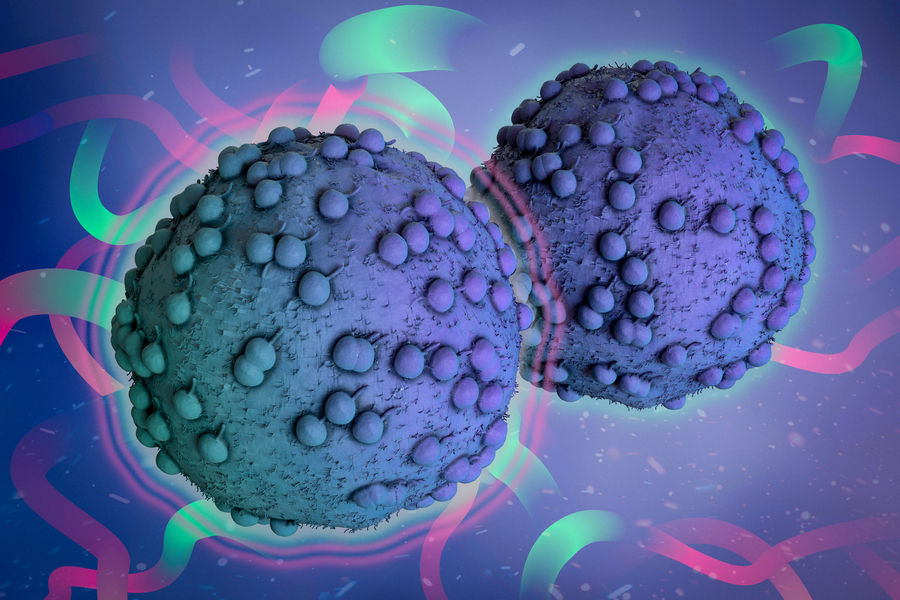
“Even before the therapy begins, the cells are in a state that intrinsically is resistant to the drug,” Cameron Flower says.Credit: MIT News; iStock
<関連情報>
- https://news.mit.edu/2026/study-reveals-why-some-cancer-therapies-dont-work-all-patients-0326
- https://www.pnas.org/doi/10.1073/pnas.2522090123
チロシンリン酸化プロテオーム解析により、チロシンキナーゼ阻害剤療法の有効性を制限する細胞内在性シグナルが特定される Tyrosine phosphoproteome profiling identifies cell-intrinsic signals limiting the efficacy of tyrosine kinase inhibitor therapies
Cameron T. Flower and Forest M. White
Proceedings of the National Academy of Sciences Published:March 25, 2026
DOI:https://doi.org/10.1073/pnas.2522090123
Significance
The last 25 y have seen a remarkable number of new anticancer therapies specifically targeting tyrosine kinases, which frequently drive tumorigenesis when hyperactive. While these therapies have brought undeniable improvements in survival time and quality of life for a large fraction of patients, many still do not respond to inhibitors aimed at their presumed driver kinase. By profiling tumor cell–intrinsic signaling networks using phosphotyrosine immunoaffinity pulldown and high-sensitivity mass spectrometry, we directly compare the signaling networks of drug-tolerant and drug-sensitive cancer cell lines across several oncogenic driver contexts and find both unique and shared signals promoting therapy tolerance.
Abstract
Tyrosine kinases (TKs) are frequently mutated or overexpressed in cancer, and TK inhibitors (TKIs) are an important therapeutic modality against TK-driven cancers, but many patients show an underwhelming response to TKIs prescribed on the basis of tumor genotype. To find cell-intrinsic TK signaling patterns which might be predictive of poor response to TKI therapies, we used high-sensitivity multiplexed mass spectrometry to quantify endogenous levels of 1,222 phosphotyrosine (pY) sites across the proteomes of TK-driven human cancer cell lines with variable response to genotype-matched TKIs. In direct comparisons between TKI-tolerant and TKI-sensitive lines with a common driver TK, we found that TKI treatment was equally effective at blocking driver TK signaling, and higher basal activity of the driver TK did not always predict higher sensitivity to TKI. All tolerant lines showed a dampened proteome-wide pY response to TKI exposure compared to sensitive lines, suggesting that tumor cells with more robust TK signaling are less vulnerable to driver TK blockade. We found that each tolerant line depends on a unique set of compensatory TKs and signaling axes but are unified by hyperactivity of at least one of the SRC family kinases (SFKs) or the related ABL1/2 kinases, both at rest and under TKI treatment, despite the absence of SFK or ABL genetic mutations. In time- and dose-resolved drug combination experiments, SFK/ABL inhibitors were potently synergistic with all TKIs tested, demonstrating that elevated SFK/ABL signaling is a conserved bottleneck for maximal TKI efficacy which could be exploited therapeutically.