2026-03-20 ラトガース大学
<関連情報>
- https://www.rutgers.edu/news/genes-tied-impulse-control-play-major-role-addiction-risk
- https://www.nature.com/articles/s44220-026-00608-6
220万人を対象とした多変量遺伝子解析により、広範かつ物質特異的な依存症リスク経路が明らかになった Multivariate genetic analyses of 2.2 million individuals reveal broad and substance-specific pathways of addiction risk
Holly E. Poore,Chris Chatzinakos,Brittany Leger,Jean Gonzalez,Travis T. Mallard,Fazil Aliev,Alexander Hatoum,Irwin D. Waldman,Sandra Sanchez-Roige,Abraham A. Palmer,K. Paige Harden,Danielle M. Dick & Peter B. Barr
Nature Mental Health Published:20 March 2026
DOI:https://doi.org/10.1038/s44220-026-00608-6
Abstract
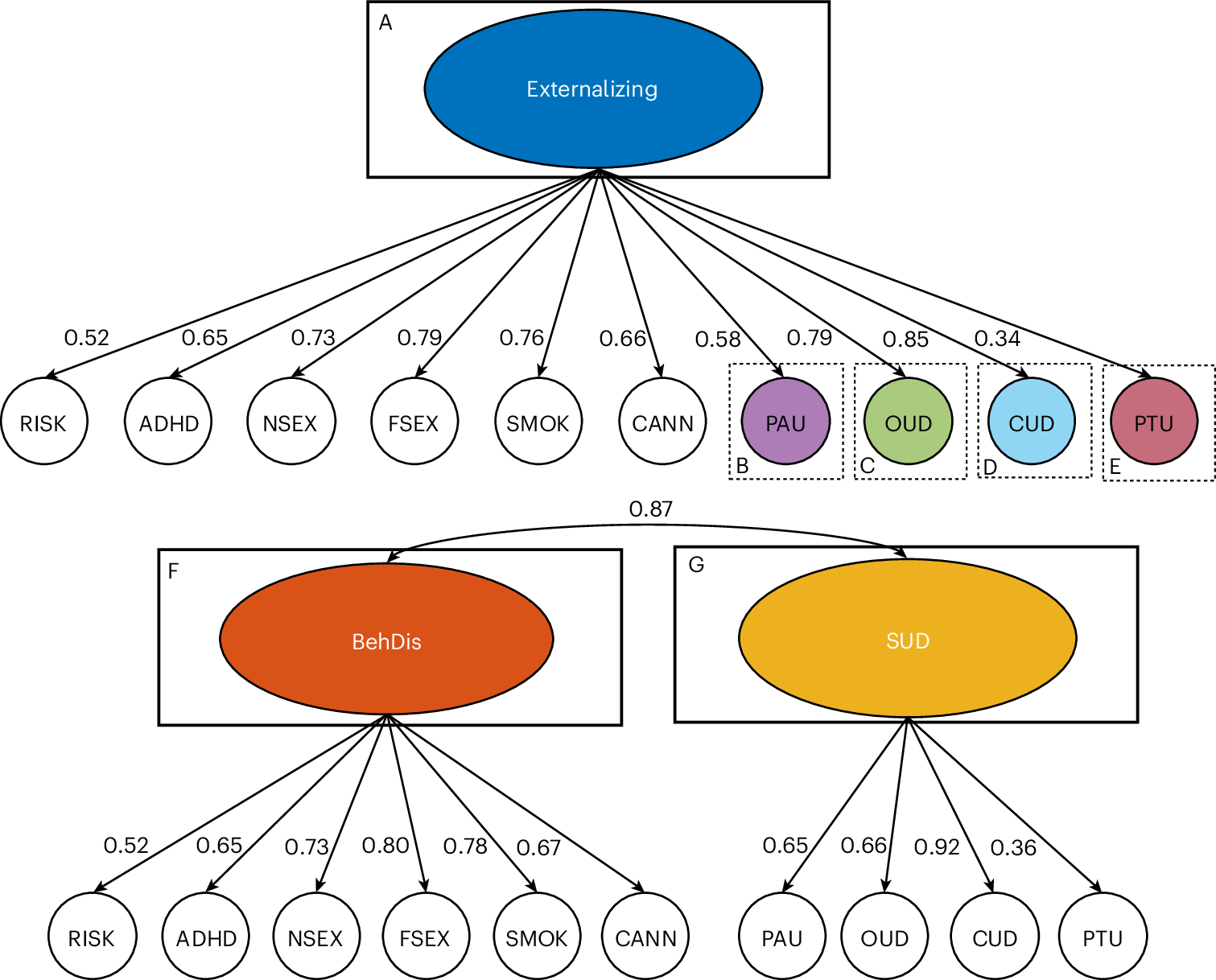
Ongoing efforts to identify genes involved in substance use disorders (SUDs) often focus on individual disorders despite high rates of co-occurrence with each other and other externalizing traits. Here we investigate whether incorporating data on other externalizing traits can boost power to detect without sacrificing specificity of SUD genetic signal. We used multivariate genomic analyses and downstream biological annotation and genetic association analyses to explore this question. We found that joint analysis of SUDs and other externalizing traits resulted in increased insights into the neurobiology of broad and substance-specific SUD risk. We found no evidence of loss of specificity for SUD genetic signal but note improvements in our ability to characterize the neurobiology of broad and substance-specific SUD genetic effects. Our findings suggest that genetic risk for SUDs operates largely via pathways shared with other behaviors characterized by behavioral disinhibition, with additional substance-specific risk, and that modeling this shared disposition improves gene discovery.