2026-06-03 ジョンズ・ホプキンス大学((JHU)
<関連情報>
- https://hub.jhu.edu/2026/06/03/habits-form-faster-than-previously-thought/
- https://www.nature.com/articles/s41467-026-71048-0
目標指向行動から習慣的行動への急激な移行を明らかにする Revealing abrupt transitions from goal-directed to habitual behavior
Sharlen Moore,Zyan Wang,Ziyi Zhu,Joy Wang,Ruolan Sun,Yeonjae A. Lee,Adam Charles & Kishore V. Kuchibhotla
Nature Communications Published:31 March 2026
DOI:https://doi.org/10.1038/s41467-026-71048-0
Abstract
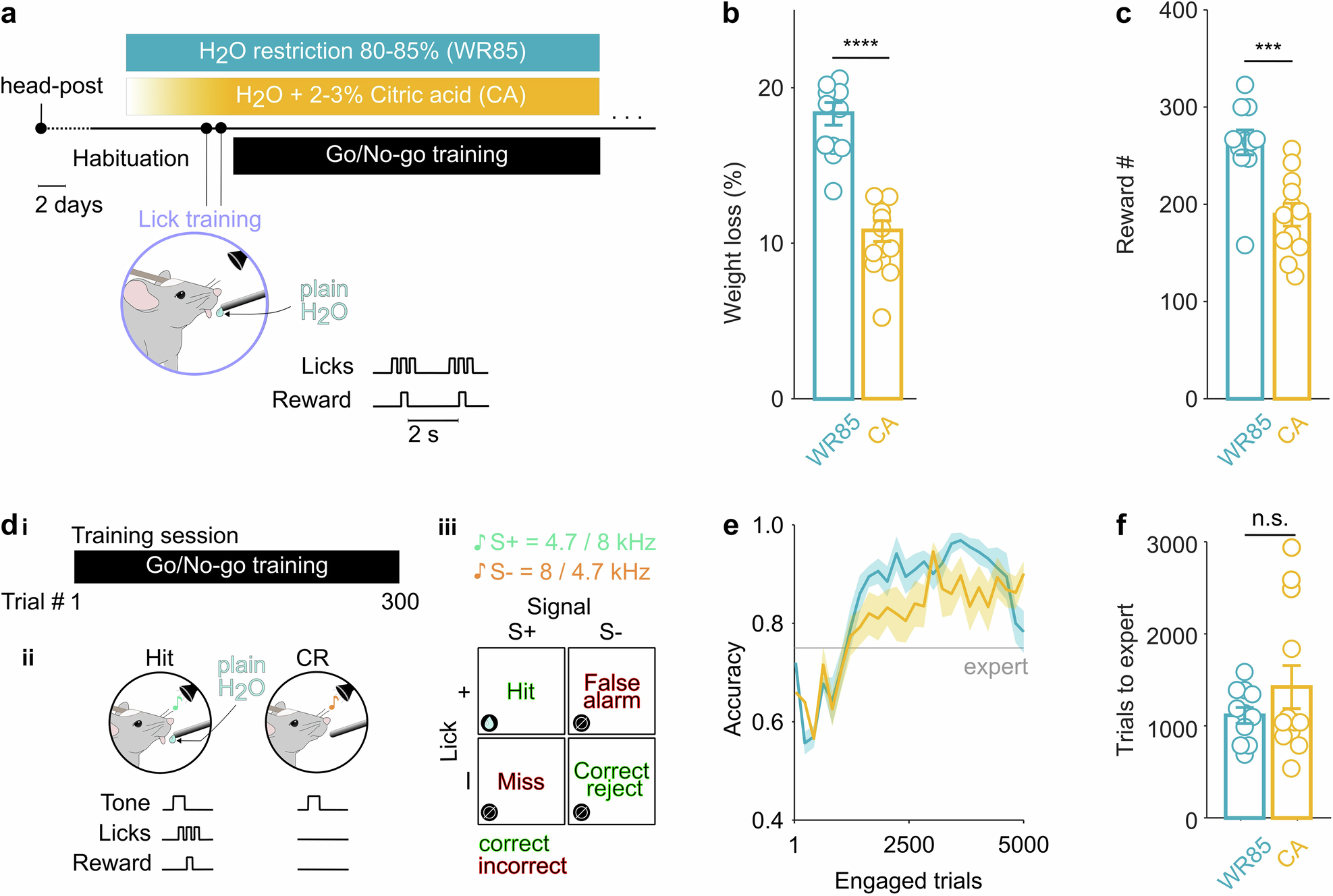
The speed of goal-directed to habit transitions has been debated since Clark Hull asked in 1943: is habit formation slow or sudden? To address this, male mice were given home-cage access to citric-acid water that reduced—without eliminating—reward-seeking for plain water in an auditory go/no-go task. Animals learned to discriminate quickly but exhibited ongoing state-like fluctuations in engagement. Strikingly, these fluctuations abruptly ceased (transition) long after discrimination stabilized, with HMM-GLM modeling pinpointing a ~3-trial transition. We confirmed this as a goal-directed to habit transition using sensory-specific outcome devaluation, DLS lesions, motor stereotypy, and pupillary responses. Dual-site fiber photometry showed equally abrupt DLS dynamics at the transition: outcome-related activity dropped and stimulus-response activity sharpened, suggesting a switch-like mechanism that recruits a readily available habit circuit rather than gradual changes across a threshold. Thus, habits can emerge suddenly, mediated by an abrupt dorsostriatal shift from outcome- to stimulus-driven processing.