2026-09-01 東京大学
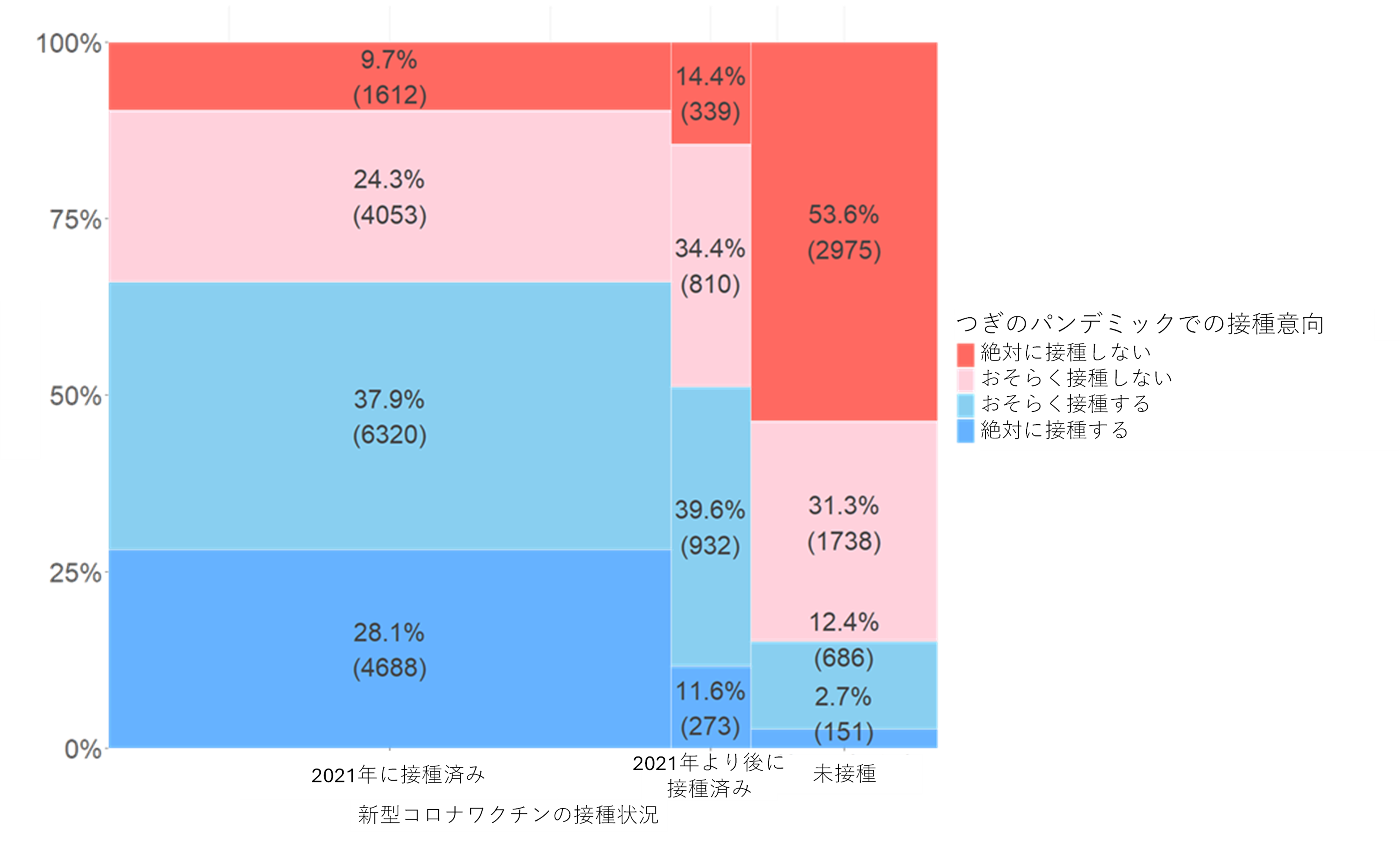
図1:新型コロナワクチンの接種歴と、次のパンデミックにおけるワクチン接種意向
<関連情報>
- https://www.u-tokyo.ac.jp/focus/ja/press/z0406_00017.html
- https://www.nature.com/articles/s41541-026-01561-2
新型コロナウイルス感染症後の将来のパンデミックにおけるワクチン接種の受容と、日本におけるその決定要因 Vaccine acceptance in a future pandemic after COVID-19 and its decision drivers in Japan
Junna Kawasaki,Masakaze Hamada,Masaki Machida,Ryo Komorizono,Mie Kobayashi-Ishihara,Naoko Fujita,Takahiro Tabuchi & Yuki Furuse
npj Vaccines Published:20 August 2026
DOI:https://doi.org/10.1038/s41541-026-01561-2
Abstract
Vaccine hesitancy has long been recognized as a global health concern and has become an even greater challenge during and after the COVID-19 pandemic. Although extensive research has examined hesitancy toward COVID-19, how the general population would respond to vaccination in a future pandemic remains unclear. Furthermore, little is known about the conditions that may reduce hesitancy. In this study, we conducted a nationwide internet survey in Japan in 2024–2025 involving 28,000 participants to assess vaccination intentions in a hypothetical future pandemic, identify factors associated with vaccine hesitancy, and examine conditions that may increase willingness to be vaccinated. We analyzed associations between individual characteristics and vaccination intention using logistic regression and explored heterogeneity in prioritized factors to determine vaccination intention using unsupervised clustering analysis. We found that only 53.1% of respondents reported intending to be vaccinated in a future pandemic—a marked decline from observed COVID-19 vaccination coverage. Notably, 35.8% of individuals who were vaccinated during the COVID-19 pandemic expressed hesitancy. Vaccination intention was lower among adults aged 20–40 years, women, individuals with lower income or educational attainment, and those endorsing misinformation or conspiracy statements. Cluster analysis identified eight distinct groups with heterogeneous priority structures. Free vaccination and evidence from clinical trials were prioritized across all clusters, whereas the prioritization of trust in authorities, social influence, domestic vaccine production, and convenience varied substantially across clusters. Public intentions to vaccinate in a future pandemic are shaped by diverse perspectives and values. Tailored strategies and risk communication approaches that address these heterogeneous concerns may be critical to strengthening preparedness for future pandemics.