2026-10-06 東北大学
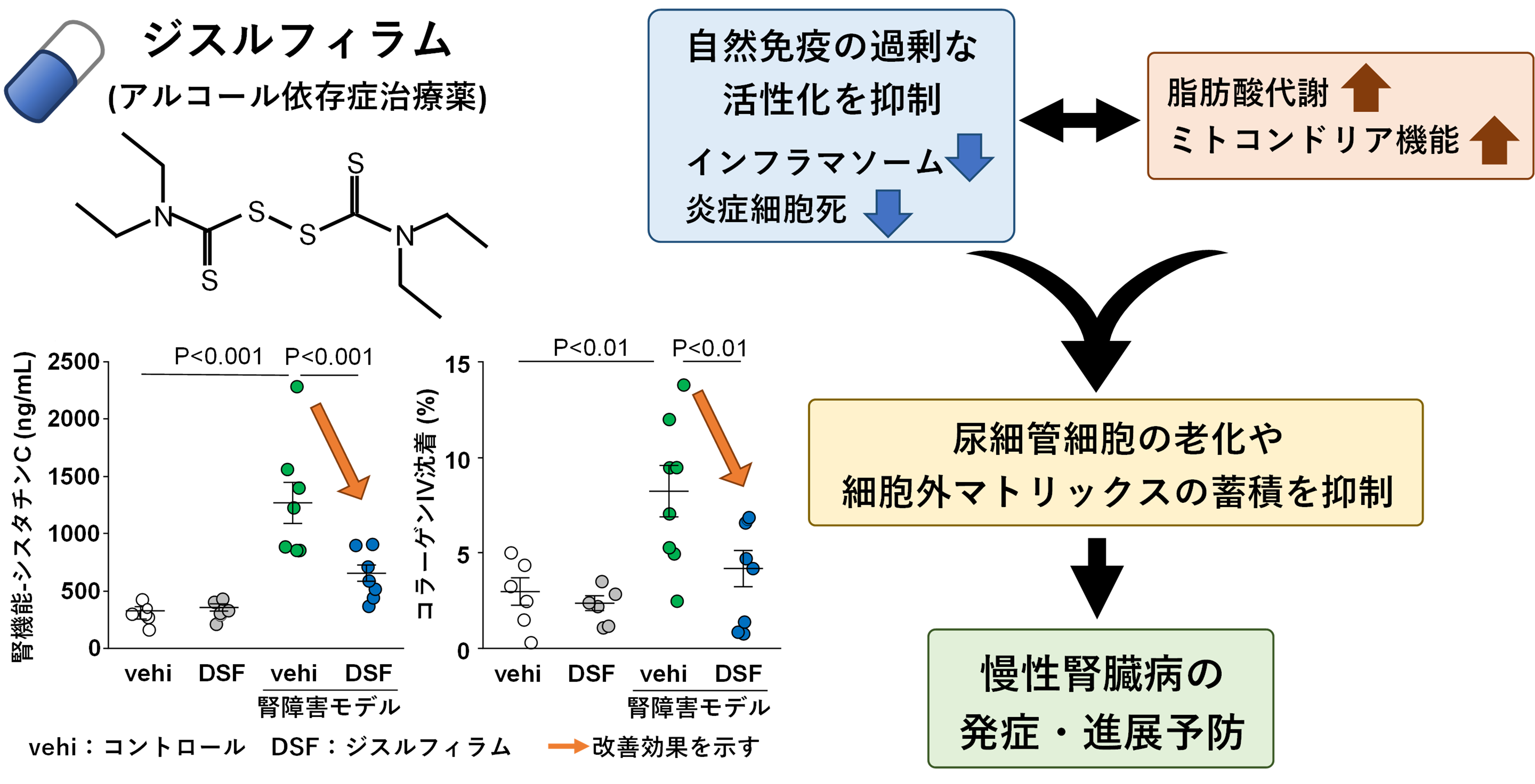
図1. ジスルフィラムは、過剰な自然免疫応答を抑制するとともに脂肪酸代謝を改善し、アデニン誘発性腎症を軽減した。
<関連情報>
- https://www.tohoku.ac.jp/japanese/2026/10/press20261006-02-disulfiram.html
- https://faseb.onlinelibrary.wiley.com/doi/10.1096/fj.202601271RR
ジスルフィラムは炎症反応および免疫代謝反応を調節することにより、アデニン誘発性腎線維症を軽減する Disulfiram Attenuates Adenine-Induced Renal Fibrosis by Modulating Inflammatory and Immunometabolic Responses
Saori Kin, Yuji Oe, Shun Ishigaki, Ichiro Fujio, Mariko Miyazaki, Tetsuhiro Tanaka
The FASEB Journal Published: 17 September 2026
DOI:https://doi.org/10.1096/fj.202601271RR
ABSTRACT
Chronic kidney disease (CKD) is partly driven by excessive innate immune activation, which contributes to progressive renal injury and fibrosis. Disulfiram (DSF), an approved treatment for alcohol dependence, has recently emerged as an inhibitor of innate immune responses such as pyroptosis. In this study, we investigated whether DSF attenuates kidney injury in adenine-induced nephropathy and explored the underlying mechanisms. DSF treatment markedly ameliorated kidney injury in adenine-induced nephropathy, accompanied by suppression of inflammatory cell infiltration and inflammasome- and pyroptosis-related markers. RNA sequencing revealed restoration of disrupted fatty acid metabolism in the kidneys following DSF treatment. Furthermore, DSF alleviated DNA damage, cellular senescence, and fibrosis. Importantly, activation of gasdermin D, a central executor of pyroptosis, was closely associated with disease severity in human CKD biopsy samples, supporting the clinical relevance of this pathway. Collectively, these findings suggest a potential role for DSF in modulating inflammatory and immunometabolic pathways in CKD.