2026-10-27 総合研究大学院大学
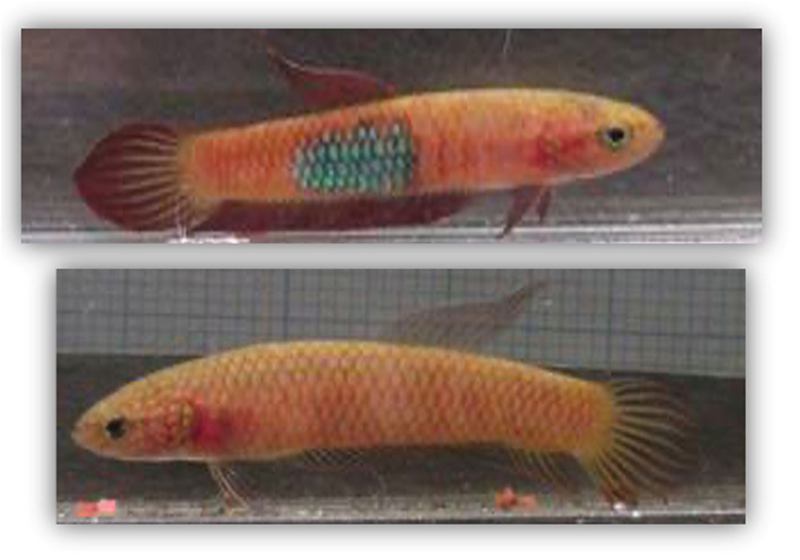
図1 ベタブロウノルムのオス(上)とメス(下)
<関連情報>
- https://www.soken.ac.jp/news/2026/20261027.html
- https://link.springer.com/article/10.1007/s00265-026-03813-6
家族で生活するアナバス科魚類ベッタ・ブラウンオルムにおける侵入者に対する行動反応 Behavioural response to an intruder in family-living anabantoid fish, Betta brownorum
Nobuyuki Kutsukake, Shun Satoh & Fumiaki Y. Nomano
Behavioral Ecology and Sociobiology Published:21 October 2026
DOI:https://doi.org/10.1007/s00265-026-03813-6
Abstract
Kin groups exhibit a continuum ranging from family living to more cooperative social systems, such as cooperative breeding and eusociality. Within this continuum, some species display intermediate characteristics between family living and cooperative breeding. In this study, we tested the previously suggested possibility that the bubble-nesting anabantoid fish Betta brownorum is a family-based cooperative breeder. In aquarium experiments, the introduction of a heterospecific territory intruder induced aggression not only by breeders but also by non-breeding subordinate natal offspring tolerated within the territory. The temporary removal of subordinates increased the frequency of aggression towards the intruder by breeders. After the subordinates were returned, breeders showed less aggression towards the intruder. This suggests that subordinates alleviate the burden of work of breeders. Immediately after their return, the subordinates were frequently attacked by breeders, particularly female breeders, but such aggression regressed to the pre-removal level. Returned subordinates still attacked the intruder, although less frequently than before removal. Based on these results, we conclude that their social system bridges group living, in which intra-group cooperation is independent of offspring care, and cooperative breeding, where helping behaviour can be clearly recognized as a form of care investment. Furthermore, this study highlights the importance of distinguishing between direct and indirect care in the study of cooperative breeding.