2026-10-23 ミュンヘン大学(LMU)
<関連情報>
- https://www.lmu.de/en/newsroom/news-overview/news/nasal-microbiome-when-neighboring-bacteria-help-pathogens-thrive-a1281411.html
- https://link.springer.com/article/10.1186/s40168-026-02563-x
アミノ酸の利用可能性は、黄色ブドウ球菌と鼻腔内微生物叢との相互作用に、菌株およびコミュニティ特異的な影響を与える Amino acid availability influences Staphylococcus aureus interaction with the nasal microbiota in a strain- and community-specific manner
Laura Camus, Jessica Franz, David Gerlach, Anna Lange, Jeffrey John Power, Marcelo Navarro-Díaz, Jens Stahl, Bernhard Krismer, Johanna Rapp, Kevser Bilici, Matthias Otto, Levin Joe Klages, Vladimir Starostin, Soyoung Ham, Jörn Kalinowski, Largus Theodora Angenent, Hannes Link & Simon Heilbronner
Microbiome Published:23 October 2026
DOI:https://doi.org/10.1186/s40168-026-02563-x
Abstract
Background
Only some individuals carry Staphylococcus aureus in the nose, predisposing them to endogenous infections. While microbial cooperation and competition are known to shape environmental and intestinal microbial communities, their impact on pathogen colonization within the nasal microbiome is largely unknown.
Results
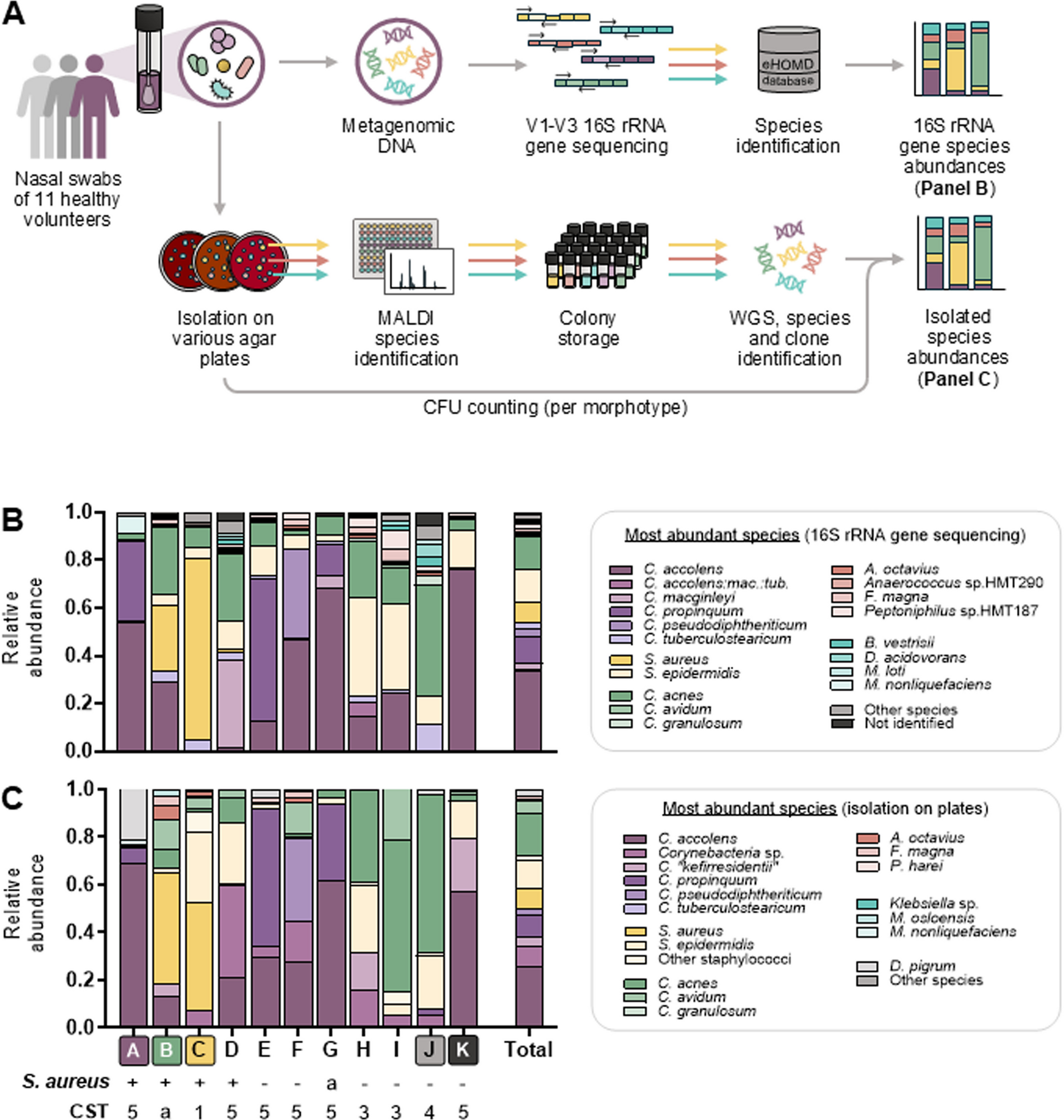
Using a newly curated nasal strain collection and systematic pairwise interaction analysis, we investigated competitive and collaborative traits between diverse S. aureus strains and nasal communities. Our experiments revealed that nasal species strongly modulate S. aureus growth in a strain- and community-specific manner both in vitro and in gnotobiotic mice. Nutrient-dependent interactions emerged as key drivers. In one example, we found that tyrosine provided by synthetic communities supported proliferation of an auxotrophic S. aureus strain. Screening of a large collection of S. aureus strains identified tyrosine dependency in 8% of strains, with colonization impaired in the absence of supportive communities, indicating broader relevance of this interaction.
Conclusions
Our findings reveal distinct metabolic adaptations that enable S. aureus to exploit specific features of resident nasal communities, highlighting complex interspecies networks that influence colonization in the human nose. These insights may inform microbiome-editing strategies to displace S. aureus from the nasal niche.