
2026-06-17 コロンビア大学
<関連情報>
- https://www.cuimc.columbia.edu/news/how-170-000-pakistani-genomes-could-transform-medicine
- https://www.nature.com/articles/s41586-026-10667-5
パキスタンゲノムリソースにおける173,303個のエクソームおよびゲノムの解析 Analysis of 173,303 exomes and genomes in the Pakistan Genome Resource
Christopher Koch,Shareef Khalid,Maleeha Zaman Khan,Shruthi Bandyadka,Brian Doyon,Daniel P. Denning,Muhammad Jahanzaib,Muhammad Rehan Mian,Wafa Gul,Muhammad Bilal Liaqat,Aneeqa Bano,Marium Dahar,Namra Saqib,Lubna Kamani,Nazish Butt,Anjum Jalal,Riffat Sultana,Shahid Abbas,Musfireh Siddiqeh,Muhammad Haroon,Asadullah Khan,Khalid Parvez Babar,Aflak Rasheed,Javed Iqbal,Regeneron Genetics Center,… Danish Saleheen
Nature Published:17 June 2026
DOI:https://doi.org/10.1038/s41586-026-10667-5
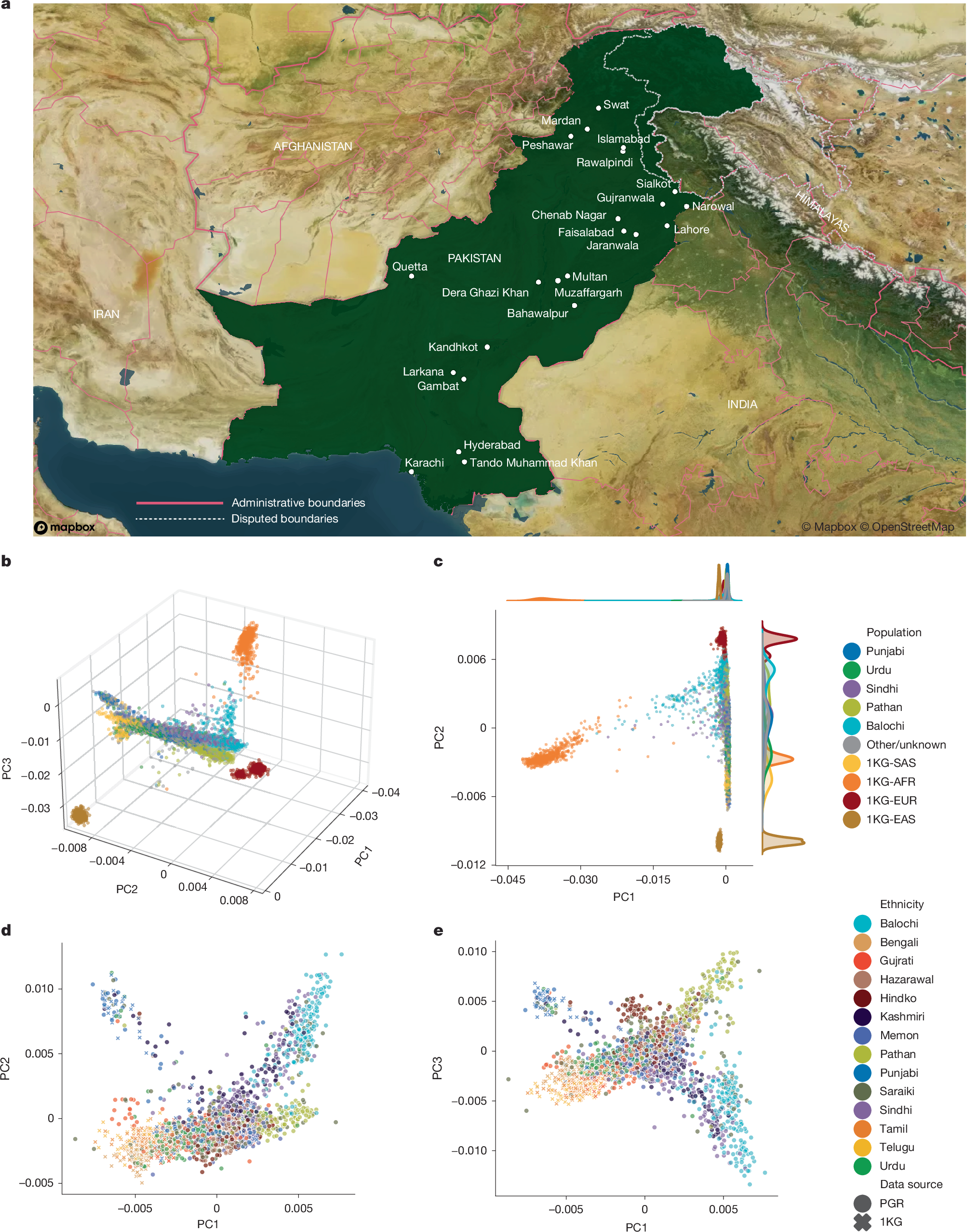
Abstract
Naturally occurring loss-of-function variants in human genes enable drug target discovery because they mimic pharmacological inhibition of proteins. However, the study of these genetic variants is constrained by their rarity. Sequencing of diverse populations, particularly those enriched in familial relatedness, has been postulated to promote discovery of rare genetic variants1,2,3. Here we present the Pakistan Genome Resource, a South Asian biobank with high familial relatedness comprising 173,303 participants, who collectively carry naturally occurring homozygous loss-of-function variants in 6,476 genes. We describe the genetic architecture of this population, associations between genes and biomarkers, the distribution of loss-of-function variants across molecular pathways, and recall-by-genotype studies of therapeutically relevant genes. The Pakistan Genome Resource expands the catalogue of human genetic variants, provides a comprehensive genetic reference resource for the Pakistani population, and demonstrates the value of studying diverse cohorts to advance human health.

