2026-10-08 英国研究イノベーション機構(UKRI)
<関連情報>
- https://www.ukri.org/news/clearing-immune-fog-could-stop-lung-cancer-before-diagnosis/
- https://www.nature.com/articles/s41586-026-11066-6
肺がんの予防のための前侵襲性制御性T細胞軸 A preinvasive regulatory T cell axis for lung cancer interception
Samuel Gamble, Zoe E. Whiteman, Claudia Peinador-Marín, Marta Lebrusant-Fernandez, Abigail Y. L. Shurr, Andrei Enica, Teerapon Sahwangarrom, Seng Kuong Anakin Ung, Amber Rogers, Petros Fessas, Chuen Ryan Khaw, Lukas Kalinke, Constantin Ahlmann-Eltze, Ahmed S. N. Alhendi, Kate Otter, Xiuchuan Hu, Krupa Thakkar, Betty Gration, Izzy Newsham, Imran Uddin, Ellen Nuttall Musson, Kyren A. Lazarus, Moritz J. Przybilla, Adam Pennycuick, Pre-Cancer Atlas Team, … James L. Reading
Nature Published:07 October 2026
DOI:https://doi.org/10.1038/s41586-026-11066-6
Abstract
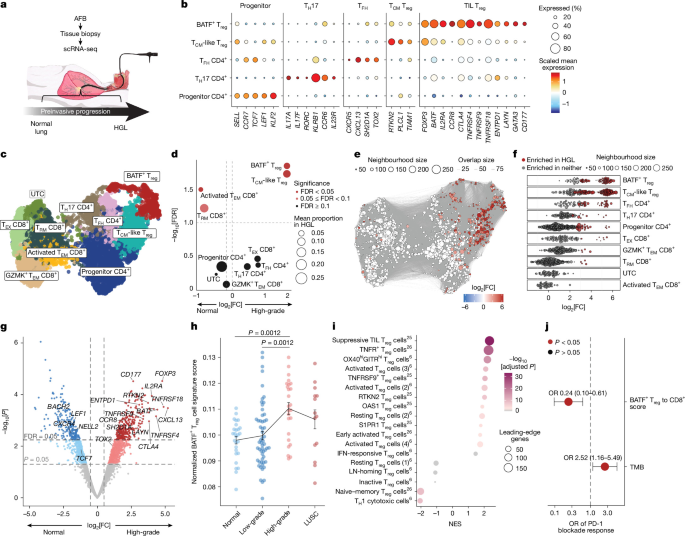
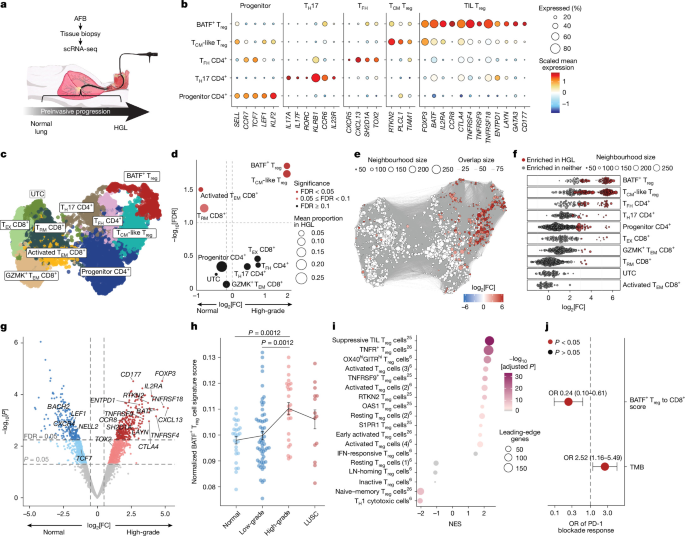
Late-stage non-small cell lung cancer (NSCLC) is rarely curable1, underscoring a need to intervene earlier in the disease process. Growing evidence suggests that antitumour T cell responses are mounted but become progressively dysregulated during early tumorigenesis2,3. Tracking and targeting preinvasive T cell regulation may inform new approaches to detect and intercept lung cancer development. Here we explore how the T cell network is remodelled during NSCLC development via multi-omic, cross-tissue immune profiling in patients with preinvasive lung lesions surveilled by autofluorescence bronchoscopy and computed tomography (CT) imaging. Effector regulatory CD4+ T cells (eTreg cells) expressing basic leucine zipper ATF-like transcription factor (BATF) accumulated in high-grade premalignant airway lesions and were clonally related to circulating eTreg cells. Circulating eTreg cells were increasingly elevated during preinvasive progression, enabling lung tumorigenesis to be tracked through analysis of peripheral blood. Emergence of this clonally coordinated eTreg cell circuit defined rapid progression in patients with early-stage NSCLC detected during CT screening. In mice, carcinogen-driven lung tumorigenesis triggered an analogous preinvasive eTreg cell axis across the blood, airways and draining lymph nodes (dLNs). This culminated in an expansion of lung BATF+ Treg cells and Treg cell-rich peribronchial immature tertiary lymphoid structures (iTLSs). Immune interception via phosphoinositide 3-kinase-δ (PI3Kδ) inhibition abrogated formation of Treg cell-rich iTLSs, reduced circulating and pulmonary Treg cells, increased local conventional type 1 dendritic cells (cDC1s) and reduced lung tumour incidence and size. These data reveal a conserved eTreg cell network that emerges across tissues during early pulmonary tumorigenesis and provide a theranostic framework to track and target preinvasive immune regulation for lung cancer interception.