2026-10-08 ミュンヘン大学(LMU)
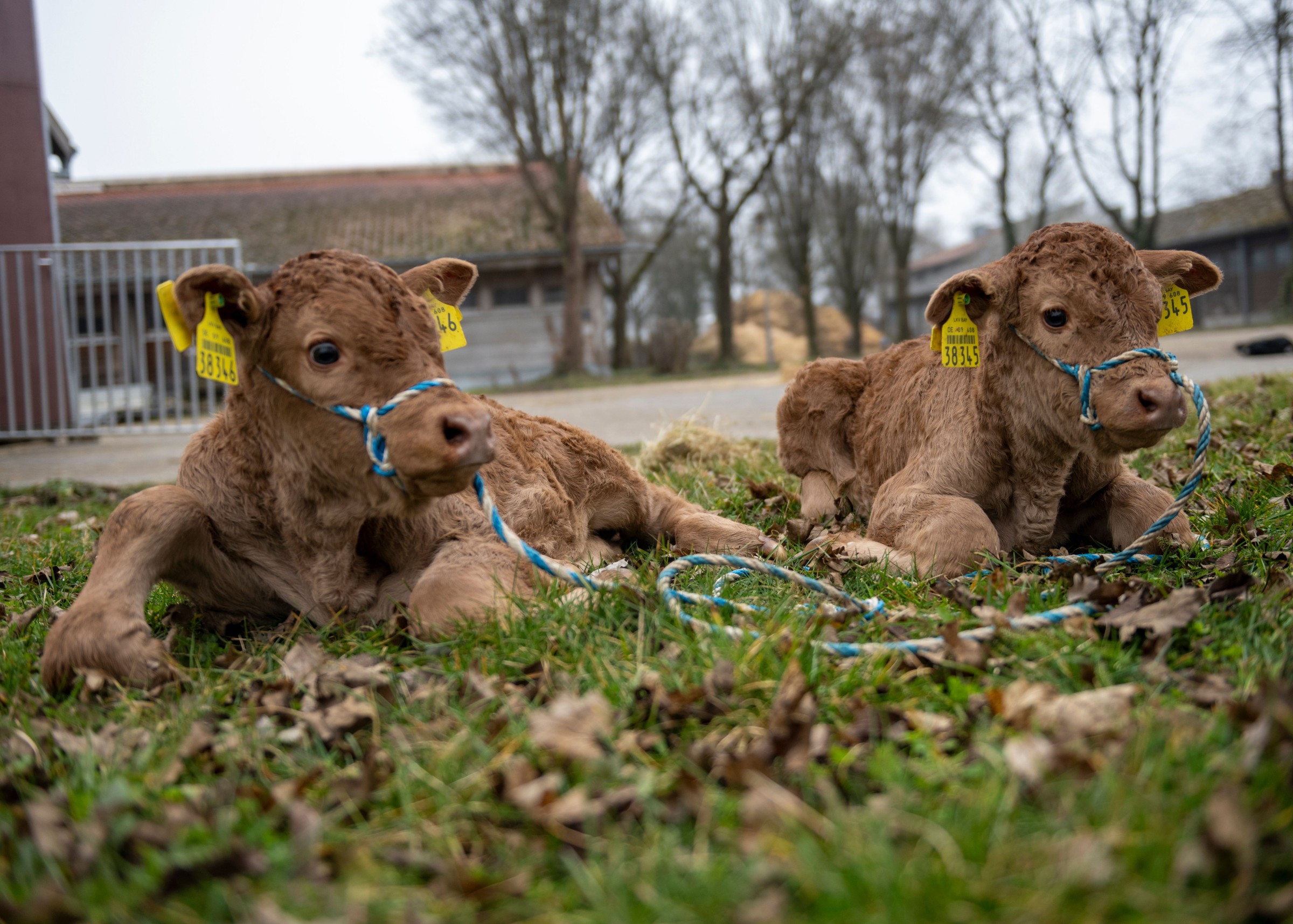
Two unexpected calves
Although they were proven to lack all functional IFNT genes, these two healthy calves were born on February 26, 2026. © LMU
<関連情報>
- https://www.lmu.de/en/newsroom/news-overview/news/cows-can-become-pregnant-even-without-embryonal-interferon-tau-83dc052b.html
- https://www.nature.com/articles/s41467-026-78446-4
胎児インターフェロンタウを欠いた牛の妊娠成立 Pregnancy establishment in cattle without embryonic interferon tau
Asghar Ali, Valeri Zakhartchenko, Tuna Güngör, Stefan Nüske, Jan B. Stöckl, Sarah Hecken, Andreas Hauser, Stefan Krebs, Sven Reese, Marcel Suchowski, Robert Friedl, Sebastian Schwanitz, Armin M. Scholz, Andreas Blutke, Martina Protschka, Mathias Büttner, Thomas Fröhlich, Horst-Dieter Reichenbach & Eckhard Wolf
Nature Communications Published:08 October 2026
DOI:https://doi.org/10.1038/s41467-026-78446-4
Abstract
In ruminants, embryonic interferon tau (IFNT) is widely considered the indispensable signal for maternal recognition of pregnancy, driving endometrial gene expression to prevent luteolysis. However, this canonical paradigm has never been directly tested using genomic loss-of-function models. Here we show that IFNT is completely dispensable for pregnancy recognition, luteal maintenance, and full-term gestation in cattle. Using CRISPR-Cas9, we generate bovine fibroblasts lacking all functional copies of the multigene IFNT locus for somatic cell nuclear transfer. IFNT-null embryos develop into blastocysts in vitro at normal rates and exhibit typical elongation at day 18 post-transfer without inducing endometrial interferon-stimulated genes. Crucially, these IFNT-null conceptuses successfully prevent luteal regression, establish normal placentation, and progress through full-term gestations, culminating in the birth of healthy female calves. These findings provide the first direct genetic evidence that embryonic IFNT is dispensable for pregnancy recognition and establishment in cattle, fundamentally revising the long-standing model of ruminant reproduction and uncovering alternative embryo-maternal signaling mechanisms.