
2026-03-02 タフツ大学
<関連情報>
- https://now.tufts.edu/2026/03/02/your-lifestyle-trajectory-greatly-influences-your-weight-study-says
- https://www.mdpi.com/2072-6643/18/3/389
就学前から成人期までの生活習慣と体重の変化に関する長期的評価 Longitudinal Assessment of Changes in Lifestyle Behaviors and Body Weight from Precollege to Adulthood
Sujata Dixit-Joshi, Christina D. Economos, Peter J. Bakun, Caitlin P. Bailey, Jeanne P. Goldberg, Erin Hennessy, Nicola M. McKeown, Susan B. Roberts, Gail T. Rogers and Daniel P. Hatfield
Nutrients Published:24 January 2026
DOI:https://doi.org/10.3390/nu18030389
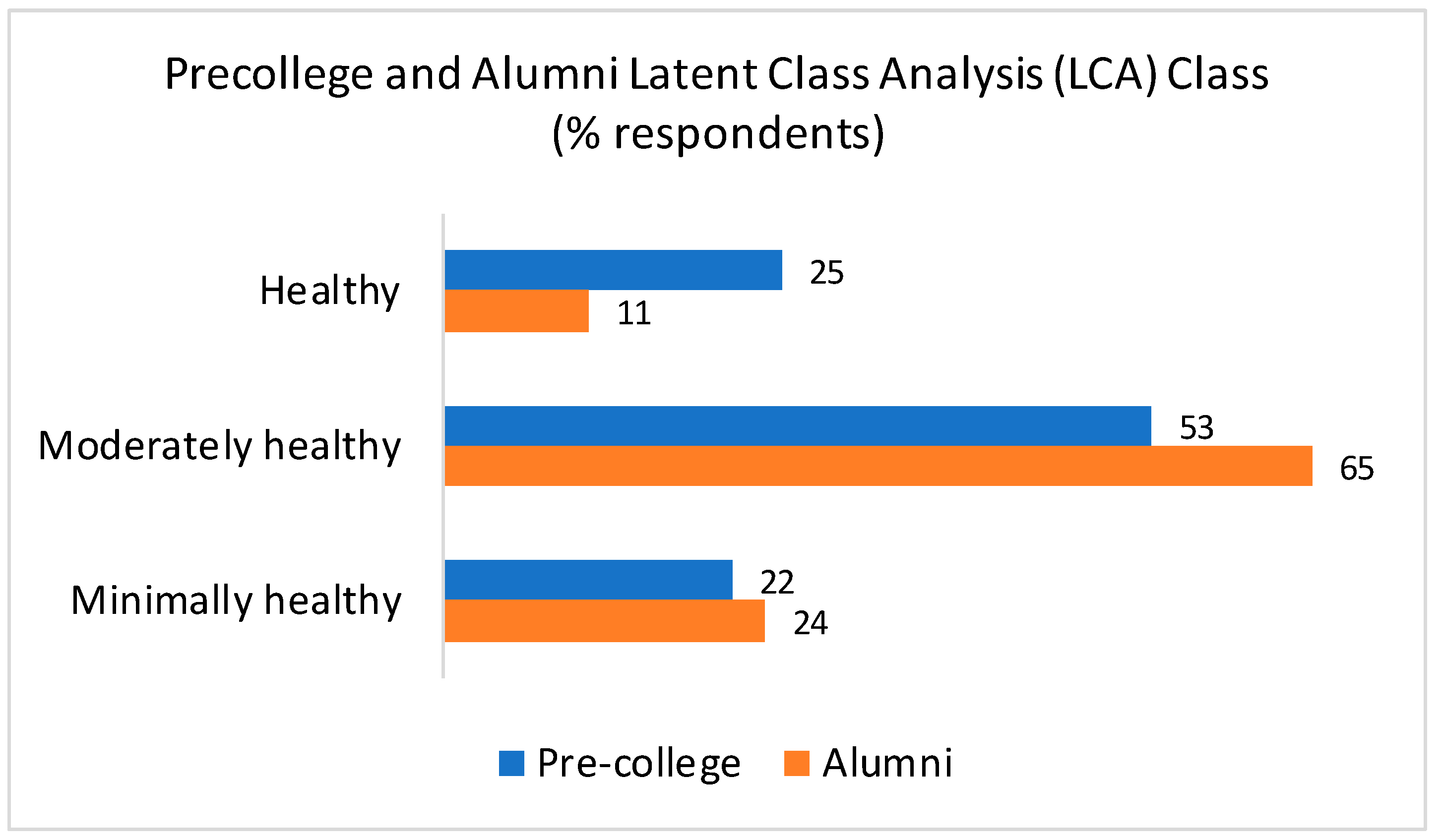
Abstract
Background/Objective: Lifestyle behaviors evolve with age and are driven by biological requirements (e.g., growth and development) and environmental changes (e.g., living and working situations), and they interact bidirectionally with health. Few studies have tracked these behaviors from emerging adulthood into later adulthood. This study examines changes in lifestyle behavior patterns from precollege to adulthood and their association with weight trajectories. Methods: Between 1998 and 2007, 4783 incoming undergraduate students at a northeastern US university completed a health survey. In 2018, 970 completed a follow-up alumni survey. Latent class analysis (LCA) was used to categorize respondents into five lifestyle patterns: stable healthy, stable moderately healthy, stable minimally healthy, worsened, or improved. BMI trajectories were similarly classified into five weight status patterns. Associations between LCA lifestyle patterns and weight were examined using ANCOVA. Results: The most common lifestyle pattern was stable moderately healthy (36.7%). Over 11–20 years, 31.7% of respondents experienced a decline in lifestyle behaviors, and 18.6% improved. During this period, the prevalence of overweight more than doubled (12% to 26%), and obesity quadrupled (2% to 8%). Transitioning to a higher BMI category was noted in 34.9% of those with a stable minimally healthy lifestyle compared with 15.9% among those with a stable healthy lifestyle. Conclusions: Early lifestyle behaviors have long-term implications for weight status. Initiatives that promote the adoption and maintenance of healthy behaviors from precollege through adulthood might reduce obesity risk.

