
2026-04-30 バージニア工科大学(Virginia Tech)
<関連情報>
- https://news.vt.edu/articles/2026/04/pamplin-bit-research-organ-transplant-task-switching.html
- https://www.nature.com/articles/s41562-026-02459-8
臓器移植におけるタスク切り替えコストの因果関係を示す証拠 Causal evidence of task-switching costs in organ transplantation
Jiayi Liu,Yiwen Jin & Joel T. Adler
Nature Human Behaviour Published:30 April 2026
DOI:https://doi.org/10.1038/s41562-026-02459-8
Abstract
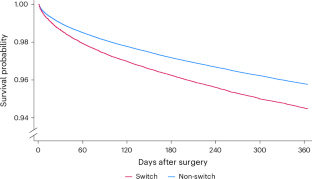
Experimental psychology has long shown that task switching imposes cognitive demands and increases error rates, yet its impact in high-stakes real-world settings remains unclear. Here we provide causal evidence of switching costs in the context of organ transplantation. Leveraging quasi-random organ arrivals as a natural experiment, we analyse national registry data on 316,742 US transplants from 2007 to 2019. We find that, when surgeons switch organ types (for example, from liver to kidney) across consecutive surgeries, patients’ 1-year post-transplant mortality increases by 0.66 percentage points (95% confidence interval 0.39–0.94; P < 0.001), a 14.8% increase relative to baseline. These risks can potentially be mitigated through structured scheduling, longer intervals between procedures, and greater surgeon experience. Our findings identify task switching as a modifiable risk factor in expert performance and offer potential strategies to improve outcomes in high-stakes environments.

