
2026-04-17 ロックフェラー大学
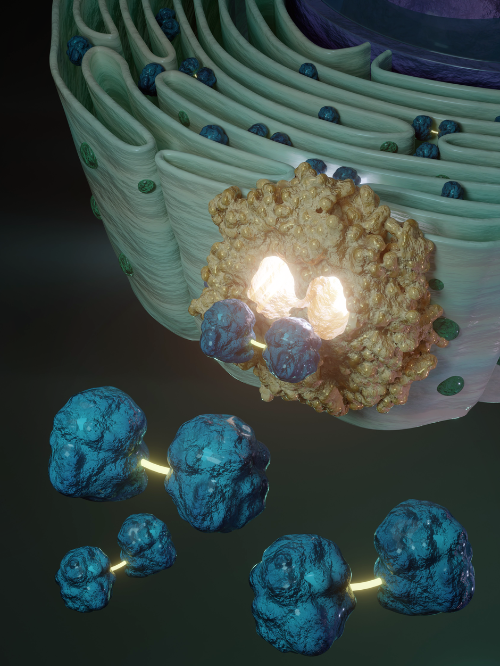
The ER is shown in the upper right, with disulfide-linked GSSG in the lumen. The exporter resembles the cryo-EM structure of SLC33A1, highlighting selective export of GSSG from the ER. (Credit: Emma Vidal, DrawImpacts)
<関連情報>
- https://www.rockefeller.edu/news/39407-antioxidant-glutathione-protein-regulation-cancer-neurodegeneration/
- https://www.nature.com/articles/s41556-026-01922-y
SLC33A1は酸化型グルタチオンを輸送し、小胞体の酸化還元恒常性を維持する SLC33A1 exports oxidized glutathione to maintain endoplasmic reticulum redox homeostasis
Shanshan Liu (刘珊珊),Mark Gad,Caifan Li (李采蘩),Kevin Cho,Yuyang Liu (刘雨洋),Khando Wangdu,Viktor Belay,Alon Millet,Hiroyuki Kojima,Henry Sanford,Michele Wölk,Linas Urnavicius,Maria Fedorova,Gary J. Patti,Ekaterina V. Vinogradova,Richard K. Hite & Kıvanç Birsoy
Nature Cell Biology Published:17 April 2026
DOI:https://doi.org/10.1038/s41556-026-01922-y
Abstract
The endoplasmic reticulum (ER) requires an oxidative environment to support the efficient maturation of secretory and membrane proteins. This is in part established by glutathione, a redox-active metabolite present in reduced (GSH) and oxidized (GSSG) forms. The ER maintains a higher GSSG:GSH ratio than the cytosol; however, the mechanisms controlling ER redox balance remain poorly understood. To address this, we developed a method for the rapid immunopurification of the ER, enabling comprehensive profiling of its proteome and metabolome. Combining this approach with CRISPR screening, we identified SLC33A1 as the major ER GSSG exporter in mammalian cells. Loss of SLC33A1 led to GSSG accumulation in the ER and a liposome-based assay demonstrated that SLC33A1 directly transports GSSG. Cryogenic electron microscopy structures and molecular dynamics simulations revealed how SLC33A1 binds GSSG and identified residues critical for its transport. Finally, an imbalance in GSSG:GSH ratio induced ER stress and dependency on the ER-associated degradation pathway, driven by a shift in protein disulfide isomerases towards their oxidized forms. Together, our work establishes SLC33A1-mediated GSSG export as a key mechanism for ER redox homeostasis and protein maturation.

