2026-05-14 東京科学大学
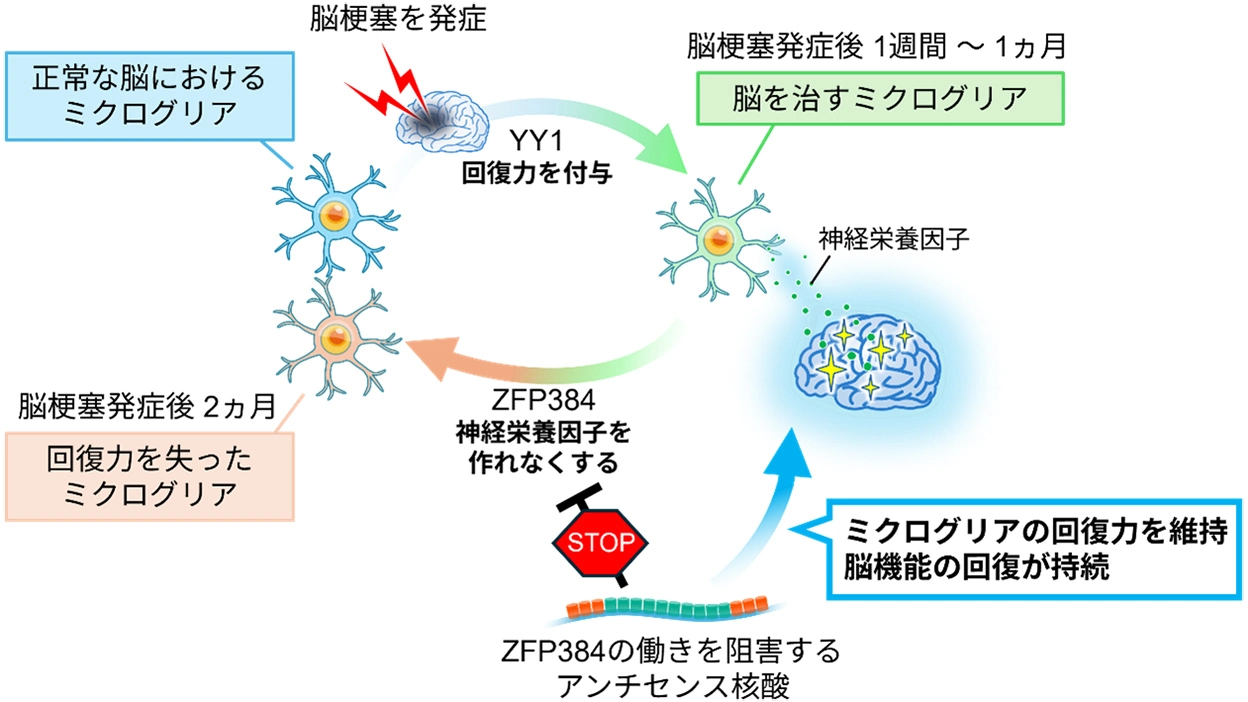
図1. 本研究の概要
<関連情報>
ミクログリアの修復機能を維持することは、脳卒中からの回復を促進する Sustaining microglial reparative function enhances stroke recovery
Jun Tsuyama,Seiichiro Sakai,Kumiko Kurabayashi,Ayaka Nakamura,Eri Tanaka,Yuichiro Hara,Ito Kawakami,Makoto Tsuda,Takahiro Masuda,Marco Prinz,Hideya Kawaji & Takashi Shichita
Nature Published:13 May 2026
DOI:https://doi.org/10.1038/s41586-026-10480-0
Abstract
Neurological symptoms after brain injury can remain as lifelong detrimental sequelae because most of the spontaneous recovery response disappears within a few months after the injury1,2. Microglia have an essential role in this process; however, the cellular and molecular mechanisms that diminish spontaneous functional recovery in the brain remain unclear. Here using cellular fate analysis, we show that reparative microglia persist in the brain after a stroke even after losing their beneficial functions. In these cells, ZFP384 is identified as a pivotal transcriptional regulator that diminishes the expression of genes associated with the recovery phase, turning them into dysfunctional microglia that lose their reparative functions. Mechanistically, ZFP384 diminishes the YY1-mediated chromatin interaction necessary to induce the expression of these genes in microglia. The use of antisense oligonucleotides that target Zfp384 can sustain the broad range of neural repair effects of microglia and enhance recovery after stroke, even in the chronic phase of ischaemic stroke. Thus, therapeutics that prevent the loss of reparative immunity—the beneficial restorative functions of immune cells—can prolong functional recovery in the brain.