2026-05-1 イェール大学
<関連情報>
- https://medicine.yale.edu/news-article/breast-cancer-drug-is-effective-for-treatment-resistant-uterine-cancer/
- https://aacrjournals.org/clincancerres/article/doi/10.1158/1078-0432.CCR-26-0144/785190/A-Phase-II-Evaluation-of-the-Efficacy-and-Safety
再発性子宮癌患者におけるサシツズマブ・ゴビテカンの有効性および安全性に関する第II相評価 A Phase II Evaluation of the Efficacy and Safety of Sacituzumab Govitecan in Patients with Recurrent Uterine Cancer
Alessandro D. Santin;Dana M. Roque;Eric Siegel;Victoria Ettorre;Michelle Greenman;Blair McNamara;Katyayani Papatla;Aparna Kailasam;Natalia Buza;Mitchell Clark;Pei Hui;Peter Dottino;Elena Ratner;Stefania Bellone
Clinical Cancer Research Published:May 14 2026
DOI:https://doi.org/10.1158/1078-0432.CCR-26-0144
Abstract
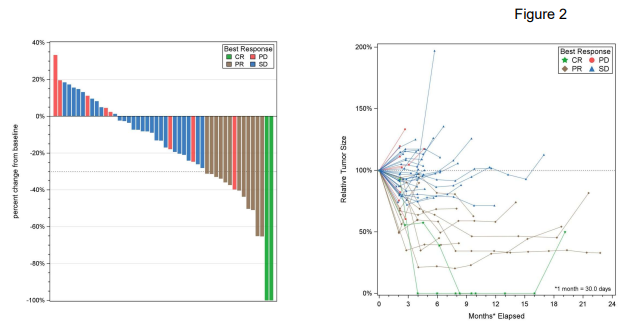
Purpose: Endometrial cancer (EC) patients who progress after chemotherapy/immunotherapy have limited treatment options. We evaluated the activity and safety of sacituzumab govitecan (SG), a Trop-2-directed ADC, in patients with advanced/recurrent EC, including carcinosarcoma. Patients and Methods: This was a phase 2, two-stage open-label investigator-initiated trial of persistent/recurrent EC patients who had progressed following >=1 prior chemotherapy. Patients received SG 10 mg/kg on days 1, 8 q3 weeks. The primary endpoint was objective response rate (ORR) by RECIST 1.1. Secondary endpoints included clinical benefit rate (CBR=complete response [CR]+partial response [PR]+stable disease ≥ 6mo), duration of response (DOR), progression-free survival (PFS), overall survival (OS), safety. Trop-2 expression was analyzed by IHC as an H-score. Results: Fifty patients were screened and 21 enrolled during stage 1; 34 patients were screened and 29 enrolled during stage 2; 84% (n=42) of patients harbored serous carcinoma, carcinosarcoma, or grade 3 endometrioid tumors. Patients received a median of 2 prior therapies (range:1-4) and 50% had failed pembrolizumab/dostarlimab. At a median follow-up (range) of 11.0 (2.9-65.5) months, ORR was 28% (95% CI,16%-42%), including CRs (4%) and PRs (24%). Median DOR (95%CI) was 9.3 (2.0–12.9) months, with 4 still responding. CBR was 52% (26/50). Median PFS and OS were 5.5 (95% CI:3.7-7.4) and 17.5 (95% CI:10.4-22.2) months, respectively. Grade 3-4 toxicity occurred in 88% with no attributable deaths. Mean H-scores did not predict response. Conclusions: SG demonstrated encouraging efficacy in a pretreated population that included biologically aggressive recurrent EC. Adverse events were consistent with the known safety profile.