2026-06-04 ジョンズ・ホプキンス大学(JHU)
◆ASDは遺伝的要因と環境要因が複雑に相互作用して発症すると考えられているが、従来の研究では個別要因ごとの評価が中心で、全体像の把握が難しかった。研究チームは、大規模な疫学データや遺伝情報、周産期要因などを統合し、複数のリスク要因がどのように組み合わさって発症リスクに影響するかを解析できる手法を構築した。その結果、単一要因では説明できない複雑な相互作用が明らかになり、遺伝的素因と環境要因の組み合わせによってリスクが変化することが示された。
◆このフレームワークは、ASDの病因解明を進めるだけでなく、高リスク群の早期特定や予防戦略の検討にも役立つ可能性がある。研究チームは、今後さらに大規模データを活用することで、個別化医療や発達障害研究の発展につながると期待している。
<関連情報>
- https://hub.jhu.edu/2026/06/04/new-framework-analyzes-autism-risk-factors/
- https://www.nature.com/articles/s41588-026-02601-2
症例・親トリオ研究におけるポリジェニックスコアを用いた直接的および間接的なポリジェニック効果と遺伝子-環境相互作用の推定 Estimation of direct and indirect polygenic effects and gene–environment interactions using polygenic scores in case–parent trio studies
Ziqiao Wang,Luke Grosvenor,Debashree Ray,Tianyuan Cheng,Ingo Ruczinski,Terri H. Beaty,Heather Volk,Christine Ladd-Acosta & Nilanjan Chatterjee Published:02 June 2026
Nature Genetics Published:02 June 2026
DOI:https://doi.org/10.1038/s41588-026-02601-2
Abstract
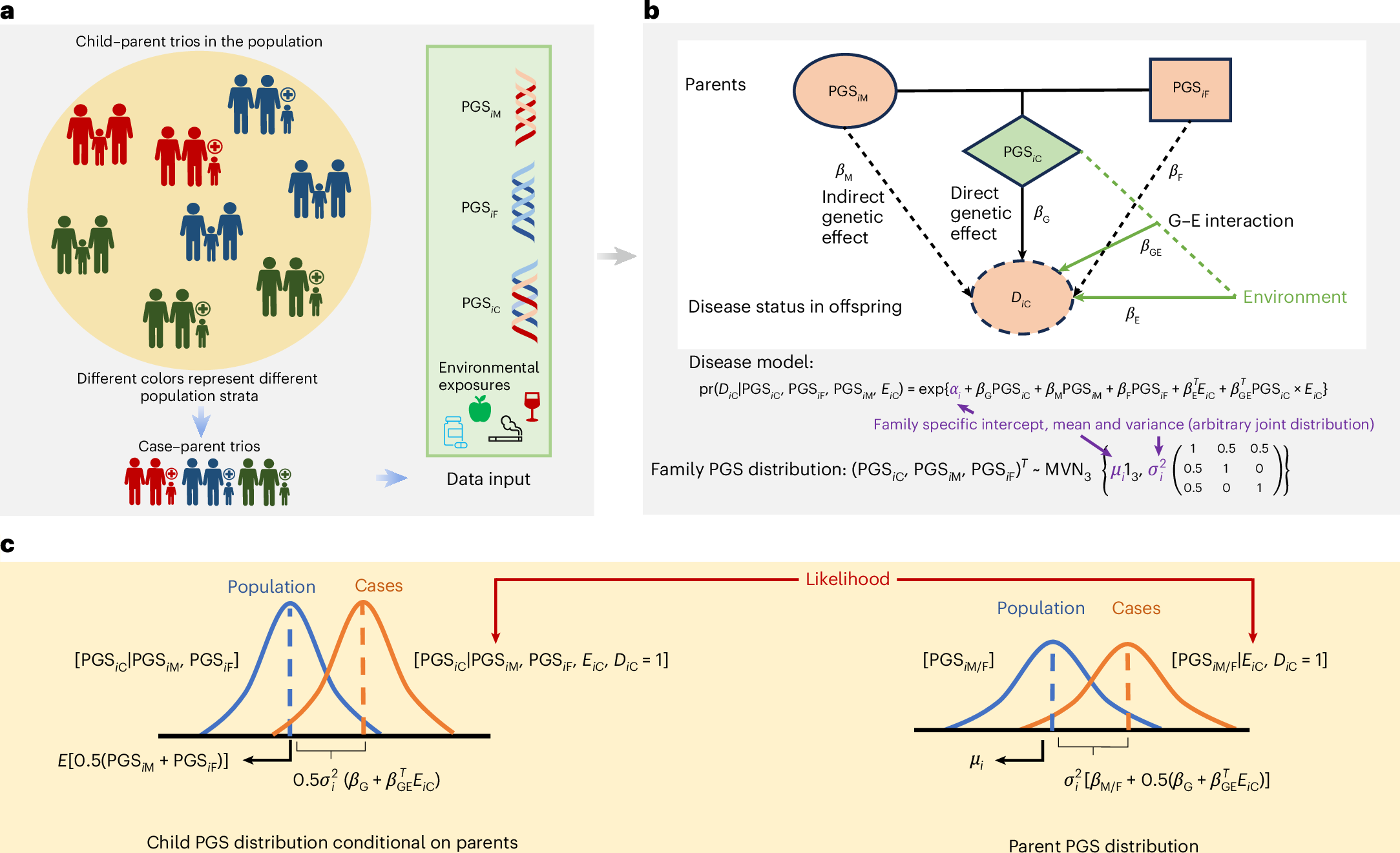
We have proposed PGS-TRI, a framework for analyzing polygenic scores (PGSs) in case–parent trio studies that estimate the risk of an index condition associated with direct PGS effects, gene–environment interactions and asymmetrical maternal and paternal indirect effects. Simulations confirm its robustness in the presence of complex population structure and assortative mating. Applied to multi-ancestry autism spectrum disorders (ASD) trios (ntrio = 18,383), PGS-TRI yielded transmission-based direct effects of PGSs for ASD and other neurocognitive traits along a genetic ancestry continuum, and identified asymmetrical indirect effects of parental PGSs for body mass index and neurocognitive traits on children’s ASD risk. In a trio study of European and Asian orofacial clefts (OFCs) (ntrio = 1,904), PGS-TRI estimated direct and indirect effects of an established PGS and its interaction with maternal risk factors. Finally, we applied PGS-TRI to large-scale, transcriptome-wide and metabolome-wide traits to examine their direct and indirect effects on ASD and OFC risk.