2026-06-24 カリフォルニア大学バークレー校(UCB)
<関連情報>
- https://news.berkeley.edu/2026/06/24/with-ai-researchers-discover-new-way-to-detect-sudden-cardiac-death-risk/
- https://www.nature.com/articles/s41586-026-10674-6
深層学習を用いて発見された突然心臓死の心電図バイオマーカー An ECG biomarker for sudden cardiac death discovered with deep learning
Ziad Obermeyer,Alexander Schubert,James Ross,Sendhil Mullainathan & Markus Lingman
Nature Published:24 June 2026
DOI:https://doi.org/10.1038/s41586-026-10674-6
Abstract
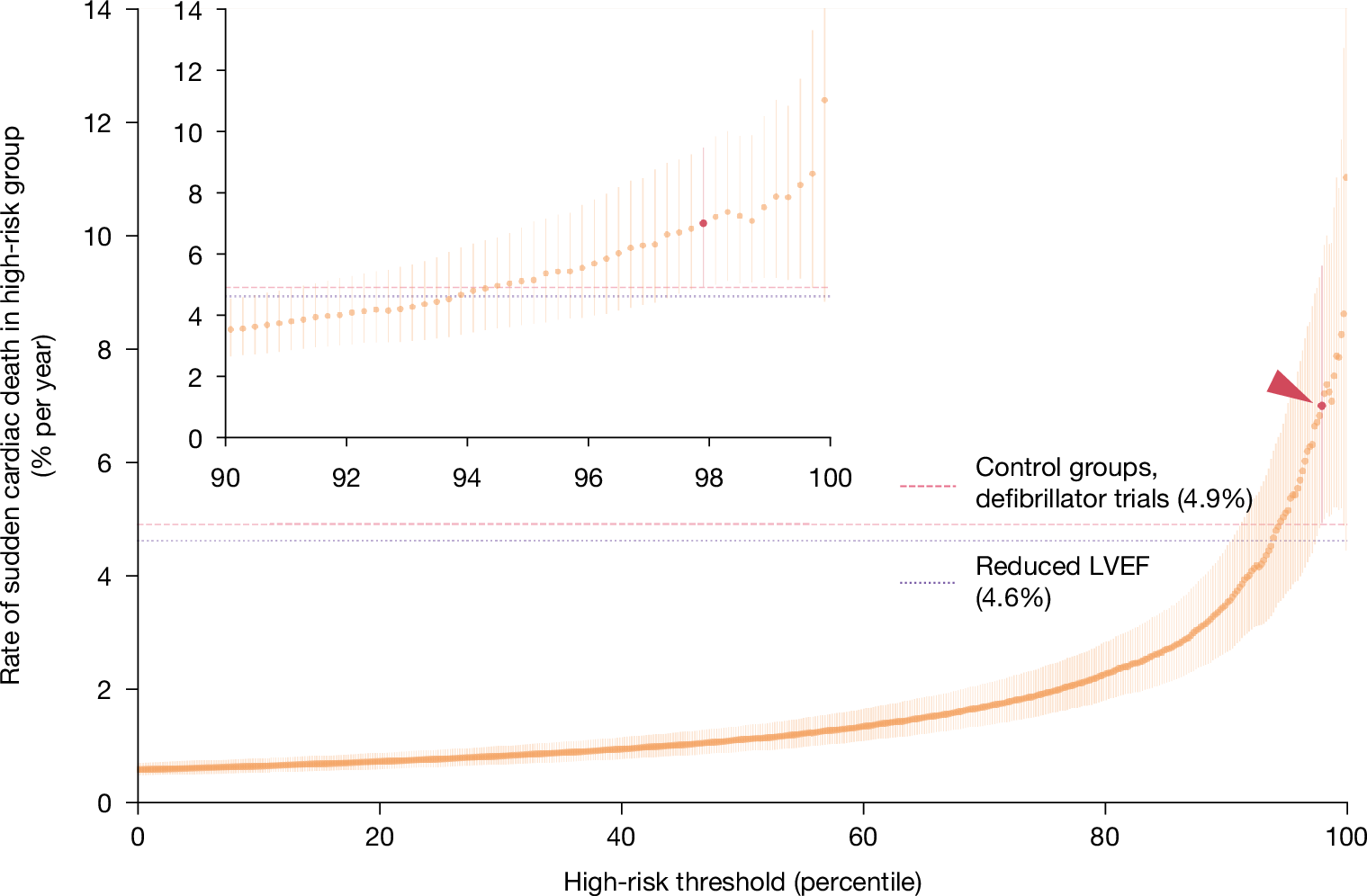
Sudden cardiac death is, in theory, preventable with defibrillators. But every year, many patients die without defibrillators because doctors fail to predict their risk1. The only predictive biomarker in wide use, cardiac left ventricular ejection fraction (LVEF), misses most sudden cardiac deaths2, and flags many low-risk patients for futile defibrillators that never fire3,4. Here we apply deep learning to a dataset linking all electrocardiograms (ECGs) in a Swedish region to death certificates. The resulting model isolates a high-risk group (2.2% of the sample) with a 7.0% annual rate of sudden cardiac death, higher than those with reduced LVEF (1.9% of the sample; 4.6% annual rate). Notably, 86.1% of the model’s high-risk patients were not flagged by LVEF. High-risk ECG patients with defibrillators implanted were 54.4% less likely to die than expected, suggesting a mortality benefit. We externally validate the model in a US health system, in which it predicts ventricular arrhythmias that cause sudden death; and a Taiwanese hospital registry, in which it specifically predicts future arrhythmic cardiac arrests. To visualize the waveform morphology ‘discovered’ by the predictive model, we pair it with a generative model of the ECG waveform. Together, they reveal a biomarker that is easily visible and robustly predicts sudden cardiac death, but has not to our knowledge been previously described. Tying the biomarker’s shape to electrophysiological first principles, we form and preliminarily test a new hypothesis on the mechanism of sudden cardiac death.