2026-07-20 エディンバラ大学
<関連情報>
- https://www.ed.ac.uk/news/test-points-to-precision-treatment-for-autoimmune-condition
- https://www.thelancet.com/journals/lanrhe/article/PIIS2665-9913(26)00038-X/fulltext
シェーグレン病における精密医療ツールとしてのインターフェロンα:コホート研究および実験医学研究 Interferon-α as a precision medicine tool in Sjögren’s disease: a cohort and experimental medicine study
Deborah Forbes, MBChB ∙ Ivana Jorgacevic, PhD ∙ Jessica Tarn, PhD ∙ Katy R Reid, PhD ∙ Bastien Rioux, PhD ∙ Kyle Thompson, PhD ∙ et al.
The Lancet Rheumatology Published: July 2, 2026
DOI:https://doi.org/10.1016/S2665-9913(26)00038-X
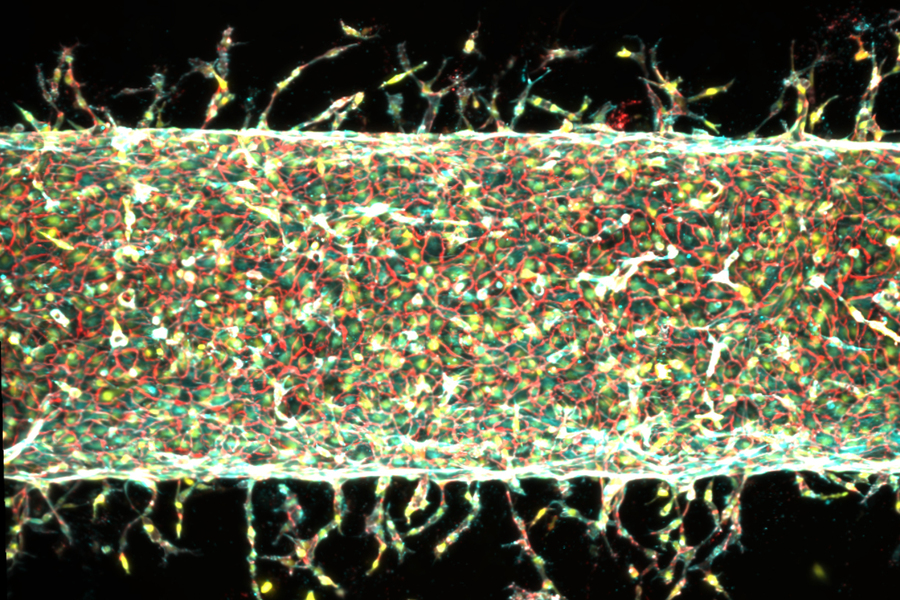
00038-X/asset/2a1343e0-5097-49bb-bc25-9a184117b0d6/main.assets/gr1_lrg.jpg "検査法が自己免疫疾患の精密医療につながる可能性を示す(Test points to precision treatment for autoimmune condition)")
Summary
Background
Mechanistic heterogeneity is a major obstacle to the development of effective treatment for Sjögren’s disease, and there is a pressing need to stratify Sjögren’s disease according to precision medicine principles. Aberrant activation of the type 1 interferon (IFN) pathway represents a leading candidate pathway, but a causal role of elevated IFNα in driving Sjögren’s disease has yet to be established. We aimed to examine the role of IFNα in driving a Sjögren’s disease endotype and relevance to precision medicine principles.
Methods
We used data from the UK Primary Sjögren’s Syndrome Registry (UKPSSR), a multicentre observational cohort of participants with Sjögren’s disease, and UK Biobank, a large population-based cohort which includes people with and without Sjögren’s disease, to study the role of IFNα in Sjögren’s disease. Ultrasensitive single molecule ELISA and an oligoprotein IFN signature score derived from broad capture proteomics were used to analyse samples from UKPSSR and data from the UK Biobank Pharma Proteomics Project (a subset of individuals from UK Biobank) to establish the timecourse and immune endotype associated with elevated IFNα. To address causality, we created a new transgenic mouse model of IFNα overexpression to establish whether chronically elevated IFNα drives this immune endotype. People with lived experience of Sjögren’s disease were involved in the design of the UKPSSR and shaping of research questions.
Findings
Between Aug 1, 2009, and March 31, 2012, we identified 177 people with Sjögren’s disease in UKPSSR (mean age 57·5 years [IQR 46·0–65·0], 163 [92%] women, 14 [8%] men, and 162 [92%] White ethnicity). In addition, between March 13, 2006, to Oct 1, 2010, we identified 47 606 people without Sjögren’s disease and 257 people with Sjögren’s disease in the UK Biobank Pharma Proteomics Project, including 137 individuals sampled before diagnosis. IFNα concentrations were elevated in 108 (61%) of 177 people with Sjögren’s disease in the UKPSSR. Oligoprotein IFN signatures were detected up to 14 years before diagnosis of Sjögren’s disease in the UK Biobank Pharma Proteomics Project. Individuals in UKPSSR with elevated IFNα had a distinct immunological endotype characterised by cytopenia, hypergammaglobulinaemia, multiple autoantibodies, and autoimmunity against the Sjögren autoantigen TRIM21/Ro52. In a mouse model of systemic chronic IFNα elevation, in which IFNα4 was overexpressed by conventional dendritic cells, the key features of the endotype were recapitulated and could be partly reversed by type 1 interferon receptor (IFNAR1) blockade.
Interpretation
We found that the elevation of IFNα drives an immune endotype of Sjögren’s disease, and elevated IFNα can be detected over a decade before diagnosis. People with Sjögren’s disease with elevated IFNα concentrations were broadly clinically similar to those with normal IFNα concentrations, yet were immunologically distinct. This highlights the mechanistic heterogeneity of Sjögren’s disease and the need for immunological stratification along precision medicine principles, using high resolution biomarkers. In addition to demonstrating causal direction, biological modelling in a mouse model showed that chronic IFNα elevation over the lifecourse had the potential to establish persistent immune dysregulation, which responded only partly to IFNAR1 blockade. These findings provide insights into Sjögren’s disease and other interferonopathic rheumatological disorders.
Funding
Precision Medicine Alliance Scotland (Chief Scientist Office, Scottish Government), Wellcome Trust, Medical Research Council UKRI, Deutsche Forschungsgemeinschaft.