2026-07-27 北海道大学,科学技術振興機構

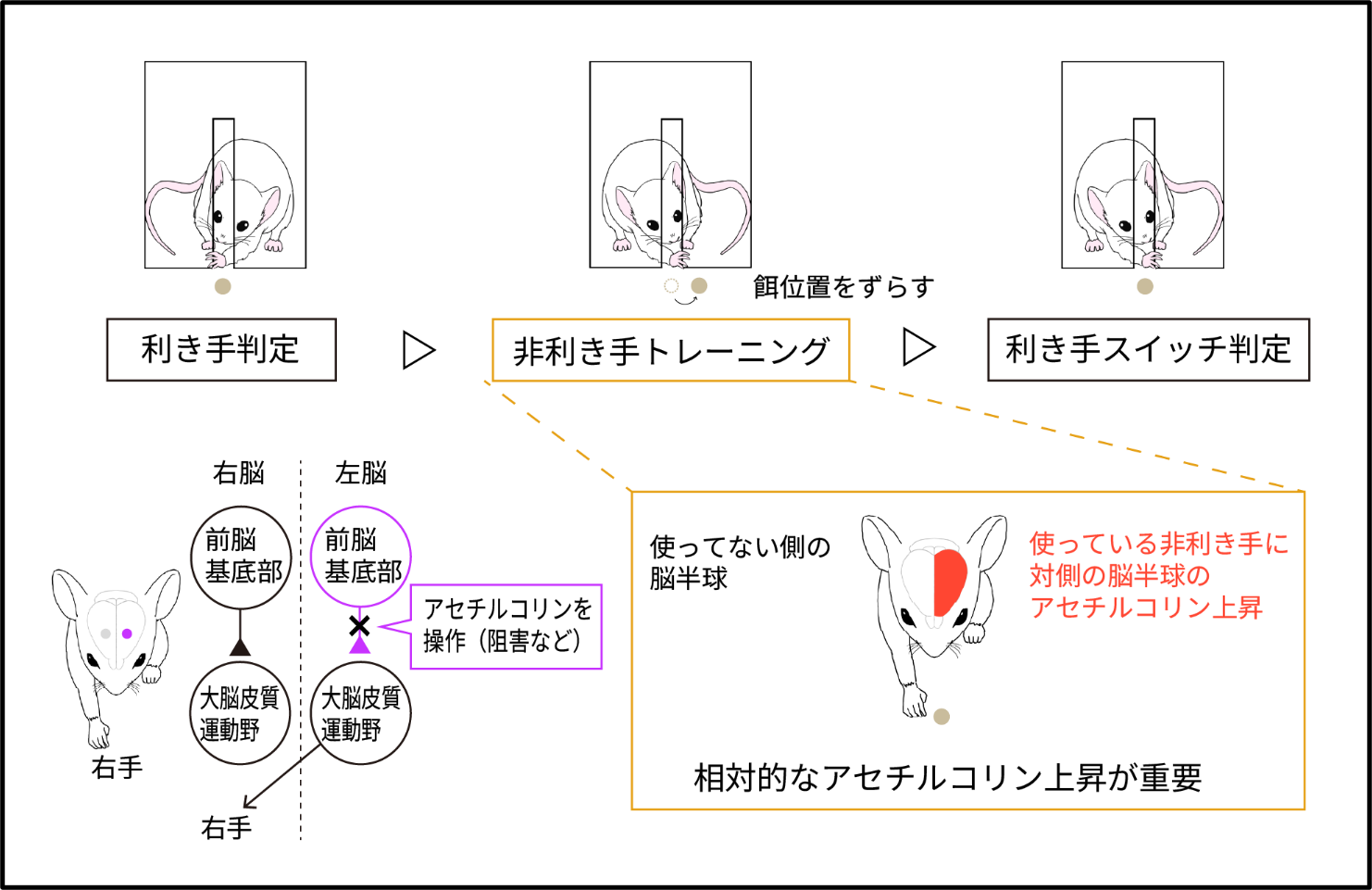
研究手法及び成果の概要図
<関連情報>
- https://www.hokudai.ac.jp/news/2026/07/post-2361.html
- https://www.nature.com/articles/s42003-026-10485-5
脅威回避と報酬探索の行動切り替えをつかさどるドーパミン神経調節機構 Dopamine dynamics as a regulatory mechanism for shifting between defensive and reward-seeking behaviors
Ryota Tsuruga,Yu Tajika,Masabumi Minami & Iku Tsutsui-Kimura
Communications Biology Published:24 July 2026
DOI:https://doi.org/10.1038/s42003-026-10485-5
Abstract
Understanding how the brain evaluates aversion and appetition to guide behavior is an important question. Here, we investigated the role of dopamine signaling in the tail of the striatum (TS) in regulating competing valence-based behaviors and learning. TS dopamine dynamics were monitored as mice performed a classical conditioning task in which an odor cue predicted either an aversive air puff or a water reward. Initially, mice exhibited anticipatory blinking, which diminished over time, while anticipatory licking emerged later, coinciding with adaptation to the air puff. Dopamine responses in the TS to the air puff and its associated odor were initially elevated but declined with repeated exposure. Ablation of TS dopamine inhibited avoidance learning and accelerated appetitive learning. Optogenetic disruption of dopaminergic decline suppressed adaptation and hindered appetitive learning. These findings demonstrate that TS dopamine dynamics are essential for avoidance and adaptation to aversive stimuli, which indirectly modulates appetitive learning, underscoring a regulatory mechanism for shifting between defensive and reward-seeking behaviors.