2026-08-14 韓国基礎科学研究院(IBS)
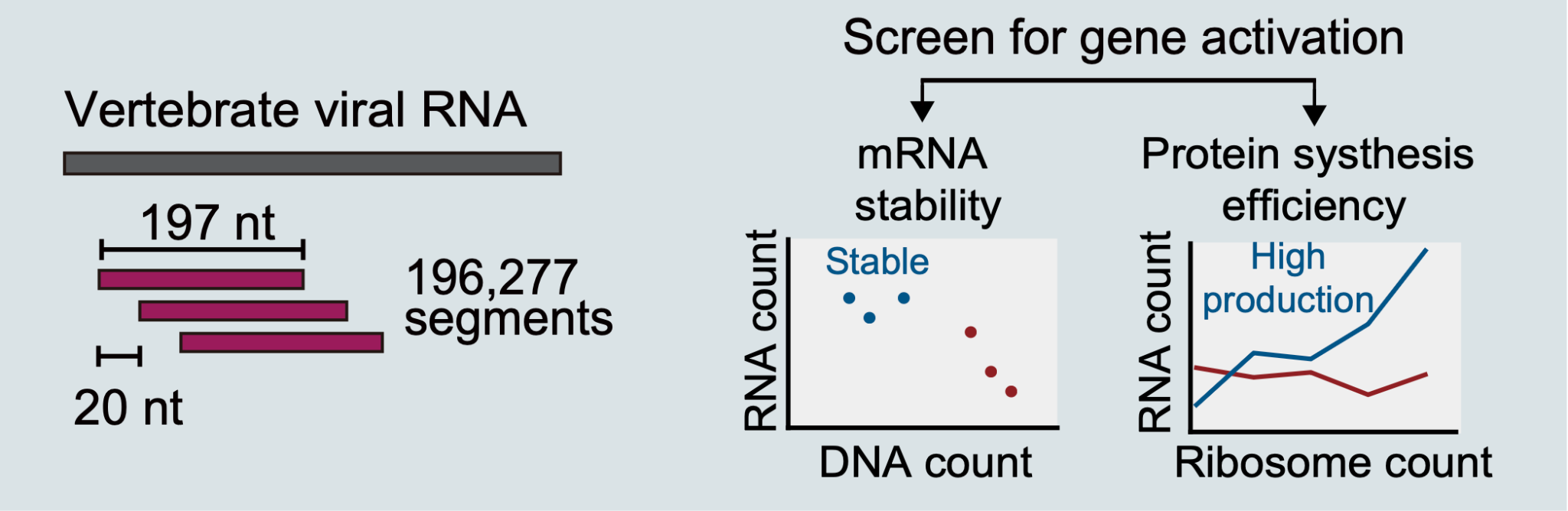
Figure 1. The researchers divided the genomes of vertebrate-infecting viruses into approximately 200-nucleotide segments, generating nearly 200,000 RNA fragments. Each fragment was introduced into cells in a construct expressing mRNA, and the researchers measured mRNA stability and protein synthesis efficiency.
<関連情報>
- https://www.ibs.re.kr/cop/bbs/BBSMSTR_000000000738/selectBoardArticle.do?nttId=26972&pageIndex=1&searchCnd=&searchWrd=
- https://www.cell.com/cell/abstract/S0092-8674(26)00870-6
脊椎動物ウイルスRNAのRNA安定化と翻訳促進に関わる要素の機能アトラス Functional atlas of vertebrate viral RNA elements that stabilize RNA and enhance translation
Jenny J. Seo ∙ Chemin Lee ∙ Dongbin Lim ∙ Minseok Jeong ∙ Soo-Jin Jung ∙ V. Narry Kim
Cell Published:August 13, 2026
DOI:https://doi.org/10.1016/j.cell.2026.07.038
Highlights
- MPRA maps functional RNA elements across 297 vertebrate viral genera
- Six distinct classes of TENT4-dependent elements reveal convergent viral evolution
- Pt1, a TENT4-independent element, endows linear mRNAs with circRNA-like stability
- Pt1 directly recruits canonical PAPs to promote cytoplasmic polyadenylation
Summary
Viruses encode diverse regulatory elements, but their breadth and mechanisms remain poorly defined. To address this gap, we performed massively parallel reporter assays spanning ∼200,000 genomic segments from 297 vertebrate-infecting viral genera. We identified numerous viral elements that enhance RNA stability and translation through TENT4-mediated mixed tailing, distributed across 19 genera and grouped into six distinct subclasses, indicating extensive convergent evolution. We also found diverse TENT4-independent elements acting through alternative pathways. One such element, Pt1 from Potamipivirus, stabilizes linear mRNA to levels comparable to circular RNA, suggesting its potential for RNA therapeutics. Pt1 directly recruits canonical poly(A) polymerases (PAPγ/α)—previously thought to function exclusively in transcription-coupled nuclear pre-mRNA processing—to drive cytoplasmic polyadenylation. Together, these findings chart the rich landscape of viral regulation, extend the scope of poly(A)-tail biology, and establish the virome as a valuable source for uncovering host RNA regulatory mechanisms.