2026-08-31 ラトガース大学
<関連情報>
- https://www.rutgers.edu/news/researchers-discover-dozens-genes-tied-ocd-and-tic-disorders
- https://www.nature.com/articles/s41593-026-02419-5
強迫性障害および慢性チック障害患者における全エクソームシーケンス解析により、36個の大きな影響を及ぼすリスク遺伝子が同定された Whole-exome sequencing in individuals with obsessive–compulsive disorder and chronic tic disorders identifies 36 large-effect risk genes
Belinda Wang, Matthew N. Tran, Sheng Wang, Yuting Liu, Emily Olfson, George Wang, Nawei Sun, Jeanselle Dea, Charles Ochieng’ Olwal, Lyvia Bertolace, Michael H. Bloch, Carolina Cappi, Yi-Chieh Chang, Denise Chavira, Barbara J. Coffey, Martha J. Falkenstein, Adam C. Frank, Martin E. Franklin, Stephanie Garayalde, Helena Garrido, Marco Grados, Rami Hatem, Allyna-London Howell, Starlette Khim, Tourette International Collaborative Genetics (TIC Genetics), … Matthew W. State
Nature Neuroscience Published:01 September 2026
DOI:https://doi.org/10.1038/s41593-026-02419-5
Abstract
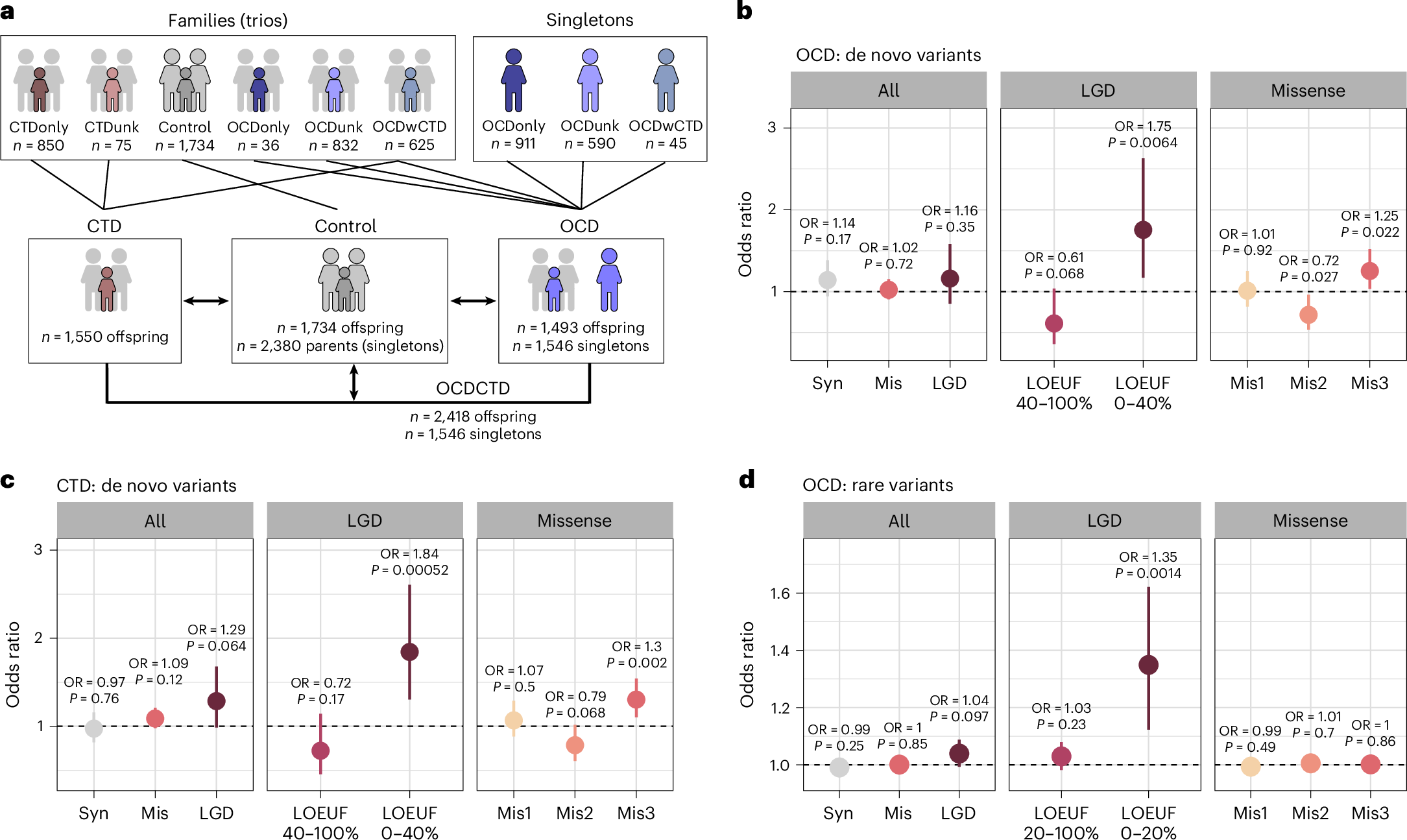
Obsessive–compulsive disorder (OCD) and chronic tic disorders (CTDs) are highly heritable. Rare mutations confer large risks for OCD and CTDs but only four high-confidence (hc) genes have been identified. Here we analyzed whole-exome sequencing data from 3,964 individuals with OCD, CTDs or both, including 2,418 trios. We found an excess in cases of de novo and rare protein-damaging mutations and identified 36 hc genes (false discovery rate < 0.1), including four previously identified hc genes (CELSR3, CHD8, SCUBE1 and WWC1) and four genes that overlap with OCD genome-wide association study loci (BRWD1, CELSR3, QRICH1 and SYNE1). Risk genes are shared among OCD, CTDs and other neurodevelopmental conditions. Transcriptomic and network analyses highlight mechanistic convergence and increased risk gene expression in postnatal cerebellum, prenatal and postnatal cortex and striatum. Dozens of large-effect OCD and CTD genes offer insights into pathogenesis and a path forward for illuminating pathophysiology and identifying novel treatment targets.