2026-10-16 東京科学大学
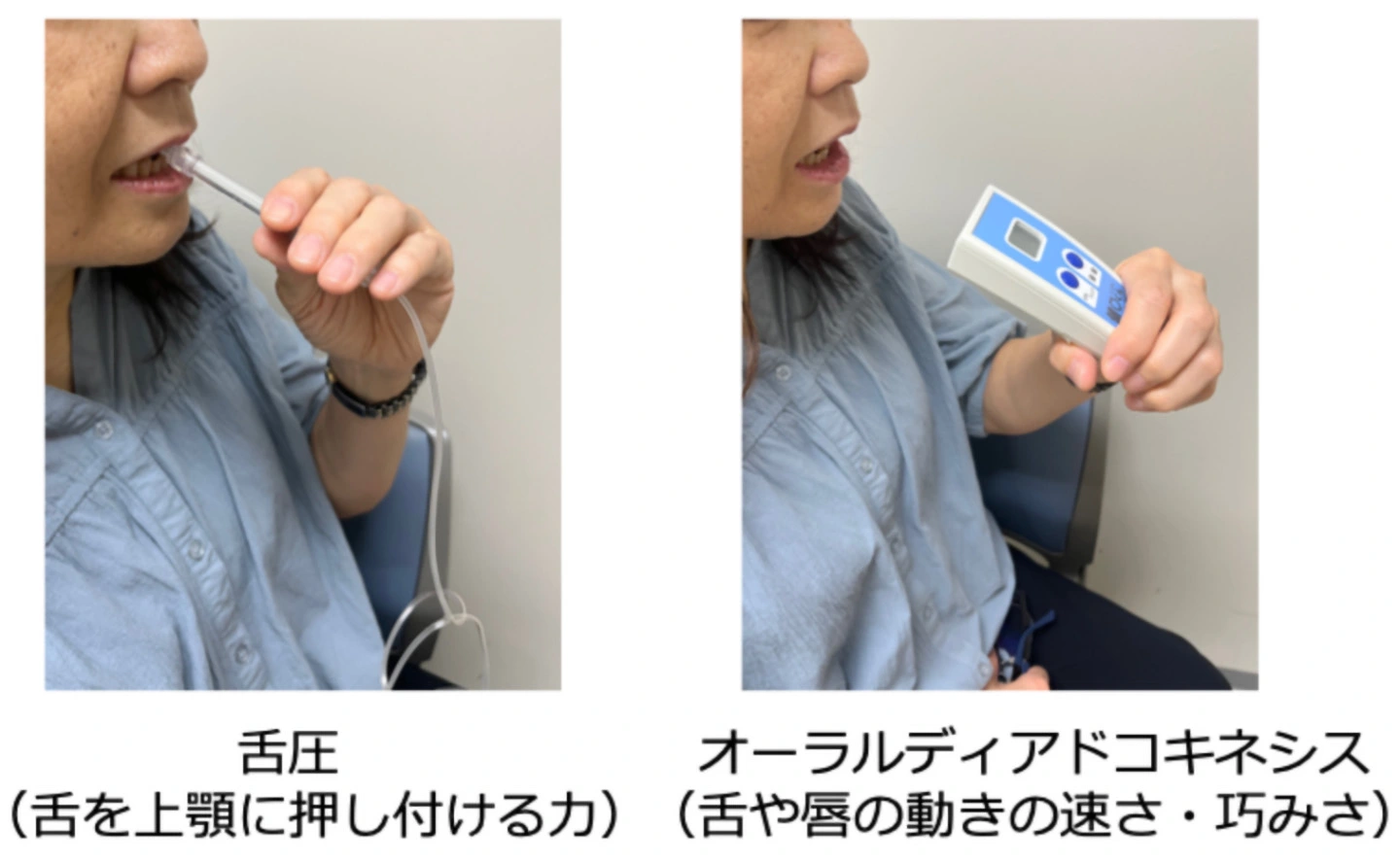
図1. 舌圧とオーラルディアドコキネシス計測の様子
<関連情報>
- https://www.isct.ac.jp/ja/news/zk7xw02i4pe3
- https://link.springer.com/article/10.1186/s12903-026-09988-8
高齢者における先延ばし行動と舌機能:横断研究 Procrastination and tongue function in older adults: a cross-sectional study
Kohei Yamaguchi, Ayane Horike, Kanako Shibahara, Rieko Moritoyo, Kanako Yoshimi, Kazuharu Nakagawa & Haruka Tohara
BMC Oral Health Published:25 September 2026
DOI:https://doi.org/10.1186/s12903-026-09988-8 Early provide
Abstract
Background
Procrastination influences health behaviors. Because oral motor function is partly maintained through use and training, procrastination may be related to tongue function; however, evidence remains limited. In this study, we aimed to examine the association between procrastination and tongue function in community-dwelling older adults.
Methods
In this cross-sectional study, procrastination, time discounting, and risk preference were assessed using three validated items from the Global Preference Survey. Tongue pressure and oral diadochokinesis (ODK) rates (/pa/, /ta/, and /ka/) were measured. Associations were examined using multivariable linear regression including decision-making traits, economic indicators, age, and sex.
Results
After exclusion, 99 participants were included in the analysis. The mean tongue pressure was 30.4 ± 8.1 kPa; the mean ODK rates were 6.2 ± 1.0 (/pa/), 6.2 ± 1.0 (/ta/), and 5.6 ± 1.0 (/ka/) times/s. A greater tendency to procrastinate was significantly associated with lower tongue pressure (B = − 2.030, 95% confidence interval [CI]: −3.619 to − 0.441, P = 0.013). For ODK, greater procrastination tendency was negatively associated with /ta/ (B = − 0.257, 95% CI:−0.449 to − 0.066, P = 0.009) and /ka/ (B = − 0.212, 95% CI: −0.391 to − 0.033, P = 0.021).
Conclusions
Procrastination was associated with poorer tongue function in older adults. Further research is needed to clarify the mechanisms underlying this association and to better understand its potential relevance to oral function.