2026-10-27 中国科学院(CAS)
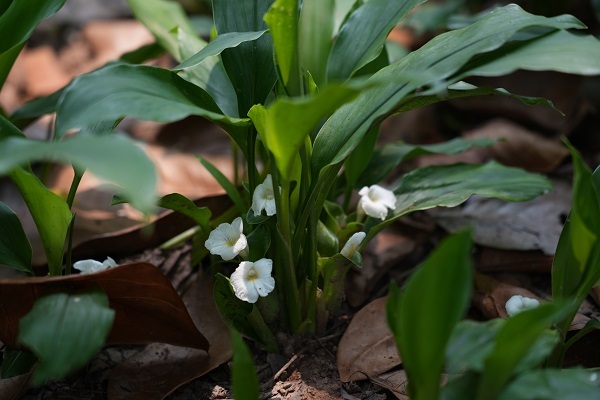
Stahlianthus involucratus (Image by LU Jianmei)
<関連情報>
- https://english.cas.cn/newsroom/research-news/202610/t20261015_1203728.shtml
- https://www.sciencedirect.com/science/article/abs/pii/S0045206826010497
Stahlianthus involucratus由来の酸素化芳香族カジナンセスキテルペノイド二量体:新規抗肥満剤 Oxygenated aromatic cadinane sesquiterpenoid dimers from Stahlianthus involucratus as a new class of anti-obesity agents
Qin-Qin Song,Jian-Xuan Li,Xin Wang,Peng Sun,Xing-Zhen Song,Jin-Yue Liang,Gang Liang,Yu-Mei Zhang,Yao-Yue Fan,Kai-Long Ji
Bioorganic Chemistry Available online: 14 September 2026
DOI:https://doi.org/10.1016/j.bioorg.2026.110513
Highlights
•Stahlianthus involucratus active fraction alleviates obesity and metabolic disorders.
•Eight new cadinane dimers, including three rare nor‑carbon skeletons, were identified.
•Compound 13 potently suppressed adipogenesis in vitro and obesity in vivo.
•Mechanistic studies showed 13 inhibited lipogenesis and enhanced thermogenesis.
Abstract
Stahlianthus involucratus, a medicinal herb indigenous to Southwest China traditionally used for inflammation, remains unexplored for anti-obesity potential. Bioactivity-guided fractionation afforded an active fraction that markedly ameliorates high-fat diet (HFD)-induced obesity and related metabolic disorders. Phytochemical investigation of this active fraction afforded thirteen oxygenated aromatic cadinane-type sesquiterpenoid dimers (CSDs, 1–13), including eight new compounds. Their structures were established by extensive spectroscopic analyses, including NMR, HRESIMS, ECD and single-crystal X-ray diffraction. Notably, compounds 1–3 possess unprecedented carbon-nor skeletons featuring a rare pyran-4-one-like ring C. Anti-adipogenic screening in 3T3-L1 preadipocytes identified compound 13 as the most potent congener, further favored by its abundance as a major constituent. Oral administration of 13 in HFD-fed obese mice significantly attenuated obesity-associated phenotypes without discernible hepatorenal toxicity. Mechanistically, 13 concurrently suppresses the lipogenic CREB–C/EBPβ/δ–PPARγ cascade and potentiates the thermogenic PRDM16–PGC1α–UCP1 axis. Collectively, these results establish the aromatized CSDs as the principal active components of S. involucratus and underscore its promise as a functional food candidate for obesity intervention.