2026-10-27 カリフォルニア大学サンタバーバラ校(UCSB)
<関連情報>
- https://news.ucsb.edu/2026/022898/early-warning-system-child-health-west-africa
- https://www.pnas.org/doi/10.1073/pnas.2321150122
西アフリカにおける出生体重を季節内~季節的な気候および社会経済変数を用いて予測することは、早期警報システムの可能性を示唆している Predicting birth weights in West Africa using subseasonal to seasonal climate and socioeconomic variables shows potential for an early warning system
Shraddhanand Shukla and Frank Davenport
Proceedings of the National Academy of Sciences Published:October 26, 2026
DOI:https://doi.org/10.1073/pnas.2321150122

Abstract
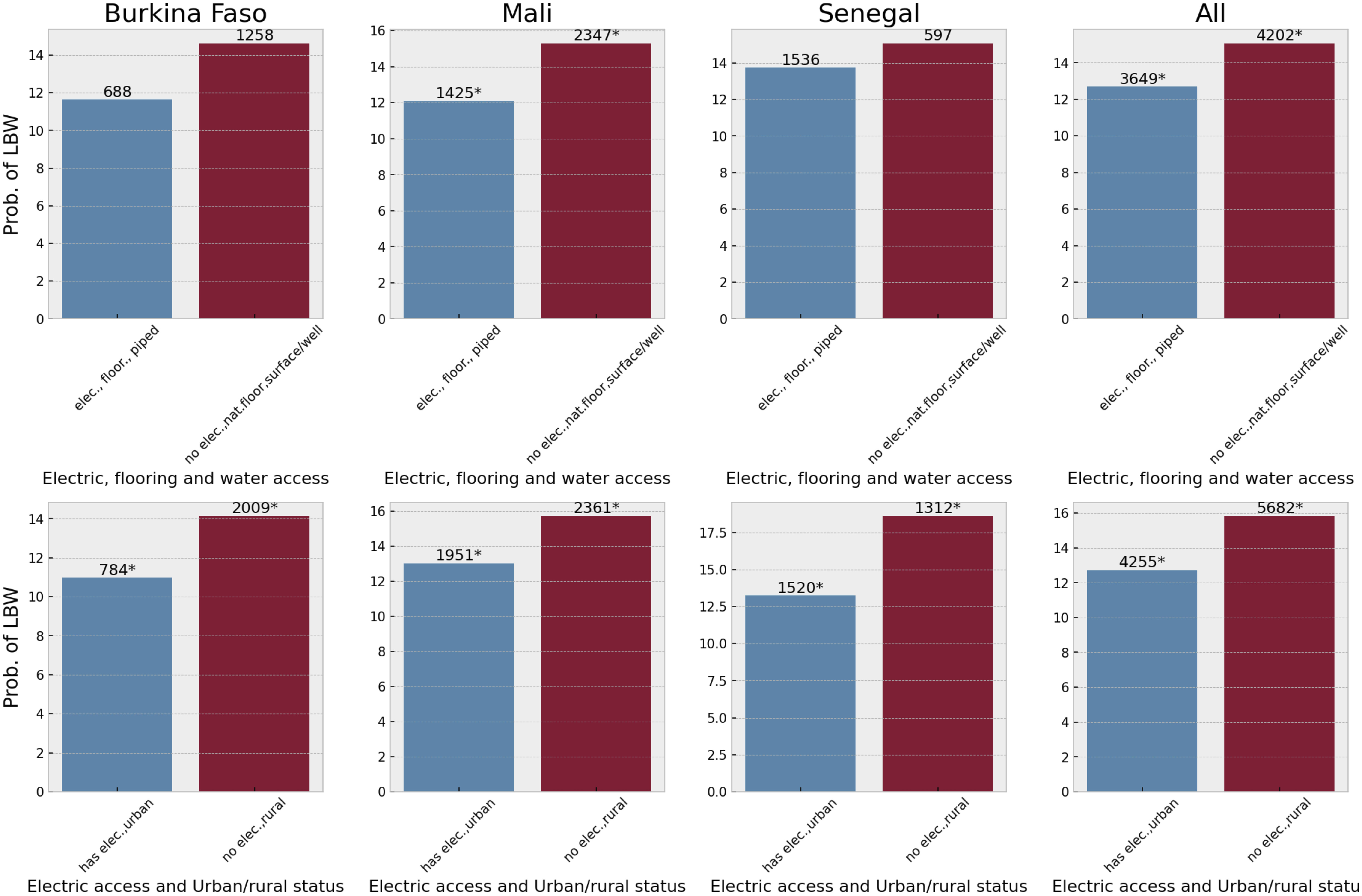
Past research has shown a negative impact of climate extremes on child birth weight (BW), which is modulated by household socioeconomic and individual maternal conditions as well as the timing and degree of exposure. This study tests the potential of predicting BW using subseasonal to seasonal (S2S) climate predictors and socioeconomic indicators to support early warning systems for BW. Three sets of predictors were tested: a) a suite of biological and socioeconomic indicators from the Demographic and Health Survey (DHS), b) S2S climate predictors, and c) a combination of climate predictors and selected socioeconomic indicators. The most accurate models incorporated the full set of DHS variables [predictors set (a)], with within-country (models trained and tested on the same country) predictive errors ranging from 13.5 to 17% for Burkina Faso and 20 to 25% for Mali. Cross-country (models trained on one country and tested on others) errors varied from 14 to 21% in Burkina Faso to 20 to 26% in Senegal. Models using only climate predictors [predictors set (b)] showed comparable skill to those using the full set of DHS indicators, with a relative error difference of 1 to 5%. The predictive skill was highest for children born with the most in-utero exposure to the lean season (months between planting and harvest). The results of this study have important implications for the prospect of implementing child BW early warning systems in data-sparse regions, based solely on climate predictors or based on selected socioeconomic indicators with climate predictors, to support malnutrition surveillance, to improve antenatal/maternal nutrition, policy formulation, and mitigation decisions.