2026-11-06 東京科学大学
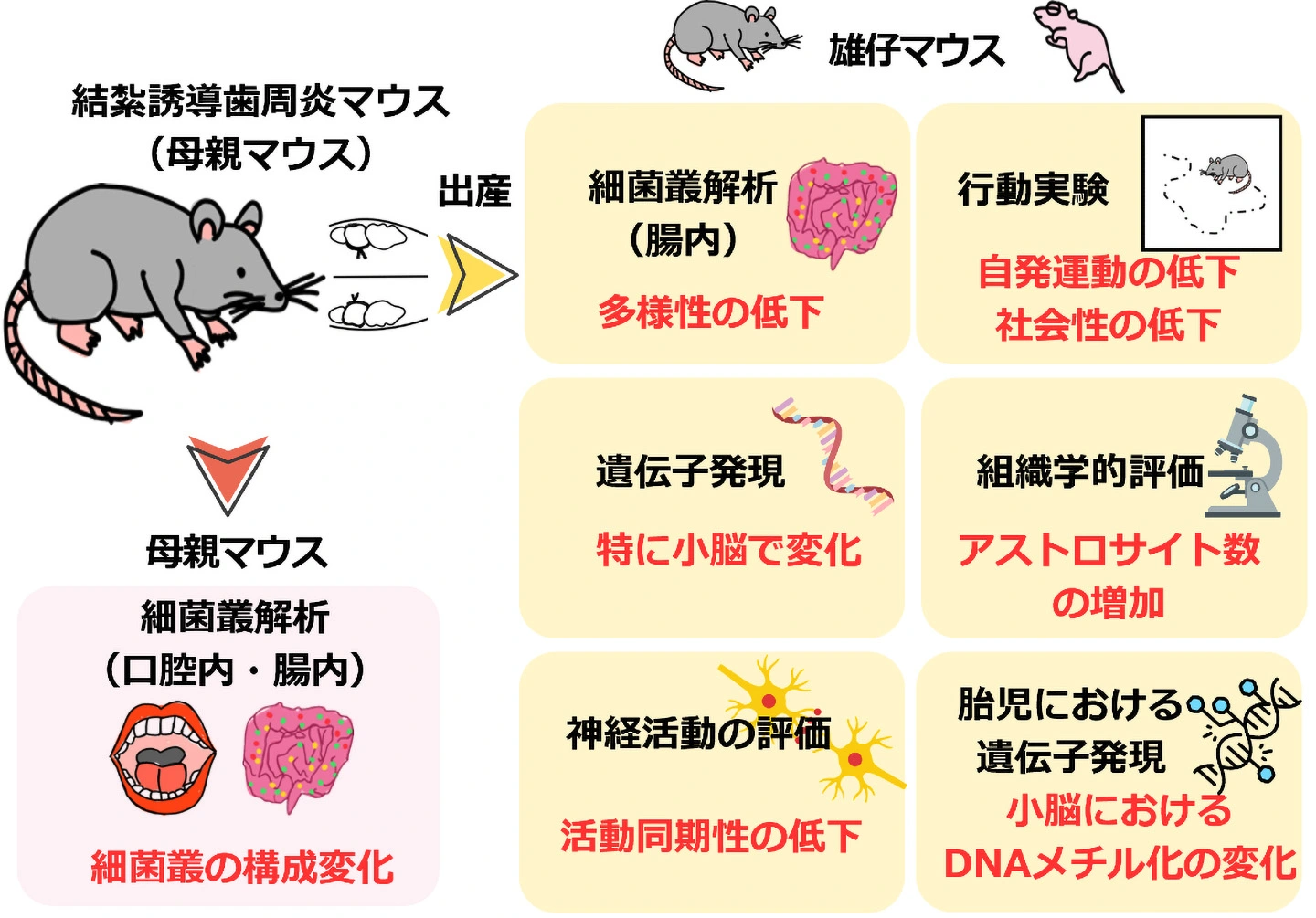
図1. 本研究の概略図
<関連情報>
- https://www.isct.ac.jp/ja/news/vj4z82dbl394
- https://journals.sagepub.com/doi/10.1177/00220345261493495
母体結紮誘発性歯周炎が子孫の脳に及ぼす影響 Effects of Maternal Ligature-Induced Periodontitis on Brain in Offspring
C. Imai, Y. Ohsugi, […], and S. Katagiri
Journal of Dental Research Published:November 3, 2026
DOI:https://doi.org/10.1177/00220345261493495
Abstract
The combined effects of chronic maternal periodontitis on offspring gut microbiome and brain outcomes remain unclear. This study aimed to evaluate the effects of maternal oral microbiome disruption on brain function and gut microbiome in offspring. Periodontitis was induced in 11- to 12-wk-old parous C57BL/6J mice by maintaining ligatures around both sides of the maxillary second molars for 4 wk, followed by breeding with naïve male mice. Maternal oral and gut microbiome, as well as the offspring gut microbiome, was analyzed by 16S rRNA gene sequencing. Male offspring were evaluated at 7 to 8 wk of age via a set of analyses, including behavioral tests, microbiome profiling, RNA sequencing, immunohistochemistry for glial cell populations, and in vivo calcium imaging. Cerebellar DNA methylation was assessed at embryonic day 18.5 to examine early epigenetic alterations. Maternal periodontitis significantly reduced microbial diversity in the maternal oral microbiome and altered the composition of the maternal gut microbiome. In offspring, α-diversity was reduced in the gut microbiome. Behavioral analyses revealed impaired social interaction and reduced spontaneous locomotion, while motor coordination and memory-related behaviors were preserved. RNA sequencing identified region-specific changes in gene expression, particularly in the cerebellum, highlighting its vulnerability to maternal inflammatory conditions. DNA methylation analysis revealed epigenetic alterations during the fetal stage, suggesting early programming effects. Immunohistochemical analysis demonstrated a significant increase in astrocyte density in the cerebellum and frontal cortex, whereas oligodendrocytes and microglia were unaffected. Furthermore, calcium imaging revealed disrupted neuronal synchrony among Purkinje cells without significant changes in individual neuronal activity parameters. Maternal oral microbiome disruption induces coordinated alterations in maternal and offspring microbiomes and leads to persistent neurobehavioral, molecular, and cellular changes in offspring. These findings provide new insights into the link between maternal oral health and offspring neurodevelopment, highlighting the potential role of microbiome-mediated mechanisms in shaping brain function.