
2026-06-23 マックス・プランク研究所
<関連情報>
- https://www.mpg.de/26827811/striking-global-similarities-in-interactions-between-dogs-and-humans
- https://www.nature.com/articles/s41598-026-57657-1
犬と人間の相互作用における世界的な驚くべき類似点 Striking global similarities in dog–human interactions
Juliane Bräuer,Yana Bender,Louise Jandke,Lea Ulverich,Henriette Mank,Christoph J. Völter,Lana Takau,Justorien Rambeloniaina,Roberto Zariquiey,Mariana Poblete,Stefan R. Schweinberger & Russell D. Gray
Scientific Reports Published:23 June 2026
DOI:https://doi.org/10.1038/s41598-026-57657-1
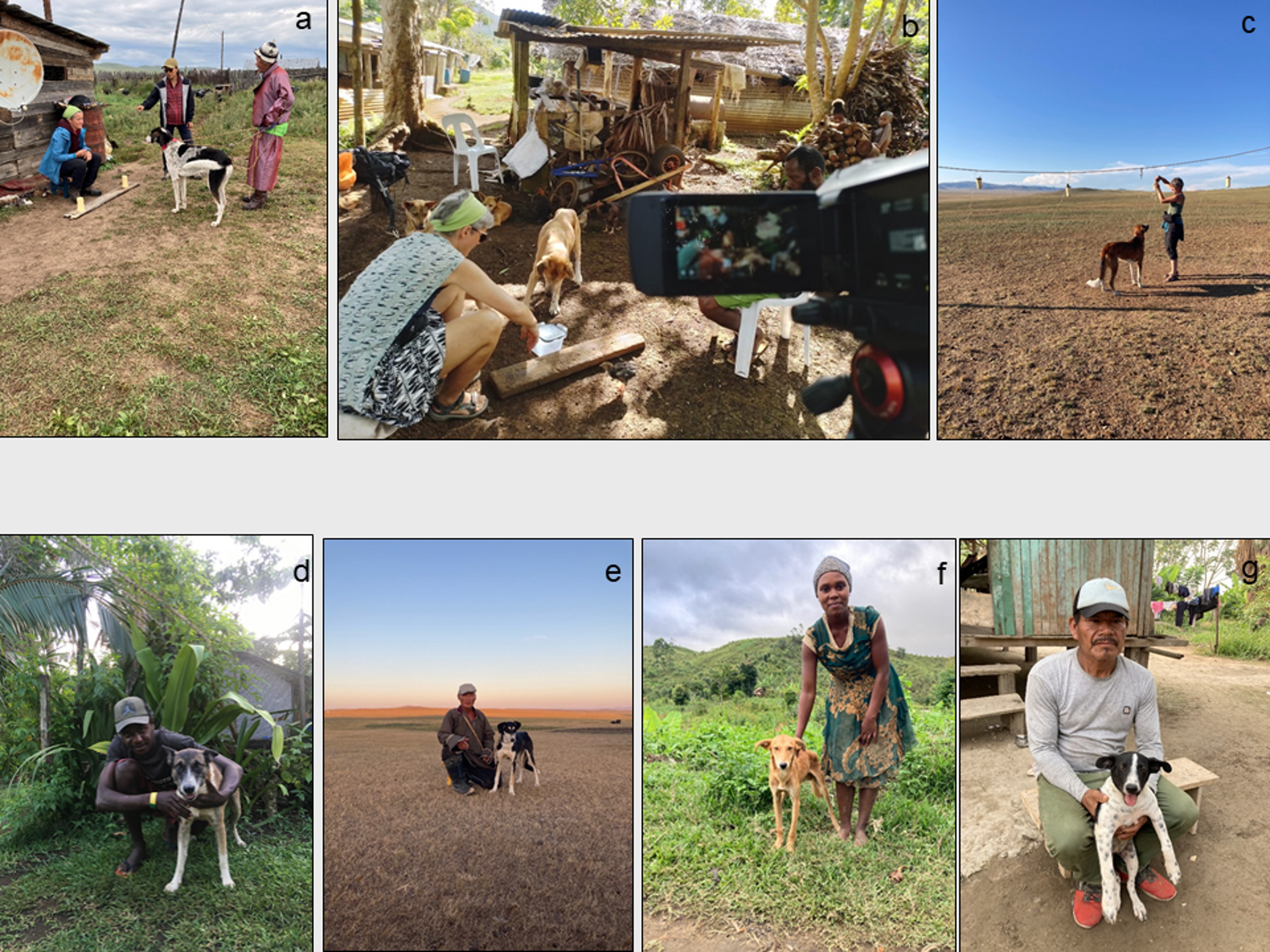
Abstract
Most of our knowledge about the dog–human relationship comes from studies with dogs from ‘WEIRD’ (Western, Educated, Industrialized, Rich, and Democratic) societies. Here, we investigate cultural differences in dog–owner interactions worldwide. To achieve this, we developed a test battery comprising six well-established social-cognitive experiments and a questionnaire that assessed the psychological and practical aspects of the dog–human bond. We tested hunting dogs alongside their owners in five rural societies across culturally diverse locations in various countries: Vanuatu, Mongolia, Madagascar, Peru, and Germany. Despite dramatic cultural and environmental differences, we found that dog–human relationships were remarkably similar. Residual differences may be attributed to variations in hunting techniques and differences between WEIRD and non-WEIRD societies.

