2026-09-03 パシフィック・ノースウェスト国立研究所(PNNL)

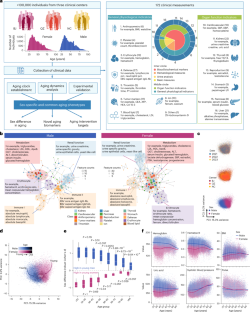
A trait-based framework was developed to organize organic molecules via intrinsic (constant) and extrinsic (dynamic) properties. A broad analytical approach was used to evaluate traits, both individually and in groups. In particular, extrinsic traits were found to explain ecosystem function and can be used across ecosystems, thus enabling more thorough assessments of future ecosystem performance. (Image: Hu et al. 2025.)
<関連情報>
- https://www.pnnl.gov/publications/functional-chemogeography-helps-explain-organic-matter-persistence-ecosystems
- https://onlinelibrary.wiley.com/doi/10.1111/gcb.70435
有機物の機能的化学地理学の出現と将来性 The Emergence and Promise of Functional Chemogeography of Organic Matter
Ang Hu, James Stegen, Andrew J. Tanentzap, Jianjun Wang
Global Change Biology Published: 22 August 2025
DOI:https://doi.org/10.1111/gcb.70435
ABSTRACT
Organisms in ecosystems continuously release a myriad of organic matter molecules that undergo microbial and abiotic transformation, processes that critically influence carbon storage and climate feedbacks. Yet, a systematic understanding of what determines the transformation and persistence of organic matter across spatiotemporal scales remains elusive. We propose an emerging framework, termed “functional chemogeography,” to understand transformation and persistence of organic matter based on the chemical traits of molecules. This framework extends beyond a sole focus on intrinsic traits, which remain relatively constant across spatiotemporal scales, to emphasize extrinsic traits such as biochemical transformations and environmental responses, which vary spatiotemporally and are shaped by both intrinsic traits and the environment. When upscaled to the assemblage level using functional diversity indices, these extrinsic traits reveal a significant, and in some cases superior, capacity than intrinsic traits to explain biogeochemical processes, as demonstrated through a case study of dissolved organic matter in China’s lakes. By integrating trait-based perspectives into predictive models, this framework helps bridge chemical complexity with ecosystem biogeochemistry, thereby advancing our ability to predict the fate of global organic carbon under environmental change.