2026-08-03 琉球大学
<関連情報>
- https://www.u-ryukyu.ac.jp/news/80672/
- https://www.jstage.jst.go.jp/article/jat/advpub/0/advpub_66257/_article
沖縄県の中小規模事業所における従業員の職場医療制度と生活習慣関連リスク要因 Worksite Healthcare Systems and Lifestyle-related Risk Factors among Employees at Small-to-medium Worksites in Okinawa, Japan
Shota Kudaka, Kenshu Taira, Atsushi Sakima, Koshi Nakamura
Journal of Atherosclerosis and Thrombosis Published:August 03, 2026
DOI:https://doi.org/10.5551/jat.66257
Abstract
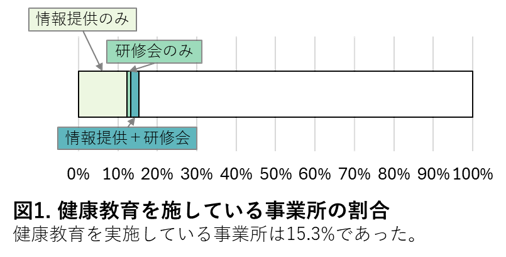
Aim: To investigate whether the presence of common health education (HE) and a healthcare administrator (HA) at a worksite would be associated with a lower prevalence of current smoking, current daily alcohol consumption, and obesity among employees at real-world, small-to-medium worksites.
Methods: The present cross-sectional study included 72,704 employees aged 35–59 years at 5,910 small-to-medium companies in Okinawa, Japan. Odds ratios were calculated by sex for each factor for HE (information provision alone, lecture classes alone, or both services) presence and HA presence, using a multilevel logistic regression model, with HE absence (neither) and HA absence, respectively, serving as the reference.
Results: The odds ratios (95% confidence intervals) for current smoking among men and women in the combined HE services group were 0.80 (0.68–0.93) and 0.68 (0.52–0.88), respectively, after adjusting for age, HA status, medication status, and basic worksite characteristics. The adjusted odds ratios for current daily alcohol consumption among men and women in the combined HE services group were 0.81 (0.69–0.95) and 0.84 (0.69–1.02), respectively. However, the four HE groups had similar odds of obesity in both men and women. The HA-present and HA-absent groups had similar odds of all outcomes in both men and women, except that men in the HA-present group had lower odds of current daily alcohol consumption: 0.92 (0.86–0.98).
Conclusions: The combined HE services presence was associated with lower odds of current smoking and daily alcohol consumption among employees, whereas HA presence was associated with lower odds of daily alcohol consumption among men.