2026-09-25 パシフィック・ノースウェスト国立研究所(PNNL)
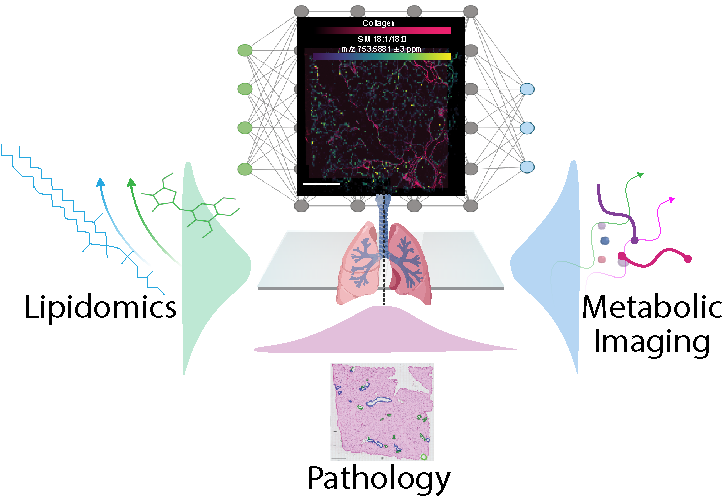
A team of researchers from Pacific Northwest National Laboratory, the University of California San Diego, and the University of Rochester Medical Center combined several advanced imaging techniques to reveal important differences between healthy lungs and those affected by bronchopulmonary dysplasia. The team’s work could help guide future medical therapies. (Image courtesy of Brittney Gorman | Pacific Northwest National Laboratory)
<関連情報>
- https://www.pnnl.gov/publications/new-imaging-approach-reveals-molecular-changes-diseased-lung-tissue
- https://www.science.org/doi/10.1126/sciadv.aec3544
共登録質量分析法と非線形光学イメージングによる肺組織のマルチスケール代謝マッピング Multiscale metabolic mapping of lung tissue via coregistered mass spectrometry and nonlinear optical imaging
Brittney L. Gorman, Zhi Li, Gail Deutsch, Heidie L. Huyck, […] , and Christopher R. Anderton
Science Advances Published:8 Jul 2026
DOI:https://doi.org/10.1126/sciadv.aec3544
Abstract
The lung is a highly heterogeneous organ that is composed of numerous microanatomical units, each essential for maintaining intricate functions that work in concert. Disruptions in the molecular and cellular mechanisms can cause tissue fibrosis, inflammation, and severe breathing difficulties, which are common characteristics of the disease of prematurity, bronchopulmonary dysplasia (BPD). BPD’s molecular changes are not well understood, and this has hindered effective diagnosis and treatment. Here, we present a multimodal imaging workflow for detailed molecular and metabolic characterization of lung tissue at multiple spatial scales. We also developed a hierarchical multimodal registration network for precise coregistration of the data from each modality. Our results show that this approach can reveal previously unknown metabolic changes in distinct functional tissue units affected by disease, including altered lipid distributions, reduced optical redox states, and collagen remodeling. This multimodal approach provided detailed maps of molecular shifts occurring in distinct microanatomical features that, when adopted to interrogate this and other tissue types, has the potential to enable the discovery of new therapeutics.