2026-09-28 北京大学(PKU)
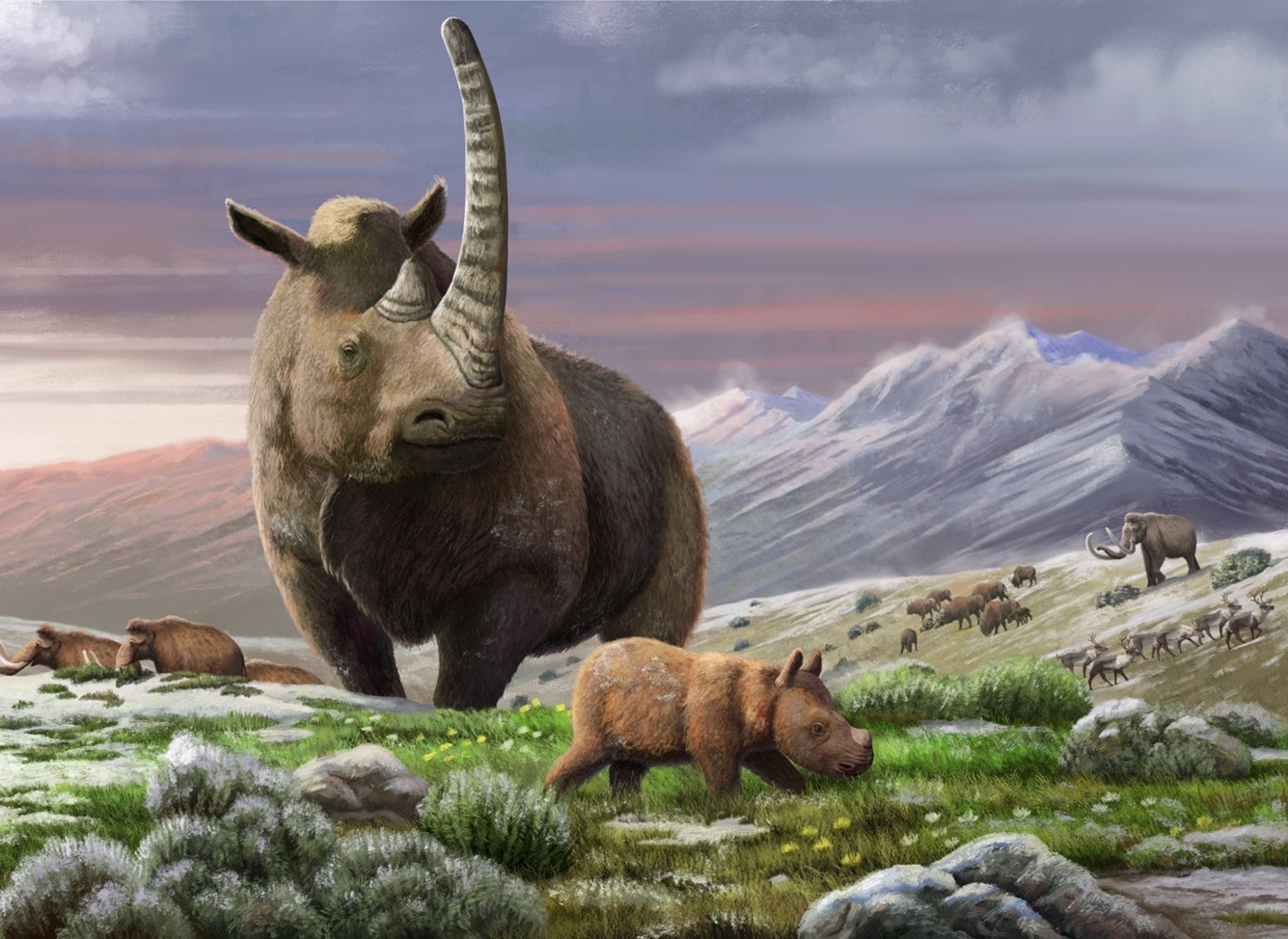
Figure 1. Artistic reconstruction of woolly rhinoceroses and their habitat in mid-latitude regions during the Late Pleistocene.
<関連情報>
- https://newsen.pku.edu.cn/news_events/news/research/15680.html
- https://www.science.org/doi/10.1126/science.aed0430
古ゲノム学と生息地モデリングにより、ケブカサイの起源が温帯ユーラシア大陸にあることが明らかになった Paleogenomics and habitat modeling reveal temperate Eurasian origins of woolly rhinoceroses
Xiao-Le Lei (雷晓乐), Jiaoyang Ruan (阮骄杨), Xueyuan Liang (梁雪原), Raquel Teixeira , […] , and He Yu (遇赫)
Science Published:10 Sep 2026
DOI:https://doi.org/10.1126/science.aed0430
Abstract
The woolly rhinoceros was a prominent Ice Age megafaunal species, and there is limited knowledge regarding its origin and responses to past glacial cycles. We sequenced 29 mitochondrial and 14 nuclear genomes from Pleistocene specimens across Eurasia and modeled the species’ habitats over the past 500,000 years. Our results suggest that its maternal genetic diversity mainly evolved in temperate Eurasia around 460 thousand to 420 thousand years ago during a prolonged glacial-interglacial transition. We found that a ~170-thousand-year-old East Asian individual was ancestral to all later populations, indicating East Asia as one possible origin of Late Pleistocene ancestry. We also identified the Altai region as a major climatic refugium. These findings highlight the crucial role of temperate Eurasia in the evolution of woolly rhinoceroses and the diversification of cold-adapted megafauna.