2026-10-20 デューク大学(Duke)
<関連情報>
- https://pratt.duke.edu/news/tulip-parkinsons-measurement/
- https://www.nature.com/articles/s41531-026-01512-7
説明可能な3Dマルチスケール運動定量化により、運動評価が自動化され、パーキンソン病の罹病期間が推定される Explainable 3D multi-scale movement quantification automates motor assessments and estimates Parkinson’s disease duration
Kyungdo Kim, Yuxuan Wen, Lauren Lim, Sihan Lyu, Yi Shi, Kyle T. Mitchell & Timothy W. Dunn
npj Parkinson’s Disease Published:03 September 2026
DOI:https://doi.org/10.1038/s41531-026-01512-7 Early provide
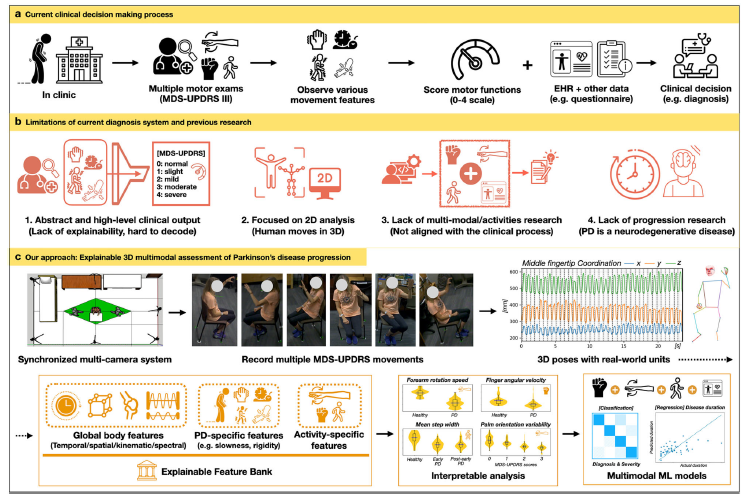
Fig. 1 | Framework for quantitative and explainable multimodal 3D pose analysis.
Abstract
Quantitative assessment of motor impairment in Parkinson’s disease (PD) remains limited, particularly in tracking how deficits evolve over time. Current bedside scoring systems, including the Movement Disorder Society Unified Parkinson’s Disease Rating Scale (MDS-UPDRS), capture clinically important observations but condense them into categorical, semi-subjective ratings. This manual scoring process is imprecise, limiting diagnostic and prognostic accuracy and hindering our understanding of PD impairments and their progression. While there have been recent efforts to improve scoring via sensor-based measurements and machine learning, these approaches have limitations impeding their utility and clinical adoption. In principle, video-based methods enable comprehensive quantification and monitoring of motor function, but previous approaches largely have used imprecise 2D movement features, analyzed only individual motor tasks, and not addressed disease progression. Here, we introduce an interpretable, quantitative framework built on a synchronized, markerless 3D pose tracking system. We recorded three routinely performed MDS-UPDRS motor tasks from a large cohort of patients with PD and healthy subjects, and extracted task-level, clinically explainable kinematic features. These activities probed complementary motor subsystems—fine hand, forearm rotation, and whole-body locomotion—offering a concise yet comprehensive view of PD motor function. From 3D poses, we developed how movement patterns differed between PD and healthy subjects and how these patterns shifted as PD progressed to form distinct movement characteristics. Using machine learning models combining 3D motor features from multiple activities across multiple spatiotemporal scales, we also automatically classified diagnostic status, duration-defined PD severity, and inferred time since diagnosis. These results establish a transparent digital-biomarker framework that may support future longitudinal monitoring of PD in clinics and trials.