2025-07-08 中国科学院(CAS)

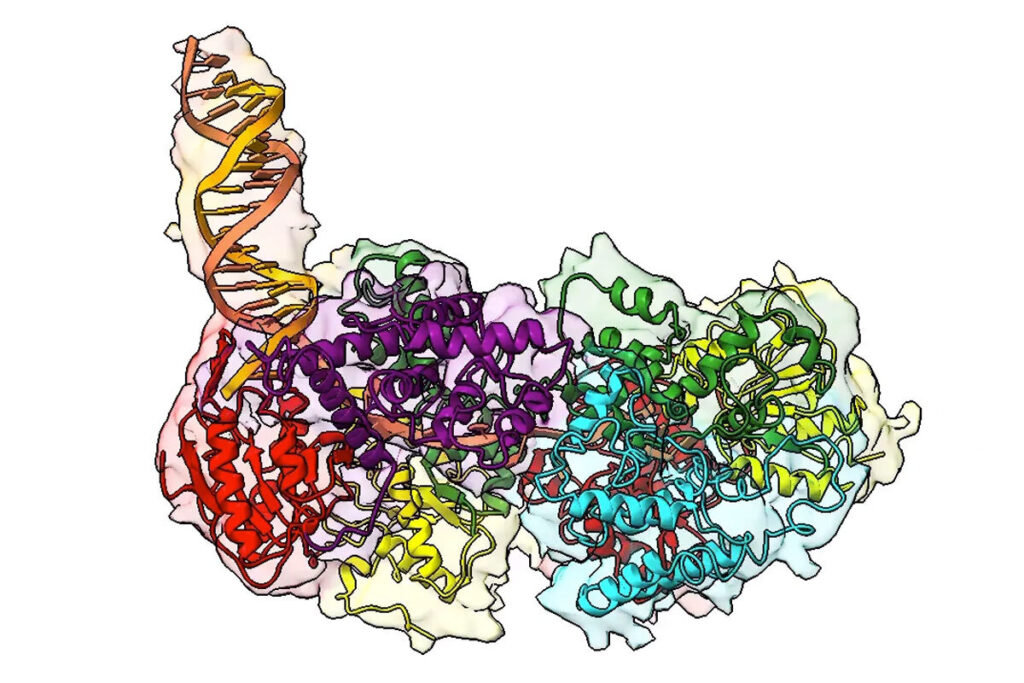
Co-existence of diploidy and triploidy within a population of Nanozostera japonica. (Image by IOCAS)
中国科学院海洋研究所の周義教授らの国際研究チームが、北西太平洋の海草ナノゾステラ・ジャポニカ(N. japonica)に隠れた種分化(クリプティック・スペシエーション)を発見。北中国と南中国からのサンプルを用いた全ゲノム解析により、両系統が約416万年前に分岐し、南系統は欧州の近縁種N. noltiiと約267万年前に分化。接触地帯では一世代限りの雑種のみ確認され、生殖隔離が明らかとなった。42Mbの染色体逆位も種分化に寄与とみられる。本研究は海草の分類・保全戦略に新たな視点を与える。
<関連情報>
- https://english.cas.cn/newsroom/research_news/earth/202507/t20250708_1047045.shtml
- https://nph.onlinelibrary.wiley.com/doi/10.1111/nph.70355
ナノゾステラ・ジャポニカ種群の発見は、隠れた種分化と過小評価されていた海草多様性を示唆している Uncovering the Nanozostera japonica species complex suggests cryptic speciation and underestimated seagrass diversity
Xiaomei Zhang, Lei Yu, Yu-Long Li, Zhaxi Suonan, Teruhisa Komatsu, Guanglong Qiu, Shaochun Xu, Shidong Yue, Min Xu, Feng Wang, Yu Zhang, Kun-Seop Lee, Jin-Xian Liu, Yi Zhou, Thorsten B. H. Reusch
New Phytologist Published: 30 June 2025
DOI:https://doi.org/10.1111/nph.70355
Summary
- The importance of marine angiosperms, or seagrasses, as foundation species for marine coastal ecosystems is in marked contrast to their low species number of only 70 described taxa. Seagrass species tend to have very similar overall morphologies dictated by hydrodynamic forces of the ocean environment. Moreover, they have inconspicuous and simple flowers, probably due to the absence of flower–pollinator interactions in the sea. We hypothesized that the seagrass species Nanozostera japonica, distributed from tropical to temperate latitudes in the North-Western Pacific, contains cryptic species.
- To test this, we assembled two chromosome-level reference genomes and conducted whole-genome resequencing at 17 locations throughout its native distribution.
- We identified two genetically divergent clades in the north and south of its range (hereafter Nj_N and Nj_S) that diverged some 4.16 million years ago. Hybrid individuals at a contact zone were either diploid F1-crosses or featured triploidy, indicating reproductive isolation. A large (42 Mb) reciprocally fixed chromosomal inversion between Nj_N and Nj_S possibly contributed to the formation of the reproductive isolation.
- We conclude that the N. japonica species complex is actually consisting of two different species. Further population genomic studies may reveal additional cryptic species, solving the conundrum why there are so few described seagrass species today.