2026-08-19 北海道大学,東洋大学
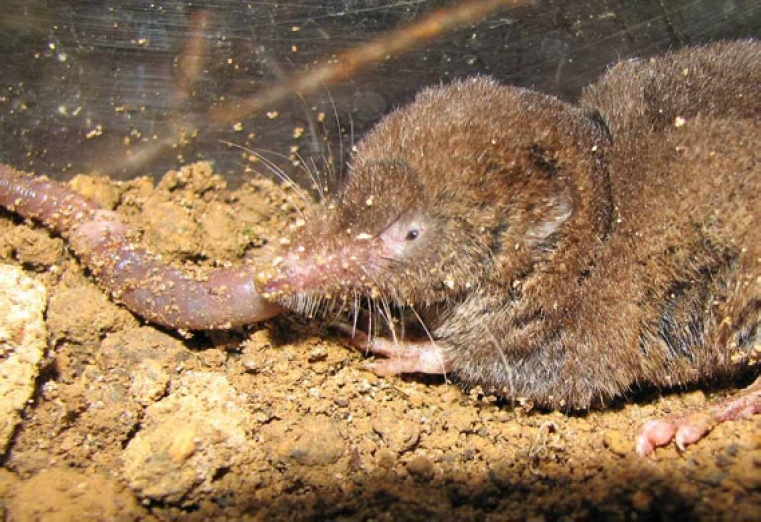
本件の研究対象となったオオアシトガリネズミ
<関連情報>
- https://www.hokudai.ac.jp/news/2026/08/post-2413.html
- https://royalsocietypublishing.org/rspb/article/293/2077/20260244/482819/Dehnel-s-phenomenon-is-not-a-simple-reduction-of
デーネル現象は単純な縮小ではない ― オオアシトガリネズミにおける頭骨形状の季節変化Dehnel’s phenomenon is not a simple reduction of size: seasonal change in skull shape of the long-clawed shrew (Soricidae, Mammalia)
Yugo Ikeda;Yukina Suwa;Satoshi D. Ohdachi
Proceedings of the Royal Society B Published:19 Aug 2026
DOI:https://doi.org/10.1098/rspb.2026.0244
Abstract
Dehnel’s phenomenon—a reversible seasonal reduction and regrowth of body size, skull, brain and visceral organs—is an extreme adaptive strategy, enabling small mammals to survive winter energetic constraints. First described in the common shrew Sorex araneus, similar seasonal remodelling has since been reported in other shrews and even in distantly related taxa, indicating convergent adaptation to cold environments. Here, we quantified year-round skull morphological changes in the long-clawed shrew (Sorex unguiculatus) from Hokkaido, Japan, using linear measurements and high-resolution two-dimensional geometric morphometrics. As classically described, braincase height decreased markedly in winter and regrew in spring. By contrast, we detected a previously unrecognized pattern: winter enlargement of the rostrum followed by reduction in early spring, which we term ‘reverse Dehnel’s phenomenon’. By integrating morphometric results with ecological and physiological evidence, we propose enhanced nasal thermoregulation as the most plausible explanation for this seasonal rostral enlargement. Our findings demonstrate that cranial remodelling in shrews is modular rather than uniformly reductive and introduce the reverse Dehnel’s phenomenon as a novel winter adaptation. Our study provides one of the most temporally fine-resolved assessments of cranial remodelling to date, and highlights the evolutionary significance of seasonal skeletal plasticity in small mammals.