
2025-08-22 バッファロー大学
<関連情報>
- https://www.buffalo.edu/news/releases/2025/08/speed-isnt-everything-when-it-comes-to-covalent-inhibitor-drugs.html
- https://pubs.acs.org/doi/10.1021/acs.jmedchem.5c01661
EGFRガイド型研究を通じた標的コバルエント阻害剤のプロファイリングと最適化 Profiling and Optimizing Targeted Covalent Inhibitors through EGFR-Guided Studies
Tahereh Damghani,Surbhi P. Chitnis,Omobolanle A. Abidakun,Kishan B. Patel,Kaly S. Lin,Emily A. Ouellette,Abigail M. Lantry,and David E. Heppner
Journal of Medicinal Chemistry Published: August 13, 2025
DOI:https://doi.org/10.1021/acs.jmedchem.5c01661
Abstract
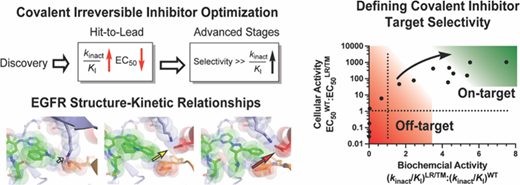
Targeted covalent inhibitors (TCIs) are actively pursued in drug discovery due to their prolonged target engagement and clinical efficacy. Although kinetic parameters provide a path to their optimization, systematic design strategies and practical guidance remain underexplored. In this study, the EGFR kinase is deployed as a model system to elucidate structural and functional determinants critical for directing the optimization of irreversible TCIs. Functional analyses reveal a two-phase optimization process, underscoring the importance of balancing─rather than maximizing─the inactivation efficiency rate (kinact/KI). Selective inhibition of the oncogenic L858R/T790M mutant over the wild-type is achieved by tuning this balance, particularly for TCIs exhibiting the fastest kinact/KI. Structural studies indicate that certain hydrophobic and hydrophilic interactions are associated with L858R/T790M selectivity, offering insights into structure-guided design. These results offer a broadly applicable approach for prioritizing compounds and support the integration of kinetic and selectivity data in TCI discovery campaigns.

