2025-11-20 フランス国立科学研究センター(CNRS)
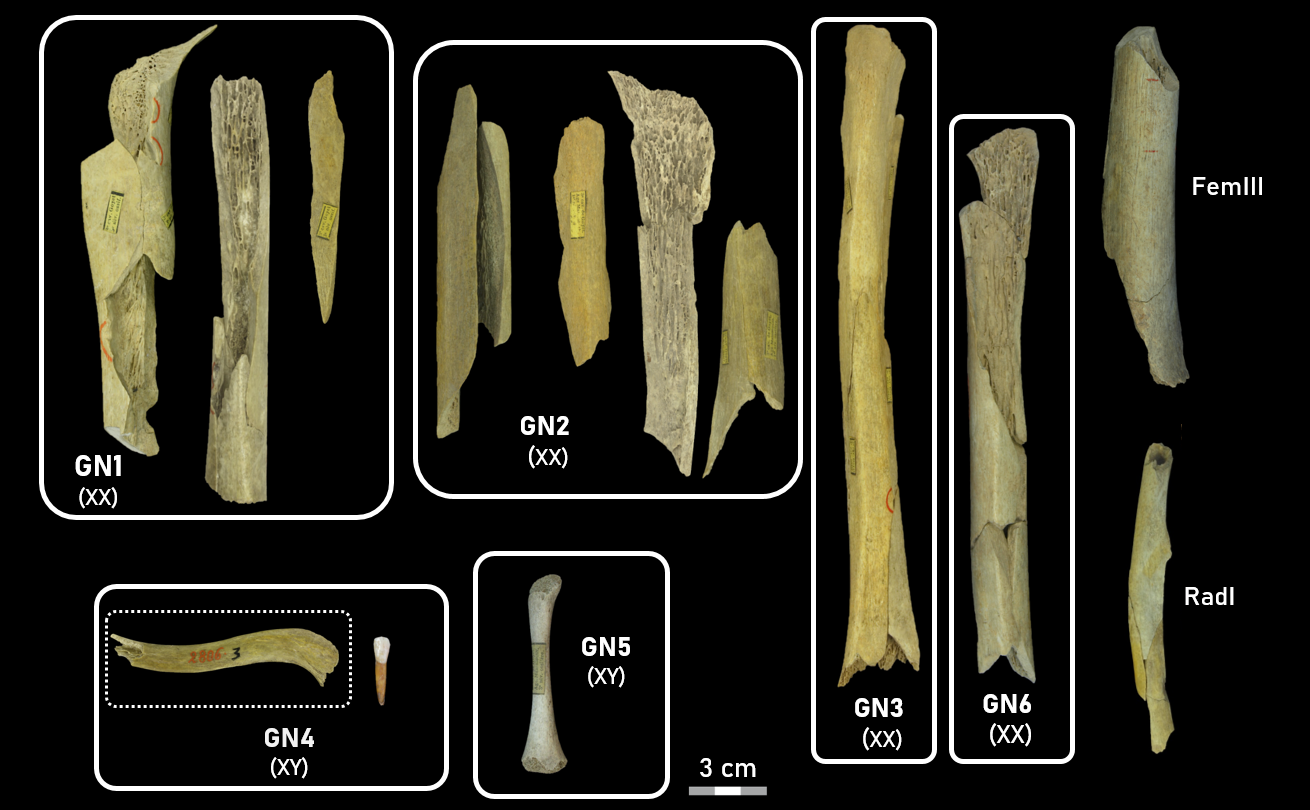
Neandertal human remains from the Troisième caverne of Goyet (Belgium). Highly fragmented bones bear traces characteristic of fresh bone fracturing and percussion, demonstrating intentional treatment of the bodies. The individuals (GNx, for “Goyet Neandertal” x), numbering six at minimum, were identified by genetic analyses: XX indicates female gender, and XY male gender.© Royal Belgian Institute of Natural Sciences /Scientific Reports
<関連情報>
- https://www.cnrs.fr/en/press/neandertal-women-and-children-were-victims-selective-cannibalism-goyet
- https://www.nature.com/articles/s41598-025-24460-3
北ヨーロッパの後期更新世における高度に選択的な人食い行為は、ネアンデルタール人が標的の獲物であったことを示している Highly selective cannibalism in the Late Pleistocene of Northern Europe reveals Neandertals were targeted prey
Quentin Cosnefroy,Isabelle Crevecoeur,Patrick Semal,Mateja Hajdinjak,Alba Bossoms Mesa,Johannes Krause,Guido Alberto Gnecchi-Ruscone,Cosimo Posth,Hervé Bocherens,Thibaut Devièse & Hélène Rougier
Scientific Reports Published:19 November 2025
DOI:https://doi.org/10.1038/s41598-025-24460-3
Abstract
The Troisième caverne of Goyet has yielded the largest assemblage of Neandertal remains in Northern Europe with clear evidence of anthropogenic modifications. However, its skeletal fragmentation has long limited detailed morphological and behavioural study on the assemblage. In this study, we integrate palaeogenetic, isotopic, morphometric, and structural analyses of the long bones to assess the biological profiles of the Neandertals from Goyet and explore whether they present particularities that could shed light on the formation of this unique cannibalised assemblage. We identify a minimum of six individuals, including four adult or adolescent females. Compared to Homo sapiens and Neandertals—including regional specimens—the females from Goyet display short statures and reduced diaphyseal robusticity of their long bones. They lack skeletal markers associated with high mobility despite isotopic evidence for non-local origins. The overrepresentation of short, morphologically gracile, non-local females, alongside two immature individuals, suggests a strong selection bias in the individuals present at the site. Dated between 41,000 and 45,000 years ago, a period marked by Neandertal cultural diversity, biological decline and the arrival of Homo sapiens in Northern Europe, the cannibalised female and juvenile Neandertals from Goyet indicate exocannibalism, possibly linked to inter-group conflict, territoriality, and/or specific treatment of outsiders.